


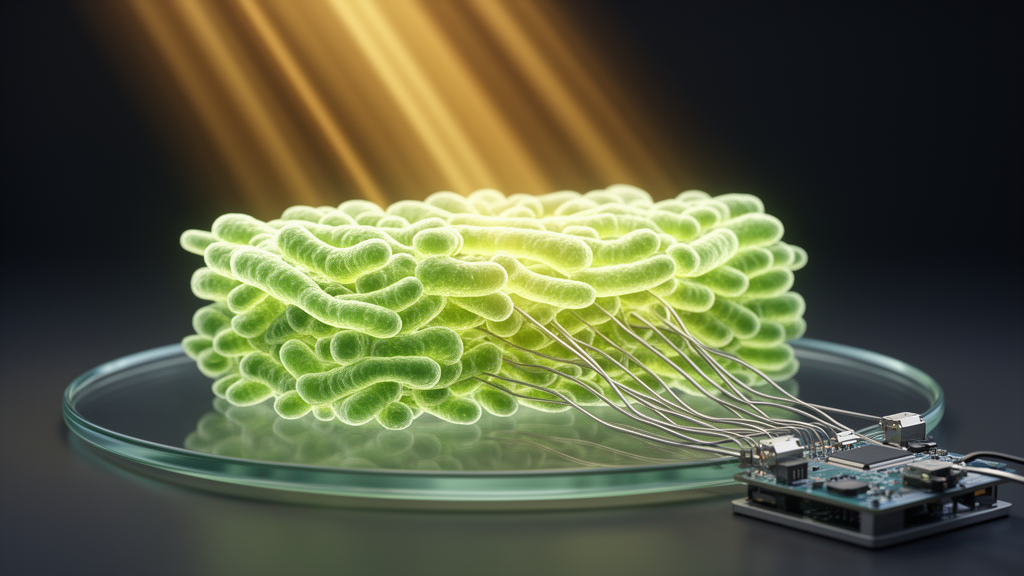
Imagine a power source that feeds on wastewater, drinks in sunlight, and repairs itself when it breaks down. That is the promise of microbial electrochemical systems, a family of technologies in which electroactive bacteria convert the chemical energy stored in organic matter directly into electricity. A new mini-review published in Frontiers in Environmental Engineering by Rajani Bansode, Mukta Patil, and Vidya Karande compiles the latest advances in solar-assisted microbial fuel cells and related hybrid bio-solar platforms, mapping out both the remarkable engineering progress of recent years and the stubborn obstacles that keep these systems out of commercial deployment.
The context is pressing. The global population is expected to reach 9.8 billion by 2050, and even under effective new energy regulations worldwide consumption is projected to rise by 32 percent compared with 2013 levels, reaching 17,934 million tonnes of oil equivalent by 2040. That trajectory would require oil production to increase by more than 15 percent and would push carbon dioxide emissions even higher, deepening global warming and ocean acidification. Decarbonizing the economy to keep warming below 2 degrees Celsius demands genuinely new energy technologies, and microbial bioelectrochemical systems have emerged as one of the more intriguing candidates because they combine renewable energy harvesting with pollution cleanup in a single device.
At the heart of the field sits the microbial fuel cell, or MFC. In its classic configuration, electrochemically active bacteria such as Geobacter sulfurreducens and Shewanella oneidensis MR-1 oxidize organic substrates at an anaerobic anode, releasing electrons that travel through an external circuit to a cathode, where oxygen is reduced to water. Protons migrate across a proton exchange membrane to complete the circuit. Performance is measured in maximum power density, Coulombic efficiency, and the rate of chemical oxygen demand removal. Mediators can boost output: in experiments reviewed by the authors, Methylene Blue at 0.1 to 1.0 millimolar raised voltage to 684 millivolts, roughly a 70 percent increase over mediator-less controls, while Neutral Red delivered a 20 percent enhancement. Substrate choice matters too, with molasses wastewater reportedly achieving a maximum power density of 1,410.2 milliwatts per square meter.
The real excitement, however, lies in hybridizing these systems with light. Solar-assisted MFCs weave photosynthetic components into the microbial electrochemical framework, using sunlight to drive anodic metabolism, stimulate photocathodic reactions, or reduce the external energy needed for conversion. The review catalogues several distinct architectures: microbial solar cells that pair photosynthetic microbes with electroactive bacteria, biophotovoltaic devices that convert sunlight directly into current using cyanobacteria and algae, MFCs with photobioanodes, microscale devices built on ultramicroelectrodes, intimately coupled photobiocatalysis, and dye-sensitized solar cell platforms that use bacterial pigments as sensitizers. Each aims to overcome the low power densities and poor scalability that plague conventional MFCs.
Microbial solar cells and their plant-based cousins illustrate the elegance of the approach. In a plant microbial fuel cell, root exudates secreted by a living plant in the rhizosphere are metabolized by resident bacteria, which release electrons that are captured by a buried anode. Because the plant continuously supplies organic matter through photosynthesis, these systems can generate electricity around the clock, even under changing weather. Plant selection is critical: species with high root exudate production, extensive root systems, and efficient photosynthetic pathways perform best. Reported power densities vary dramatically, from 679 milliwatts per square meter for the marsh grass Spartina anglica to below 0.001 milliwatts per square meter for some Sedum species tested over 360 days on semi-arid green roofs.
Biophotovoltaics, the review notes, take a more direct route, extracting current from the photosynthetic electron transport chain itself. Whole-cell systems consistently outperform devices built from isolated chloroplasts or photosystems: cyanobacterial systems such as Synechocystis sp. PCC 6803 achieve current densities of 1,200 to 1,500 milliamps per square meter, while subcellular preparations manage only 60 to 200 milliamps per square meter. The advantage is biological self-repair and self-replication, which isolated enzymes cannot match. In one striking photobioanode demonstration, a hybrid cell combining a TiO2 photoanode with a light-absorbing silicon nanowire photocathode maintained a photocurrent of 0.3 milliamperes per square centimeter for more than 120 hours under simulated sunlight, using the acetogen Sporomusa ovata as microbial catalyst.
Engineering the interface between living cells and inorganic semiconductors is where much of the frontier research now concentrates. Materials including titanium dioxide, cadmium sulfide, silicon nanowires, graphene derivatives, and graphitic carbon nitride nanocomposites provide light absorption and conductivity, while conductive nanomaterials such as graphene oxide, carbon nanotubes, and nanostructured hydrogels support microbial adhesion and boost biofilm conductivity. A persistent problem is energy mismatch: when the semiconductor Fermi level shifts above the potential of the biological mediator, charge transport becomes thermodynamically unfavorable and photocurrent collapses. Plasmonic nanoparticles of silver or gold mounted on photoanodes can help, enhancing local light harvesting through surface plasmon resonance and reducing recombination losses.
Intimately coupled photobiocatalysis offers a different kind of synergy, this time in environmental remediation. By positioning bacteria close enough to semiconductor photocatalysts to rapidly degrade photocatalytic products yet shielded from the reactive oxygen species generated during photocatalysis, ICPB systems dramatically accelerate pollutant breakdown. Quantitative results cited in the review are striking: dinitrotoluene degradation was 3.5 times faster than in controls, trichlorophenol removal increased 2.8-fold, and 92 percent of trinitrotoluene was removed within 24 hours compared with 35 percent in conventional systems. In one setup, an N-doped TiO2 photocatalyst coated on macroporous carbon foam hosted a Geobacter-dominated anode-respiring biofilm that generated 50 percent more current than a bioanode alone.
Even electricity generation itself can borrow from biology. Dye-sensitized solar cells, third-generation thin-film devices that mimic plant photosynthesis, have been built using pigments from microorganisms. A pigment from the Antarctic bacterium Streptomyces fildesensis functions as a sensitizer, exploiting the fact that intense ultraviolet radiation in Antarctica drives pigment production as a defense mechanism. Similarly, prodigiosin from Serratia marcescens 11E produced a working dye-sensitized cell with an open circuit voltage of 560 millivolts and showed high photostability after five days. Co-sensitizing with several biological pigments such as anthocyanins and chlorophylls can broaden the absorption spectrum and reduce charge recombination.
Despite this creativity, the authors are candid about the hurdles. Power outputs remain low compared with conventional electrochemical systems, electron transfer between microbes and electrodes is inefficient, biofilms are fragile, materials are expensive, and larger reactors suffer from elevated internal resistance, mass transfer lags, and oxygen diffusion losses. Some semiconductors are toxic or photocorrode under illumination, and the long-term sustainability of nanomaterial disposal remains an open question. The path forward, the review argues, lies in combining affordable materials with synthetic biology and CRISPR-mediated engineering of electrogenic microbes, building robust biofilms, redesigning reactors, and grounding development in serious techno-economic analysis. If those pieces come together, living solar panels that clean water while generating power could yet earn a place in the circular economy of the coming decades.
Subject of Research: Solar-assisted microbial electrochemical systems for bio-solar energy conversion
Article Title: Microbial electrochemical systems for bio-solar energy conversion: recent advances, interfaces, future challenges
Article References: Bansode, R., Patil, M., & Karande, V. (2026). Microbial electrochemical systems for bio-solar energy conversion: recent advances, interfaces, future challenges. Frontiers in Environmental Engineering, 5, Article 1886265. https://doi.org/10.3389/fenve.2026.1886265
Image Credits: AI Generated
DOI: 10.3389/fenve.2026.1886265
Keywords: microbial fuel cells, biophotovoltaics, bio-solar energy, microbial solar cells, photobioanodes, dye-sensitized solar cells, intimately coupled photobiocatalysis, extracellular electron transfer, semiconductor-microbe interfaces, wastewater treatment, renewable energy, synthetic biology
Cite Scienmag News
Faith Mcneil. (October 15, 2026). Living Solar Panels: Microbes and Light Join Forces to Generate Clean Electricity. Scienmag. https://scienmag.com/living-solar-panels-microbes-and-light-join-forces-to-generate-clean-electricity/
Faith Mcneil. "Living Solar Panels: Microbes and Light Join Forces to Generate Clean Electricity." Scienmag, 15 October 2026, https://scienmag.com/living-solar-panels-microbes-and-light-join-forces-to-generate-clean-electricity/. Accessed 15 October 2026.
Faith Mcneil. "Living Solar Panels: Microbes and Light Join Forces to Generate Clean Electricity." Scienmag. October 15, 2026. https://scienmag.com/living-solar-panels-microbes-and-light-join-forces-to-generate-clean-electricity/


