


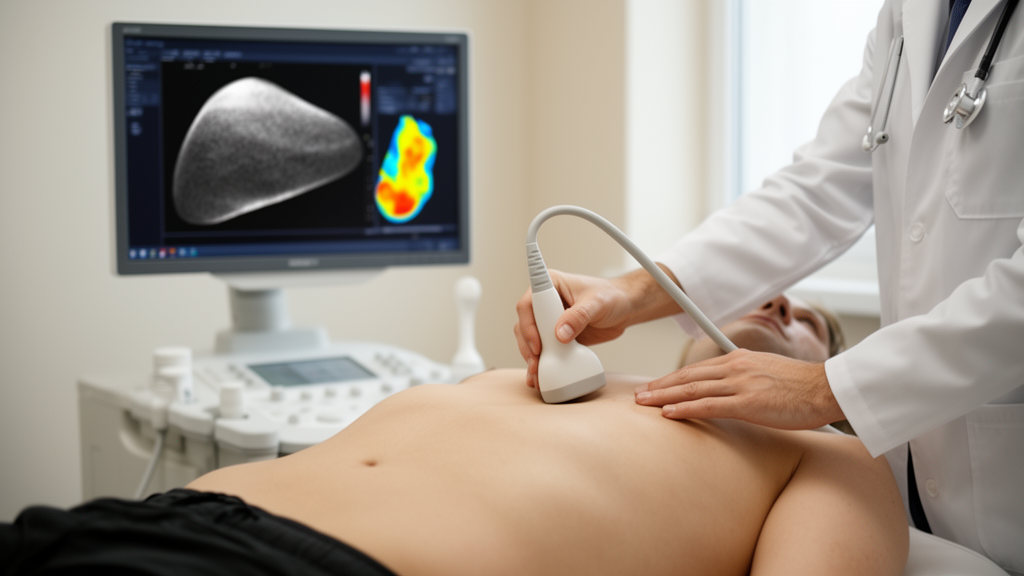
Direct-acting antiviral drugs have already rewritten the story of hepatitis C. What once required a year of interferon injections with brutal side effects and uncertain results is now a twelve-week course of oral tablets that clears the virus in more than 95 percent of treated patients. Yet a persistent question has shadowed this success: does eliminating the virus actually heal the scarred liver, or does it merely stop the damage from getting worse? A new systematic review and meta-analysis published in the Journal of Translational Medicine offers the most comprehensive answer yet, and its conclusion is cautiously encouraging.
The research team, led by Shreyasi Athalye and Vivek Kumar of the ICMR-National Institute for Research on Blood and Immune Disorders in Mumbai, together with colleagues from Mumbai medical institutions, pooled data from studies published between January 2011 and March 2026. The analysis, registered prospectively under PROSPERO ID CRD42025642274, searched PubMed, Google Scholar, Scopus and Science Direct for studies that measured liver fibrosis in hepatitis C patients before and after direct-acting antiviral therapy. To be included, studies had to use at least one validated assessment tool: vibration-controlled transient elastography, point shear wave elastography, supersonic shear imaging, magnetic resonance elastography, serum markers such as APRI or FIB-4, or liver biopsy.
The central metric of the analysis was the standardized mean change, a statistical measure that expresses how much a value shifts after treatment in units of the baseline variability. Pooled across studies using random-effects models in RStudio, liver stiffness measured by transient elastography fell substantially by the time patients reached sustained virologic response at twelve weeks, the milestone known as SVR12. The standardized mean change was 0.53, with a 95 percent confidence interval of 0.38 to 0.69 and a p-value below 0.0001. At SVR24, the estimate was 0.542, and at SVR48 it settled at 0.46, indicating that the improvement persists and remains statistically robust a full year after the virus has been cleared.
The effect was not confined to one measurement technology. When the authors analyzed studies using point shear wave elastography separately, the pooled standardized mean change reached 0.82, with a confidence interval of 0.22 to 1.42 and a p-value of 0.007. This larger effect size may reflect differences in the patient populations studied with this newer technique, but it reinforces the overall signal that the liver becomes measurably softer once viral replication stops. The authors emphasize that the direction of change is consistent across modalities, which strengthens confidence that the finding is not an artifact of any single device or protocol.
Beyond stiffness itself, the meta-analysis examined markers of hepatic synthetic function. Serum albumin, a protein produced exclusively by liver cells and a key indicator of the organ’s capacity, rose significantly after treatment, with a standardized mean change of negative 0.26 and a confidence interval of negative 0.45 to negative 0.07, reaching statistical significance at p equals 0.007. The negative sign reflects the direction of change in the pooled calculation, but the clinical meaning is clear: livers that had been struggling to produce albumin recovered measurable function. By contrast, haemoglobin showed no statistically significant change, with a standardized mean change of 0.13 and a p-value of 0.13, suggesting that the improvement is specific to hepatic rather than systemic hematologic parameters.
The authors were careful to test whether their results depended on a few influential studies or on populations contaminated by co-infections. Sensitivity analyses restricted to uniform hepatitis C mono-infected cohorts and to peer-reviewed publications only produced SVR12 estimates ranging from 0.49 to 0.53, essentially identical to the primary finding. This stability suggests that the liver stiffness reduction is a genuine biological effect of viral eradication rather than a statistical quirk of heterogeneous data. For the SVR24 timepoint, however, one study by Elkhayat and colleagues exerted disproportionate influence; removing it substantially lowered the pooled estimate to 0.359, with a confidence interval of 0.294 to 0.423. This sensitivity highlights how much individual studies can shape meta-analytic conclusions when heterogeneity is high.
And heterogeneity is indeed high. The I-squared statistic, which quantifies the proportion of variability attributable to differences between studies rather than sampling error, exceeded 99 percent for the SVR12 and SVR24 estimates and remained at 92.2 percent for SVR48. Such extreme heterogeneity is common in meta-analyses of observational fibrosis studies, where baseline disease stage, fibrosis measurement technique, follow-up duration and patient comorbidities vary widely. The authors used random-effects models precisely to accommodate this diversity, but readers should interpret the point estimates as summaries of a broad landscape rather than precise predictions for any individual patient.
The mechanistic interpretation offered by the authors is nuanced and important. The observed reductions in liver stiffness likely reflect two overlapping processes. First, the resolution of hepatic necroinflammation, the active inflammatory damage that inflamed livers exhibit, can soften the organ even when structural scarring remains unchanged. Second, in some patients, genuine structural fibrosis regression may occur, with scar tissue gradually remodeling and diminishing over months to years. Distinguishing between these two mechanisms requires histological confirmation through liver biopsy, which the authors explicitly call for in future studies. Until such paired biopsy data accumulate, the elastography improvements should be understood as a combination of inflammation resolution and probable but not yet proven structural repair.
The clinical implications are nonetheless substantial. For the millions of people worldwide living with chronic hepatitis C, many of whom have already developed significant fibrosis or cirrhosis by the time they are diagnosed, the finding suggests that antiviral cure offers more than viral eradication. It offers a measurable window of hepatic recovery within twelve to twenty-four weeks of achieving sustained virologic response. This supports the growing consensus that direct-acting antiviral therapy should be offered even to patients with advanced fibrosis, not only to prevent future complications but to actively reverse existing damage. It also validates the use of non-invasive elastography as a practical tool for monitoring fibrosis regression in routine clinical practice, sparing patients from repeated biopsies.
Looking forward, the authors argue that comprehensive evaluation of fibrosis-related outcomes is essential to inform future clinical strategies. As direct-acting antiviral therapy becomes the global standard and elimination targets approach, the question shifts from whether the virus can be cured to what happens to the liver afterward. This meta-analysis provides a rigorous, quantitative foundation for that next chapter, demonstrating that liver stiffness falls significantly and hepatic synthetic function improves within the first year after viral clearance. The residual uncertainties, particularly the need for histological confirmation of true fibrosis regression and the influence of individual studies on longer-term estimates, define the research agenda. But the central message is clear: curing hepatitis C does more than eliminate a virus. It gives damaged livers a genuine chance to heal.
Subject of Research: Beyond virological cure: A meta-analysis of liver stiffness reduction after DAA treatment for HCV
Article Title: Beyond virological cure: A meta-analysis of liver stiffness reduction after DAA treatment for HCV
Article References: Beyond virological cure: A meta-analysis of liver stiffness reduction after DAA treatment for HCV. (n.d.). https://doi.org/10.1186/s12967-026-08986-2
Image Credits: AI Generated
DOI: 10.1186/s12967-026-08986-2
Keywords: Beyond, virological, cure, meta-analysis, liver, stiffness, reduction, treatment, scientific research
Cite Scienmag News
Kristina Jarvis. (October 16, 2026). Liver stiffness falls measurably after hepatitis C cure, large meta-analysis finds. Scienmag. https://scienmag.com/liver-stiffness-falls-measurably-after-hepatitis-c-cure-large-meta-analysis-finds/
Kristina Jarvis. "Liver stiffness falls measurably after hepatitis C cure, large meta-analysis finds." Scienmag, 16 October 2026, https://scienmag.com/liver-stiffness-falls-measurably-after-hepatitis-c-cure-large-meta-analysis-finds/. Accessed 16 October 2026.
Kristina Jarvis. "Liver stiffness falls measurably after hepatitis C cure, large meta-analysis finds." Scienmag. October 16, 2026. https://scienmag.com/liver-stiffness-falls-measurably-after-hepatitis-c-cure-large-meta-analysis-finds/


