


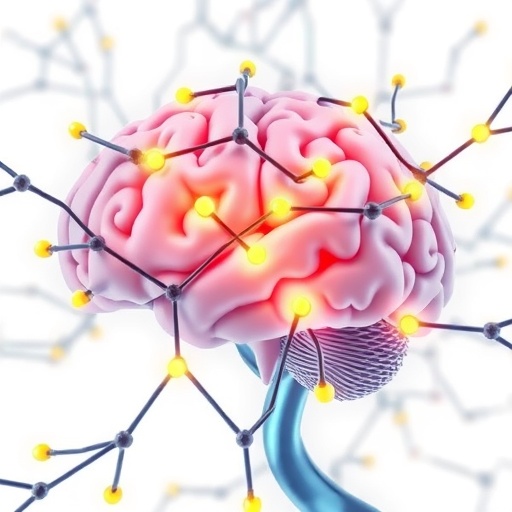
Lithium, a well-known treatment in psychiatry, is re-entering the Alzheimer’s debate with fresh mechanistic insight. In a new study published in Translational Psychiatry, researchers revisit whether lithium could help preserve cognition in Alzheimer’s disease—and, crucially, explore how its effects may depend on the brain’s cholinergic circuitry and large-scale connectivity.
The work centers on the cholinergic system, which relies on acetylcholine signaling and is strongly impaired in Alzheimer’s. Rather than treating lithium’s potential as a single-target phenomenon, the authors frame it as a systems-level intervention that could modulate signaling pathways tied to memory, attention, and network stability.
To understand how this might work, the study emphasizes brain connectivity—how distant regions communicate through functional networks. Alzheimer’s is characterized not only by local pathology but also by disruptions in network organization. The researchers investigate whether lithium’s cognitive potential aligns with patterns of connectivity that support resilient information processing.
The analysis also underscores the possibility that lithium’s benefits may involve restoring or compensating for cholinergic dysfunction. This could mean improving the functional environment in which cholinergic neurons operate, potentially boosting downstream communication across key cortical and subcortical regions.
Importantly, the authors do not present lithium as a universal cure, but as a candidate that may exert measurable cognitive effects only under specific neurobiological conditions. That distinction matters for designing future trials, including how participants are stratified by disease stage, cholinergic integrity, and connectivity profiles.
The study’s framing supports a more targeted approach to repurposed drugs in neurodegeneration. Instead of relying solely on clinical outcomes, it argues for embedding biomarkers and network readouts into therapeutic evaluation—turning “can it work?” into “for whom might it work, and why?”
With Alzheimer’s research increasingly focused on precision neuroscience, the findings add momentum to theories linking cholinergic signaling, neurochemical modulation, and network-level dysfunction. If validated in additional cohorts and experimental settings, the cholinergic-connectivity lens could guide better interpretation of lithium-related signals.
Overall, the paper positions lithium as a neurobiologically plausible candidate whose cognitive potential may be mediated by the cholinergic system and reflected in brain connectivity changes—offering a clearer map for future translational efforts.
Cite Scienmag News
Cassandra Pierce. (July 29, 2026). Lithium’s Cognitive Potential in Alzheimer’s Reassessed: Cholinergic System and Connectivity. Scienmag. https://scienmag.com/lithiums-cognitive-potential-in-alzheimers-reassessed-cholinergic-system-and-connectivity/
Cassandra Pierce. "Lithium’s Cognitive Potential in Alzheimer’s Reassessed: Cholinergic System and Connectivity." Scienmag, 29 July 2026, https://scienmag.com/lithiums-cognitive-potential-in-alzheimers-reassessed-cholinergic-system-and-connectivity/. Accessed 4 September 2026.
Cassandra Pierce. "Lithium’s Cognitive Potential in Alzheimer’s Reassessed: Cholinergic System and Connectivity." Scienmag. July 29, 2026. https://scienmag.com/lithiums-cognitive-potential-in-alzheimers-reassessed-cholinergic-system-and-connectivity/


