

Monday, October 26, 2026
Science
No Result
View All Result
  • Login
  • HOME
  • SCIENCE NEWS
  • CONTACT US
  • HOME
  • SCIENCE NEWS
  • CONTACT US
No Result
View All Result
Scienmag
No Result
View All Result
Home Science News Chemistry

Liquid membranes bend 100 times more easily than lipid membranes

October 26, 2026
in Chemistry
Bethany Barker
By Bethany Barker Scienmag Editorial Profile - Catalysis
Reading Time: 2 mins read
0
Liquid membranes bend 100 times more easily than lipid membranes

Liquid membranes bend 100 times more easily than lipid membranes

65
SHARES
587
VIEWS
Share on FacebookShare on Twitter
ADVERTISEMENT

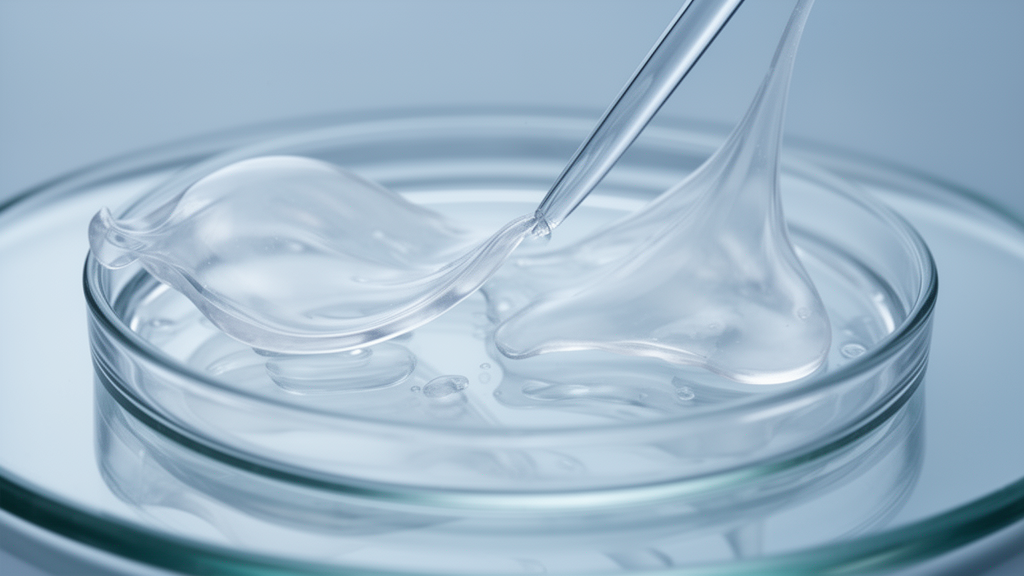
A membrane made entirely from liquid bends about 100 times more easily than a conventional lipid membrane, according to an experimental study led by the University of Osaka. Researchers characterized the spontaneous fluctuations and bending response of coacervate vesicles, hollow spherical structures whose boundaries consist of a liquid-like coacervate layer sandwiched between neutral polymer chains. Their measurements indicate that the membrane’s resistance to bending comes primarily from entropy, unlike the energy-driven restoring forces that govern lipid membranes.

The study examined a physical regime intermediate between ordinary liquid interfaces and elastic biological membranes. Coacervates form when oppositely charged molecules associate in water; they have attracted attention as possible models for membraneless compartments inside cells and for “protocells,” hypothetical primitive cells that may have preceded modern ones. Modern cells, by contrast, are enclosed by lipid membranes whose behavior is governed by bending elasticity. A coacervate vesicle creates a membrane-like boundary while retaining a liquid-like interior, allowing researchers to examine how a membrane behaves when its constituent material is itself liquid-like.

To create the vesicles, the team mixed two oppositely charged block copolymers in water. Each polymer consisted of a charged segment and a neutral segment, and the oppositely charged portions spontaneously assembled into hollow spheres. In the resulting structures, a coacervate layer was sandwiched between layers of neutral polymer chains. This arrangement produced a membrane-like boundary without the conventional lipid bilayer found around living cells. The researchers used neutron spin echo spectroscopy to track spontaneous structural fluctuations on nanometer and nanosecond scales, directly probing the dynamics associated with the vesicles’ bending behavior.

The technique revealed that the liquid membranes flexed much more readily than lipid membranes. The difference was not limited to the magnitude of deformation: the physical origin of the restoring force also differed. In the coacervate vesicles, the tendency to recover after bending deformation was attributed primarily to entropy. By contrast, lipid membranes undergo enthalpy-driven restoring processes. The study therefore identifies a distinct bending regime in which a liquid-like material forms a closed, membrane-shaped structure and responds mechanically differently from a lipid bilayer.

The findings are a controlled physical result, not a measurement of living-cell membranes or a demonstration of protocell function. The experiments used vesicles assembled from synthetic block copolymers, and the results do not establish that biological coacervates or hypothetical primitive cells share the same mechanical properties. The researchers identified possible relevance for understanding how liquid-based compartments, including those proposed as protocells, behave when they take on membrane-like shapes. More broadly, the observations provide a physical framework for studying the bending dynamics of a membrane composed of liquid rather than a conventional lipid bilayer, while remaining limited to the experimental vesicle system investigated.

Subject of Research: Experimental characterization of entropy-driven bending in liquid coacervate membranes

Article Title: Bending a liquid: Liquid membranes flex 100 times more easily than cell membranes

Article References: Bending a liquid: Liquid membranes flex 100 times more easily than cell membranes. Original publication (Bibliographic details unavailable.)

Image Credits: AI Generated

DOI: Not provided

Keywords: coacervate vesicles, liquid membranes, bending elasticity, entropy, lipid bilayers, block copolymers, neutron spin echo spectroscopy, protocells, membrane dynamics, Bending, liquid, membranes

Cite Scienmag News

Bethany Barker. (October 26, 2026). Liquid membranes bend 100 times more easily than lipid membranes. Scienmag. https://scienmag.com/liquid-membranes-bend-100-times-more-easily-than-lipid-membranes/

Bethany Barker. "Liquid membranes bend 100 times more easily than lipid membranes." Scienmag, 26 October 2026, https://scienmag.com/liquid-membranes-bend-100-times-more-easily-than-lipid-membranes/. Accessed 26 October 2026.

Bethany Barker. "Liquid membranes bend 100 times more easily than lipid membranes." Scienmag. October 26, 2026. https://scienmag.com/liquid-membranes-bend-100-times-more-easily-than-lipid-membranes/


Tags: bendingbending elasticitybiological membrane mimeticsblock copolymerscoacervate vesiclescomparison of lipid and liquid membranesentropyentropy-driven membrane resistancelipid bilayersliquidliquid membranesliquid-liquid interfacesmembrane bending elasticitymembrane dynamicsmembraneless cellular compartmentsmembranesneutron spin echo spectroscopyphysical properties of coacervatespolymer-based vesicle formationprotocell modelsprotocellsspontaneous membrane fluctuations
Share26Tweet16
Previous Post

Lightweight pose model recognizes fitness actions and counts repetitions accurately

Next Post

UK survey links cognitive distortions, not emotion dysregulation, to IED violence

Related Posts

Stanford team observes first real-time quantum jump in sound
Chemistry

Stanford team observes first real-time quantum jump in sound

October 26, 2026
Layered magnetic crystal converts microwaves into optical signals
Chemistry

Layered magnetic crystal converts microwaves into optical signals

October 26, 2026
Sandia-Led AI Project Targets Uncertainty in Turbulent Flow Models
Chemistry

Sandia-Led AI Project Targets Uncertainty in Turbulent Flow Models

October 26, 2026
Quasi-BIC design improves quantum-well photodetection for machine vision
Chemistry

Quasi-BIC design improves quantum-well photodetection for machine vision

October 26, 2026
Pilot system co-produces hydrogen and fresh water from seawater
Chemistry

Pilot system co-produces hydrogen and fresh water from seawater

October 26, 2026
Dual-View Microscope Records Neuronal Activity in 3D at 100 Hz
Chemistry

Dual-View Microscope Records Neuronal Activity in 3D at 100 Hz

October 26, 2026
Next Post
UK survey links cognitive distortions, not emotion dysregulation, to IED violence

UK survey links cognitive distortions, not emotion dysregulation, to IED violence

  • Mothers who receive childcare support from maternal grandparents show more optimized

    Mothers who receive childcare support from maternal grandparents show more parental warmth, finds NTU Singapore study

    27656 shares
    Share 11059 Tweet 6912
  • University of Seville Breaks 120-Year-Old Mystery, Revises a Key Einstein Concept

    1061 shares
    Share 424 Tweet 265
  • Bee body mass, pathogens and local climate influence heat tolerance

    682 shares
    Share 273 Tweet 171
  • Researchers record first-ever images and data of a shark experiencing a boat strike

    546 shares
    Share 218 Tweet 137
  • Groundbreaking Clinical Trial Reveals Lubiprostone Enhances Kidney Function

    531 shares
    Share 212 Tweet 133
Science

Embark on a thrilling journey of discovery with Scienmag.com—your ultimate source for cutting-edge breakthroughs. Immerse yourself in a world where curiosity knows no limits and tomorrow’s possibilities become today’s reality!

RECENT NEWS

  • Cold-triggered muscle metabolism promotes longevity in worms
  • Rhinovirus Genotypes Differ in Severe Childhood Pneumonia Patterns
  • Half-matched transplants show high survival in severe aplastic anemia
  • UK survey links cognitive distortions, not emotion dysregulation, to IED violence

Categories

  • Agriculture
  • Anthropology
  • Archaeology
  • Athmospheric
  • Biology
  • Biotechnology
  • Blog
  • Bussines
  • Cancer
  • Chemistry
  • Climate
  • Earth Science
  • Editorial Policy
  • Marine
  • Mathematics
  • Medicine
  • Pediatry
  • Policy
  • Psychology & Psychiatry
  • Science Education
  • Science News
  • Social Science
  • Space
  • Technology and Engineering

Subscribe to Blog via Email

Enter your email address to subscribe to this blog and receive notifications of new posts by email.

Join 5,151 other subscribers

© 2025 Scienmag - Science Magazine

Welcome Back!

Login to your account below

Forgotten Password?

Retrieve your password

Please enter your username or email address to reset your password.

Log In
No Result
View All Result
  • HOME
  • SCIENCE NEWS
  • CONTACT US

© 2025 Scienmag - Science Magazine

Discover more from Science

Subscribe now to keep reading and get access to the full archive.

Continue reading