


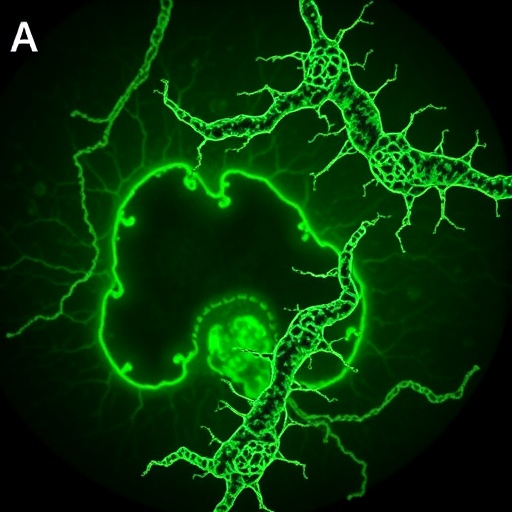
A new study in mice has identified a potentially important chain of events linking lipid accumulation in immune cells of the retina to progressive vision loss. The research, published in Nature Communications, reports that CD36—a protein involved in the uptake of fatty acids and other lipids—drives the buildup of fat-like molecules inside reactive microglia. These altered microglia then activate the NLRP3 inflammasome, a powerful inflammatory signaling system, triggering production of interleukin-1 beta, or IL-1β. According to the study, this inflammatory cascade contributes to retinal degeneration in mice and may help explain how chronic immune stress damages the light-sensitive tissue at the back of the eye.
The retina is often described as an extension of the central nervous system, and its delicate architecture depends on a tightly controlled relationship between neurons, blood vessels, and resident immune cells. Microglia are the retina’s principal immune sentinels. Under normal conditions, they monitor the tissue, remove cellular debris, and respond rapidly to injury or infection. Their activation can be protective in the short term, but prolonged or excessive activation may turn these cells into drivers of disease. The new findings suggest that the problem is not simply that microglia become reactive; rather, their metabolic state may determine whether they protect retinal neurons or intensify the damage.
At the center of the mechanism is CD36, a membrane receptor that helps cells recognize and internalize long-chain fatty acids, oxidized lipids, and other lipid-rich molecules. In a stressed retinal environment, increased CD36 activity can cause microglia to absorb more lipid material than they can safely process. The resulting intracellular accumulation may disrupt energy metabolism, organelle function, and cellular waste disposal. Instead of remaining responsive but controlled, the lipid-loaded microglia develop a more inflammatory profile. This observation places cellular metabolism alongside immune signaling as a key factor in retinal disease, highlighting how the handling of fats can influence the fate of neighboring neurons.
The study connects this metabolic shift to the NLRP3 inflammasome, a multiprotein complex that functions as an alarm system inside immune cells. NLRP3 can be activated by a broad range of danger signals, including oxidative stress, damaged organelles, ionic imbalance, and abnormal lipid deposits. Once assembled, the inflammasome activates inflammatory enzymes, particularly caspase-1. This enzyme processes inactive precursor molecules into mature cytokines, including IL-1β. The release of IL-1β amplifies local inflammation, changes the behavior of nearby cells, and can create a feedback loop in which tissue injury stimulates more immune activation, leading to further injury.
In the retinal context described by the researchers, CD36-mediated lipid accumulation appears to act upstream of this inflammatory machinery. Reactive microglia take up excess lipid through CD36, and the resulting cellular stress activates NLRP3. The inflammasome then increases IL-1β signaling, creating an inflammatory environment that is hostile to retinal cells. Photoreceptors, which convert light into electrical signals, are particularly vulnerable because they have extraordinarily high energy demands and rely on carefully balanced lipid metabolism. Damage to these cells can compromise vision, while injury to supporting retinal neurons and pigment epithelial cells may accelerate the broader degenerative process.
The findings also help illuminate why inflammation in retinal disorders can be difficult to control. Inflammation is not an isolated event that begins and ends with the arrival of immune cells. Instead, it can become a self-reinforcing network involving lipids, oxidative stress, cytokines, and cellular debris. Once microglia enter a persistently reactive state, they may release inflammatory mediators and alter the local environment in ways that encourage further lipid accumulation and neuronal stress. The CD36–NLRP3–IL-1β pathway therefore represents more than a single molecular link; it is a possible biological circuit connecting metabolic overload with chronic inflammation and tissue degeneration.
Because the work was conducted in mice, the results do not yet establish that the same pathway causes human retinal disease. Mouse and human retinas share important biological features, but they also differ in anatomy, immune regulation, metabolism, and disease susceptibility. Human retinal degeneration is not one condition but a group of disorders with diverse genetic and environmental causes. Age-related degeneration, inherited retinal diseases, diabetic retinal injury, and inflammatory eye disorders may involve overlapping mechanisms without being identical. Further studies will be needed to determine whether CD36 activity, lipid-loaded microglia, NLRP3 signaling, and IL-1β are consistently elevated in patients and whether their relationship changes across different stages of disease.
Even with these limitations, the research suggests several possible therapeutic directions. Blocking CD36 could, in principle, reduce the amount of lipid material entering microglia. Inhibiting NLRP3 might prevent the inflammatory complex from assembling, while targeting IL-1β could dampen one of the major cytokine signals released downstream. Each strategy carries challenges. CD36 participates in normal lipid handling and immune surveillance, so completely eliminating its activity could interfere with essential cellular functions. NLRP3 and IL-1β also help defend tissues against genuine threats. Any future treatment would need to suppress harmful, persistent inflammation without disabling the protective responses required to maintain retinal health.
The study’s broader significance lies in its emphasis on the immune cell as a metabolic sensor. Microglia do not merely react to retinal damage after it occurs; they interpret changes in their environment, including the presence of abnormal lipids, and translate those changes into inflammatory signals. By identifying CD36-mediated lipid accumulation as a trigger for the NLRP3-IL-1β pathway, the researchers provide a framework for understanding how metabolic imbalance may become chronic inflammation and, ultimately, neuronal loss. The work does not offer an immediate cure for retinal degeneration, but it adds a precise molecular target to the search for treatments that could preserve vision by interrupting inflammation before it becomes irreversible.
Cite Scienmag News
Ophelia Keating. (August 15, 2026). Lipid-loaded reactive microglia drive retinal degeneration in mice through CD36-NLRP3-IL-1β signaling. Scienmag. https://scienmag.com/lipid-loaded-reactive-microglia-drive-retinal-degeneration-in-mice-through-cd36-nlrp3-il-1%ce%b2-signaling/
Ophelia Keating. "Lipid-loaded reactive microglia drive retinal degeneration in mice through CD36-NLRP3-IL-1β signaling." Scienmag, 15 August 2026, https://scienmag.com/lipid-loaded-reactive-microglia-drive-retinal-degeneration-in-mice-through-cd36-nlrp3-il-1%ce%b2-signaling/. Accessed 3 September 2026.
Ophelia Keating. "Lipid-loaded reactive microglia drive retinal degeneration in mice through CD36-NLRP3-IL-1β signaling." Scienmag. August 15, 2026. https://scienmag.com/lipid-loaded-reactive-microglia-drive-retinal-degeneration-in-mice-through-cd36-nlrp3-il-1%ce%b2-signaling/


