


Every time a streaming service suggests a song you end up loving, somewhere in the background an algorithm has made a judgment call about what kind of music that track represents. Genre classification is one of the foundational tasks of music information retrieval, the field that teaches computers to make sense of audio, and it underpins everything from playlist curation to recommendation engines. The trouble is that the deep learning models responsible for these judgments have grown enormous, demanding server farms and energy budgets that put them out of reach for anything running on a phone, an embedded device, or a modest local server. A new study from researchers at Shahid Chamran University of Ahvaz in Iran argues that this arms race toward bigger networks may be unnecessary, and their evidence is striking: a deliberately compact convolutional neural network that sorts music genres with 96.2 percent accuracy while keeping computational demands low.
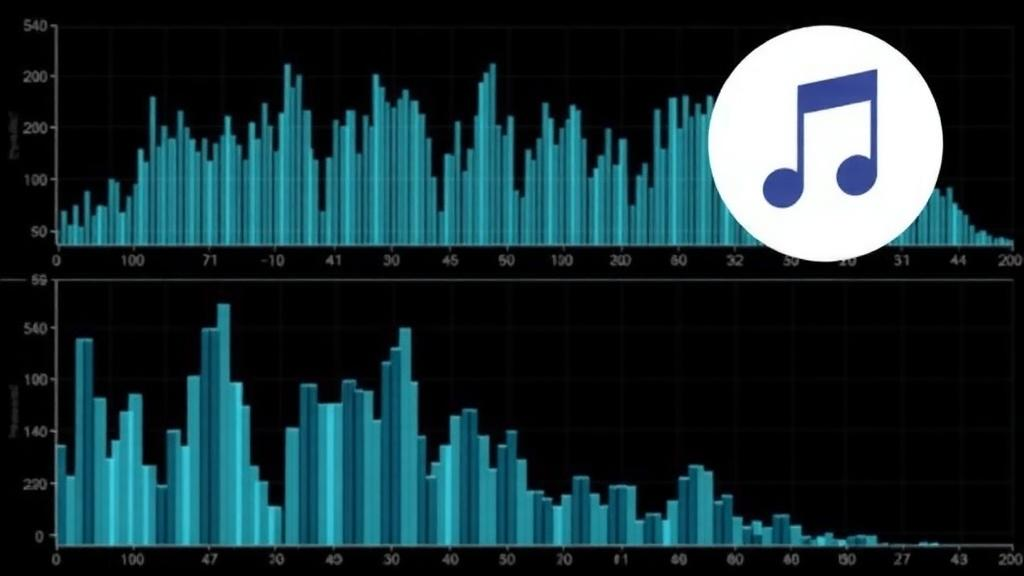
The work, published in Multimedia Tools and Applications by Omid Adibfar, Seyed Enayatallah Alavi, and Marjan Naderan Tahan, describes a framework that turns raw audio into images and then lets a streamlined vision-style network read those images. The central insight is that sound, when decomposed into its frequency components over time, becomes a visual object. A spectrogram maps the intensity of every frequency band in a recording onto a two-dimensional picture, with time running along one axis and frequency along the other. Percussive hits appear as vertical streaks, sustained notes as horizontal bands, and the overall texture of a blues track looks measurably different from that of a metal riff. Once audio is rendered this way, the enormous toolkit of image recognition, including convolutional neural networks originally designed for photographs, can be brought to bear on a problem that once required hand-engineered acoustic features.
The choice of architecture is where the study makes its most distinctive contribution. Rather than building a bespoke network from scratch or deploying one of the heavyweight models that dominate leaderboards, the team adapted the design philosophy of EfficientNetB0, the smallest member of a family of architectures engineered by Google researchers to squeeze maximum accuracy out of minimal computation. EfficientNet’s trick is compound scaling, a principled way of balancing network depth, width, and input resolution so that no single dimension is inflated at the expense of the others. The resulting model achieves strong performance with a fraction of the parameters of conventional architectures, and it was this efficiency-first template that the researchers used as the inspiration for their compact classifier.
Before any training could happen, however, the researchers confronted a problem familiar to anyone working in music information retrieval: data scarcity. The benchmark dataset for this task, GTZAN, contains 30-second audio clips spanning ten genres, from blues and classical to hip-hop, jazz, and rock. That is a small corpus by the standards of modern deep learning, and models trained naively on it tend to overfit, memorizing the quirks of individual recordings rather than learning the general statistical signatures of a genre. The team’s solution was elegantly simple. They chopped each 30-second track into ten shorter segments of 3 seconds each, multiplying the effective size of the training set tenfold. The segmentation does more than pad out the dataset; it also forces the network to focus on local time-frequency patterns, the short bursts of texture and rhythm that genuinely distinguish genres, rather than leaning on long-range structure that may not generalize.
Each 3-second segment was then converted into a spectrogram image and fed to the network as its input. This preprocessing pipeline matters more than it might appear. Earlier generations of genre classifiers relied on features such as mel-frequency cepstral coefficients, timbre descriptors, and rhythm statistics, which were extracted by hand and then passed to classical machine learning methods like support vector machines or k-nearest-neighbor classifiers. Those approaches, which appear throughout the study’s reference list as the field’s earlier state of the art, capped out at accuracies well below what deep networks now achieve, partly because human-designed features capture only what researchers thought to measure. Spectrograms, by contrast, preserve the raw structure of the sound and allow the network to discover its own discriminative features during training.
The headline result is a classification accuracy of 96.2 percent on the GTZAN benchmark, a figure the authors report as significantly outperforming several state-of-the-art methods while maintaining lower computational complexity. That combination is the real story. In machine learning benchmarks, it is common to see accuracy climb as models balloon in size, but each increment of accuracy purchased with parameters and floating-point operations comes at a cost in deployment flexibility. A model that matches or beats larger competitors while remaining lightweight changes the calculus entirely. It can plausibly run on hardware where cloud connectivity is unreliable, where latency matters, or where the energy budget of a data center is simply not an option.
The practical implications reach well beyond academic benchmarks. Streaming platforms process billions of plays and depend on fast, accurate genre tagging to organize catalogs, power recommendations, and route new uploads into the right editorial pipelines. Music libraries, radio archives, and independent distribution platforms face the same need with far smaller budgets. A compact model that runs cheaply could bring automated genre classification to applications that have historically been priced out of state-of-the-art performance, from a musician’s laptop tool that tags demo recordings to an embedded system that organizes a broadcast archive in real time. The authors explicitly frame their work as a robust solution for practical music analysis applications, and the efficiency numbers are what make that framing credible.
The study also speaks to a broader and increasingly urgent conversation in machine learning research about the true cost of intelligence. As large models have captured public attention, a counter-current has emphasized efficiency: distillation, pruning, quantization, and clever architectural design that extracts more performance per parameter. EfficientNet itself became emblematic of this movement, and its influence here shows how those design principles migrate across domains, from recognizing objects in photographs to parsing the texture of a jazz solo. The Iranian team’s result suggests that for well-defined perceptual tasks with modest data, thoughtful preprocessing and an optimized compact architecture can go a long way, and that the gap between small and large models can be closed or even reversed when the pipeline is designed carefully.
There are, of course, caveats worth keeping in mind. GTZAN, despite its two-decade tenure as the field’s standard benchmark, is small and has known limitations, including a restricted set of genres and recordings that have been scrutinized for labeling inconsistencies. High accuracy on a ten-class benchmark does not automatically translate to the messier reality of hundreds of overlapping genres, hybrid styles, and non-Western musical traditions. The authors’ own citation list, which includes work on robust evaluation across global and regional music datasets, reflects an awareness that genre is as much a cultural construct as an acoustic one. Still, as a proof of concept, the study demonstrates that the combination of effective preprocessing and lightweight design can deliver state-of-the-art results, and it offers a template that other researchers can extend to larger and more diverse catalogs.
What makes the result resonate beyond the technical community is the picture it paints of where applied artificial intelligence is heading. The most consequential systems of the coming years may not be the largest ones but the ones small enough, cheap enough, and fast enough to live inside the devices and workflows where music is actually made, stored, and heard. A network that listens to three seconds of sound, sees its frequency anatomy as an image, and names its genre with better than 96 percent reliability, all on modest hardware, is a small piece of engineering with an outsized implication: that in the contest between brute force and clever design, clever design is still very much in the running.
Subject of Research: Lightweight deep learning for automatic music genre classification from spectrogram images
Article Title: Music genre classification using spectrogram images and a lightweight efficientnet-based CNN
Article References: Adibfar, O., Alavi, S. E., & Tahan, M. N. (2026). Music genre classification using spectrogram images and a lightweight efficientnet-based CNN. Multimedia Tools and Applications, 85(9), Article 758. https://doi.org/10.1007/s11042-026-21923-1
Image Credits: AI Generated
DOI: 10.1007/s11042-026-21923-1
Keywords: music genre classification, music information retrieval, spectrograms, EfficientNetB0, lightweight CNN, deep learning, GTZAN dataset, convolutional neural networks, audio classification, recommendation systems, machine learning, computational efficiency
Cite Scienmag News
Blake Davidson. (October 3, 2026). Lightweight AI Reads Music Spectrograms to Sort Genres With 96% Accuracy. Scienmag. https://scienmag.com/lightweight-ai-reads-music-spectrograms-to-sort-genres-with-96-accuracy/
Blake Davidson. "Lightweight AI Reads Music Spectrograms to Sort Genres With 96% Accuracy." Scienmag, 3 October 2026, https://scienmag.com/lightweight-ai-reads-music-spectrograms-to-sort-genres-with-96-accuracy/. Accessed 4 October 2026.
Blake Davidson. "Lightweight AI Reads Music Spectrograms to Sort Genres With 96% Accuracy." Scienmag. October 3, 2026. https://scienmag.com/lightweight-ai-reads-music-spectrograms-to-sort-genres-with-96-accuracy/


