


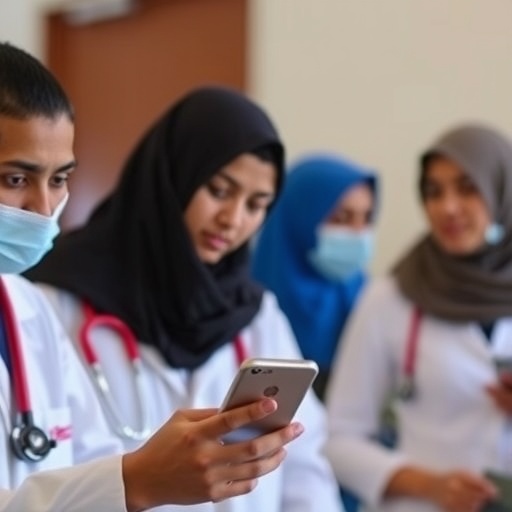
The COVID-19 pandemic has profoundly reshaped the landscape of education, pushing academic institutions across the globe to adopt digital tools for teaching and learning. One notable application of technology during this period has been the rise of messaging platforms as educational tools. In Libya, medical students turned to Telegram, a messaging app recognized for its versatility and user-friendly interface, to facilitate learning amid challenging pandemic-related restrictions. This shift toward e-learning highlights not only the adaptability of students and educators but also the potential of digital platforms to serve traditional academic functions in unprecedented times.
The study conducted by Awad, Amer, and Abbas meticulously investigates the perceptions of medical students in Libya regarding the use of Telegram as an e-learning medium during the COVID-19 crisis. As educational institutions faced disruptions, the need for immediate transition to online education became imperative. The research underscores how this experience has shaped students’ opinions, experiences, and the overall efficacy of utilizing Telegram as an educational tool. It reveals significant insights into both the benefits and challenges associated with this mode of learning.
The findings from this research provide a nuanced understanding of how readily students adapted to e-learning protocols using Telegram. One of the primary advantages identified in the study is the ease of communication that Telegram facilitates. Unlike traditional learning platforms that can be cumbersome, Telegram allows for instant messaging, voice calls, and video sharing, making it an appealing option for students needing quick feedback and communication with peers and instructors. Such immediacy can foster a more engaged learning environment, even when face-to-face interactions are not feasible.
Furthermore, the research highlights the ability of Telegram to support group conversations, enabling collaborative learning among students. In academic settings, interactive discussions are essential for deepening understanding and enhancing knowledge retention. The use of Telegram has allowed students to create study groups that transcend physical barriers, promoting a sense of community and collective inquiry. This sentiment is particularly important during the pandemic, where feelings of isolation could impede academic motivation and performance.
However, while Telegram’s features present numerous benefits, the study does not shy away from addressing the limitations students encountered. One significant concern is the distraction that ubiquitous messaging can introduce. Notifications, group chats, and the allure of social media can detract from focused study time, leading to an overarching challenge of maintaining academic discipline in a virtual environment. Students reported mixed feelings about balancing their personal and academic lives within the same platform, which occasionally blurred the boundaries of their engagement.
Moreover, the research sheds light on the digital literacy gaps that may affect students’ experiences with Telegram. The differences in comfort levels with technology can impact how effectively students utilize e-learning tools. Some students expressed frustration over limited technological skills that hindered their ability to navigate the platform fully. This highlights an essential factor in the success of any digital tool in education: ensuring that all students have the requisite skills to engage effectively with technology.
In terms of assessment, the study shows that students appreciated the flexibility that Telegram provided regarding learning materials and resources. In the context of sudden transitions due to the COVID-19 pandemic, the ability to share educational content seamlessly through Telegram proved invaluable. Students benefited from the quick dissemination of lecture notes, supplementary materials, and recordings that might not have otherwise reached them in a timely manner.
Additionally, the research emphasizes the role of instructors in facilitating effective e-learning experiences through Telegram. Instructors played a crucial part in guiding discussions, clarifying concepts, and providing constructive feedback. Their involvement helped bridge the gap left by the absence of traditional classroom dynamics and fostered a culture of accountability. This teacher-student interaction helped students feel more connected and engaged in their studies, despite the physical separation imposed by the pandemic.
Interestingly, the perceptions of Telegram as a tool for e-learning varied across demographics. The study notes differences in responses based on gender, age, and year of study, indicating that experiences with the platform were not uniform. This variation underscores the need for tailored approaches when integrating technology into educational practices, as diverse student needs and preferences must be acknowledged to ensure effectiveness.
As the world transitions to a post-pandemic reality, the findings from this research are particularly timely. They not only provide insights specific to the situation in Libya but also have broader implications for e-learning practices globally. The lessons learned regarding the use of Telegram and similar platforms can inform future instructional strategies, ensuring that educational practices resonate with the needs of modern learners.
The study concludes by advocating for the inclusion of technology training in medical curricula, emphasizing that fostering digital competency among students is essential. Preparing future healthcare professionals not only involves traditional medical training but also equipping them with the skills required to navigate and leverage emerging technologies in their professional lives.
As the landscape of education continues to evolve, the experiences of medical students in Libya serve as a potent reminder of the adaptability required in the face of adversity. The effective use of digital platforms such as Telegram highlights the possibilities that exist when traditional boundaries are challenged. Through understanding and addressing the multifaceted nature of e-learning initiatives, educators can create more inclusive and responsive educational environments.
In summary, this research comprehensively highlights the imperative role messaging applications like Telegram can play in facilitating learning during unprecedented circumstances. The findings from Awad, Amer, and Abbas’s study compel educators, administrators, and policymakers to reconsider the traditional boundaries of learning environments and embrace digital innovation as a cornerstone of future education.
Awad, H.R., Amer, A.H. & Abbas, G. Medical students’ perceptions of Telegram messenger as an e-learning tool during the COVID-19 pandemic in Libya.
Discov Educ 4, 263 (2025). https://doi.org/10.1007/s44217-025-00717-x
Cite Scienmag News
Courtney Benton. (September 2, 2025). Libyan Medical Students Embrace Telegram for E-Learning. Scienmag. https://scienmag.com/libyan-medical-students-embrace-telegram-for-e-learning/
Courtney Benton. "Libyan Medical Students Embrace Telegram for E-Learning." Scienmag, 2 September 2025, https://scienmag.com/libyan-medical-students-embrace-telegram-for-e-learning/. Accessed 3 September 2026.
Courtney Benton. "Libyan Medical Students Embrace Telegram for E-Learning." Scienmag. September 2, 2025. https://scienmag.com/libyan-medical-students-embrace-telegram-for-e-learning/


