


A group of leading academics are calling for the UN Sustainable Development Goals to be extended past their 2030 target date and updated with consideration for the impact of artificial intelligence (AI), and with more input from communities affected by the goals, among other recommendations.
Halfway to the targeted completion date of 2030, many of the UN’s ambitious 17 Sustainable Development Goals (SDGs) are off track or progressing too slowly, due to the slowing of the global economy by COVID and international conflicts. In the run-up to the Summit of the Future in New York next September, the authors are recommending the goals be extended to 2050 and retooled with an ambitious timeline and greater clarity about specific goals — such as those pertaining to climate and “planetary health”.
Writing in Nature, the authors recommend the UN’s 180 member states further extend many of the goals’ individual targets to as far as 2050. They also recommend action to reworking individual targets for each goal. The paper was led by Francesco Fuso-Nerini, director of the Climate Action Center at KTH Royal Institute of Technology and honorary researcher at the University of Oxford; together with Mariana Mazzucato, University College London; Johan Rockström, Potsdam Institute for Climate Impact Research; Harro van Asselt, University of Cambridge; Jim W. Hall, University of Oxford; Stelvia Matos, University of Surrey; Åsa Persson, Stockholm Environmental Institute; Benjamin Sovacool, Boston University; Ricardo Vinuesa, KTH Royal Institute of Technology; and Jeffrey Sachs, Columbia University.
Enacted in 2015, the 17 Sustainable Development Goals cover such global challenges as hunger, poverty, health, climate action, education, gender equality, peace and biodiversity. Each of the goals is comprised of specific targets.
Fuso-Nerini says some goals and regions have progressed faster than others, but most of the world is lagging behind – particularly on climate and biodiversity targets. Furthermore, many targets are too vague and difficult to measure. Another key challenge is to prevent countries from progressing at the expense of others, he says.
The paper refers to an urgent need for updated pathways and milestones toward reaching all SDGs including integrating net-zero greenhouse gases emissions, as well as strengthening global governance of the transition through existing frameworks agreed upon by the members of the UN. The authors also say adapting the goals to be relevant to 2050 will require more inclusive consultations with scientists, indigenous populations, marginalized communities and the private sector.
As steps toward strengthening the goals, they recommend measures such as framing goals as missions with clear targets, and reforming global finance architecture to enable more public investment in the reaching the goals.
Planetary health however occupies a central issue in the framework of the SDGs, he says, given that the world has already transgressed six of nine planetary boundaries that regulate the stability and functioning of Earth.
“Achieving the social and economic goals can’t be done at the expense of planet,” he says. “What keeps getting left behind are the climate and biodiversity goals, so the base layer for achieving the SDGs is a healthy planet that can support the achievement of all social and economic goals.”

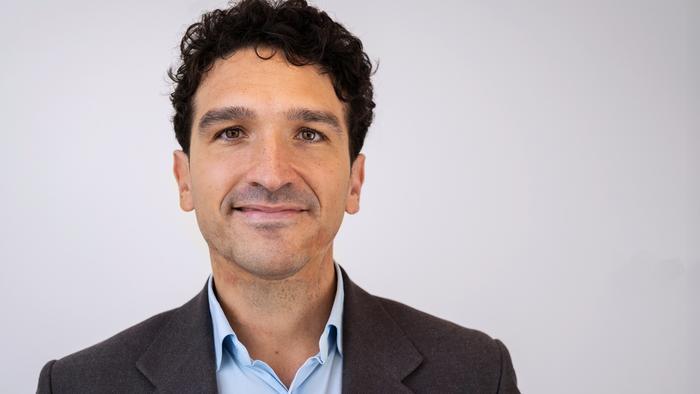
Credit: KTH
A group of leading academics are calling for the UN Sustainable Development Goals to be extended past their 2030 target date and updated with consideration for the impact of artificial intelligence (AI), and with more input from communities affected by the goals, among other recommendations.
Halfway to the targeted completion date of 2030, many of the UN’s ambitious 17 Sustainable Development Goals (SDGs) are off track or progressing too slowly, due to the slowing of the global economy by COVID and international conflicts. In the run-up to the Summit of the Future in New York next September, the authors are recommending the goals be extended to 2050 and retooled with an ambitious timeline and greater clarity about specific goals — such as those pertaining to climate and “planetary health”.
Writing in Nature, the authors recommend the UN’s 180 member states further extend many of the goals’ individual targets to as far as 2050. They also recommend action to reworking individual targets for each goal. The paper was led by Francesco Fuso-Nerini, director of the Climate Action Center at KTH Royal Institute of Technology and honorary researcher at the University of Oxford; together with Mariana Mazzucato, University College London; Johan Rockström, Potsdam Institute for Climate Impact Research; Harro van Asselt, University of Cambridge; Jim W. Hall, University of Oxford; Stelvia Matos, University of Surrey; Åsa Persson, Stockholm Environmental Institute; Benjamin Sovacool, Boston University; Ricardo Vinuesa, KTH Royal Institute of Technology; and Jeffrey Sachs, Columbia University.
Enacted in 2015, the 17 Sustainable Development Goals cover such global challenges as hunger, poverty, health, climate action, education, gender equality, peace and biodiversity. Each of the goals is comprised of specific targets.
Fuso-Nerini says some goals and regions have progressed faster than others, but most of the world is lagging behind – particularly on climate and biodiversity targets. Furthermore, many targets are too vague and difficult to measure. Another key challenge is to prevent countries from progressing at the expense of others, he says.
The paper refers to an urgent need for updated pathways and milestones toward reaching all SDGs including integrating net-zero greenhouse gases emissions, as well as strengthening global governance of the transition through existing frameworks agreed upon by the members of the UN. The authors also say adapting the goals to be relevant to 2050 will require more inclusive consultations with scientists, indigenous populations, marginalized communities and the private sector.
As steps toward strengthening the goals, they recommend measures such as framing goals as missions with clear targets, and reforming global finance architecture to enable more public investment in the reaching the goals.
Planetary health however occupies a central issue in the framework of the SDGs, he says, given that the world has already transgressed six of nine planetary boundaries that regulate the stability and functioning of Earth.
“Achieving the social and economic goals can’t be done at the expense of planet,” he says. “What keeps getting left behind are the climate and biodiversity goals, so the base layer for achieving the SDGs is a healthy planet that can support the achievement of all social and economic goals.”
Journal
Nature
Method of Research
Systematic review
Subject of Research
Not applicable
Article Title
Extending the Sustainable Development Goals to 2050 – a roadmap
Article Publication Date
17-Jun-2024
Cite Scienmag News
Courtney Benton. (June 17, 2024). Leading academics call for extending and reframing Sustainable Development Goals. Scienmag. https://scienmag.com/leading-academics-call-for-extending-and-reframing-sustainable-development-goals/
Courtney Benton. "Leading academics call for extending and reframing Sustainable Development Goals." Scienmag, 17 June 2024, https://scienmag.com/leading-academics-call-for-extending-and-reframing-sustainable-development-goals/. Accessed 4 September 2026.
Courtney Benton. "Leading academics call for extending and reframing Sustainable Development Goals." Scienmag. June 17, 2024. https://scienmag.com/leading-academics-call-for-extending-and-reframing-sustainable-development-goals/

