


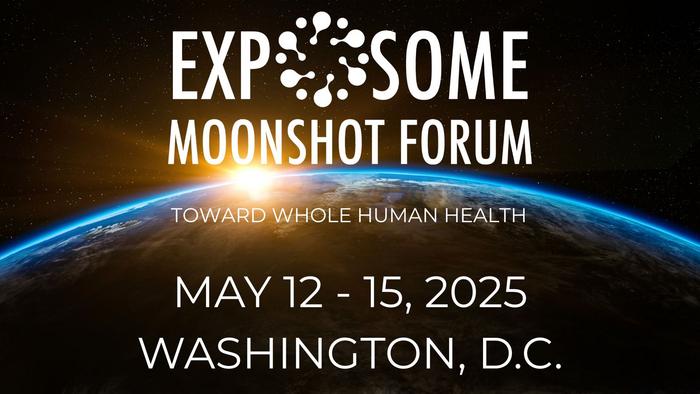
In a groundbreaking stride toward understanding the complex interplay between our environment and human health, the inaugural Exposome Moonshot Forum convened over four days in Washington D.C. this May, gathering more than 500 public health researchers, policymakers, and thought leaders. This landmark event signaled a pivotal shift in biomedical research, aiming to decode the human exposome — the cumulative measure of all environmental exposures influencing an individual throughout their lifetime — akin in ambition and scope to the historic Human Genome Project.
Initiated against the backdrop of the momentous achievements of the Human Genome Project, the Exposome Moonshot addresses a glaring gap in contemporary medical science: while genetic information illuminated hereditary factors in disease, it left out the vast, intricate matrix of external exposures shaping our health. The exposome encompasses a vast array of influences including chemical pollutants, dietary inputs, psychosocial stressors, and lifestyle factors. By mapping these elements, researchers hope to surmount the one-sided focus on genetics and embrace a holistic view of disease causation and prevention.
Technological advancements underpin the feasibility of this ambitious initiative. Recent innovations in sensor technology now enable continuous, real-time monitoring of environmental exposures at unprecedented resolution. Coupled with powerful analytical techniques such as high-resolution mass spectrometry and nuclear magnetic resonance spectroscopy, scientists can dissect complex biological samples to identify and quantify an immense diversity of chemical compounds. This molecular fingerprinting is then analyzed through sophisticated bioinformatics pipelines capable of handling vast, multidimensional datasets.
Artificial intelligence (AI) and big data analytics are playing an indispensable role. Machine learning algorithms sift through terabytes of heterogeneous data — ranging from geospatial records to social determinants of health — to detect patterns and generate predictive models. These computational approaches facilitate the integration of multifaceted datasets, unraveling complex exposure-disease relationships that would otherwise remain obscured. Furthermore, the scalability of cloud computing offers the infrastructure necessary to support global collaboration and data sharing.
Ethical, legal, and societal challenges were a focal point of the forum’s dialogue. Participants underscored the importance of transparent governance frameworks, equitable data ownership, and the safeguarding of individual privacy as foundational pillars for success. The forum recognized that the immense data aggregation necessitates robust policies that ensure inclusivity and prevent misuse, highlighting the need for interdisciplinary collaboration beyond the scientific community. Citizen involvement and public trust were emphasized as critical to sustaining this nascent field.
Crucially, the forum served as a platform to align research efforts worldwide, avoiding duplication and fostering synergy. By uniting institutions across continents, the Moonshot aims to establish shared infrastructures and standardize methodologies, enabling cross-study comparability and robust meta-analyses. This global coordination is essential given the complexities inherent in capturing environmental exposures that vary geographically, temporally, and culturally.
Experts at the event conveyed an optimistic yet pragmatic outlook. Professor Gary Miller of Columbia University posited that pooling existing exposome research assets could ignite a revolution in public health and medicine, potentially saving innumerable lives. Conversely, concerns were raised about the current data gaps, specifically the paucity of information on the vast majority of chemicals humans encounter, many of which lack comprehensive toxicological profiles, underscoring the urgent need for systematic exposomic study.
AI and computational modeling emerged as indispensable tools for managing the exposome’s complexity. Dr. Nicole Kleinstreuer highlighted how advanced mathematical models can simulate biological pathways and environmental interactions, offering insights into disease susceptibility in ways previously unattainable. These models offer promise not only for research but also for translation into clinical and public health applications, where targeted interventions could be personalized based on an individual’s exposomic profile.
The forum also emphasized the economic and practical benefits of exposome science. By precisely identifying exposures that truly impact health, it becomes possible to refine regulatory toxicology, reduce reliance on outdated and often imprecise animal testing, and optimize public health resource allocation. As Professor Thomas Hartung articulated, the staggering scale of chemical agents produced globally demands smarter, more efficient routes to discern meaningful risks, an endeavor that the exposome initiative addresses head-on.
Integrating social determinants of health emerged as a critical frontier within exposome research. Environmental influences are inseparable from factors like socioeconomic status, psychosocial stress, and community infrastructure, all of which modulate vulnerability and resilience. Professor Roel Vermeulen stressed the imperative of incorporating these dimensions, supported by large-scale cohort studies and biobanks capable of capturing lifespan exposures with demographic diversity, thereby enabling precision public health.
The forum’s Declaration Ceremony marked a formal commitment to cooperation, innovation, and inclusion in bringing the exposome field to fruition. This commitment underscores the transformative potential of exposome science to redefine medicine, shifting paradigms from genetic determinism to a multifactorial understanding of health shaped by environmental encounters. It embraces a future where prevention supersedes treatment, aligning scientific rigor with societal well-being.
Looking forward, the establishment of global working groups will prioritize developing frameworks for systematic categorization and cataloging of environmental exposures. These collaborative efforts will drive the refinement of measurement standards, data interoperability, and policy integration. The momentum generated at the Exposome Moonshot Forum promises to catalyze a decade of innovation, aligning science, technology, and ethics in service of a healthier planet and populace.
Ultimately, the Human Exposome Project represents an unprecedented scientific frontier, demanding interdisciplinary convergence, technological prowess, and ethical stewardship. Its success holds the promise to unravel the intricate web of environmental factors that sculpt human health, enabling tailored interventions, reducing disease burdens, and fostering societal resilience in a rapidly changing world.
News Publication Date:
May 12, 2025 (Embargo lifted)
Web References:
www.exposomemoonshot.org
Cite Scienmag News
Juliet Wilcox. (May 12, 2025). Launching the Exposome Moonshot Initiative in Washington D.C. Scienmag. https://scienmag.com/launching-the-exposome-moonshot-initiative-in-washington-d-c/
Juliet Wilcox. "Launching the Exposome Moonshot Initiative in Washington D.C." Scienmag, 12 May 2025, https://scienmag.com/launching-the-exposome-moonshot-initiative-in-washington-d-c/. Accessed 4 September 2026.
Juliet Wilcox. "Launching the Exposome Moonshot Initiative in Washington D.C." Scienmag. May 12, 2025. https://scienmag.com/launching-the-exposome-moonshot-initiative-in-washington-d-c/


