

Friday, November 13, 2026
Science
No Result
View All Result
  • Login
  • HOME
  • SCIENCE NEWS
  • CONTACT US
  • HOME
  • SCIENCE NEWS
  • CONTACT US
No Result
View All Result
Scienmag
No Result
View All Result
Home Science News Social Science

Landscape thinking models adaptation in turbulent environments

October 22, 2026
in Social Science
Gavin Prescott
By Gavin Prescott Scienmag Editorial Profile - Ecology and Ecosystem Dynamics
Reading Time: 3 mins read
0
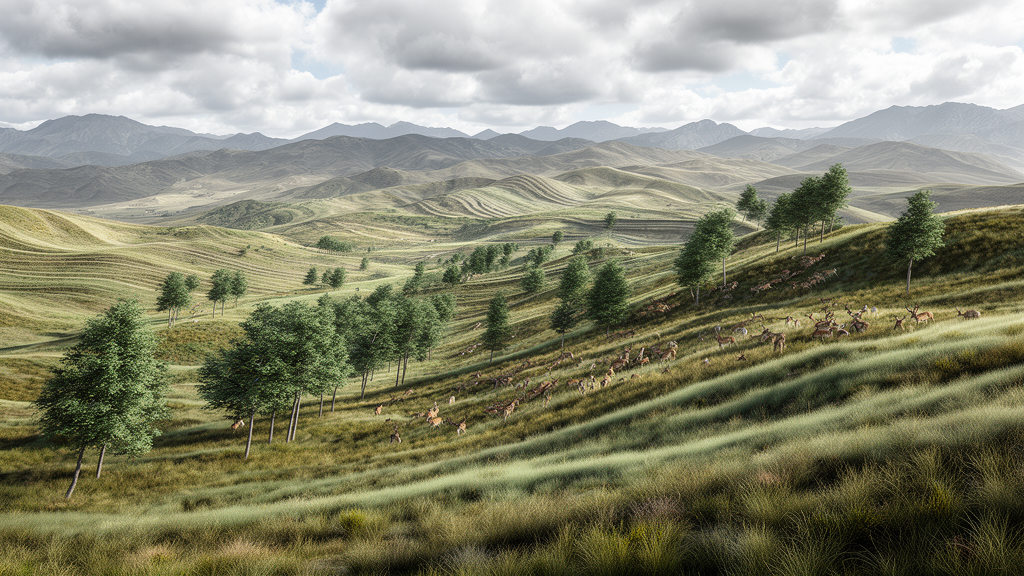
Landscape thinking models adaptation in turbulent environments

Landscape thinking models adaptation in turbulent environments

65
SHARES
587
VIEWS
Share on FacebookShare on Twitter
ADVERTISEMENT

A computational study proposes a new way to analyze how organizations adapt in unpredictable environments marked by tightly coupled interdependencies. Wenwen Liu and Wanzheng Zhao introduce “landscape thinking” as an adaptive mindset for exploring multidimensional possibility spaces, then use NK-landscape simulations to examine how the structure of those spaces can shape adaptive outcomes. The framework is grounded in evolutionary biology and built around three constructs.

The first is multivariable and diverse possibility: interacting variables help determine the structure and ruggedness of a possibility landscape. The second is initial divergence, describing how early positions and search heuristics can generate distinct adaptive trajectories. The third is dynamic and adjacent possibility, which concerns how new opportunities emerge as an explorer continues interacting with the environment.

To illustrate how these constructs operate together, the researchers developed computational models based on NK landscapes. Their simulations consider incremental fine-tuning and irregular oscillation as mechanisms for changing position over time. Across the models, the authors examine the effects of variable interdependencies, initial positions and dynamic neighborhood updates under conditions of turbulence.

The simulations show that these features shape adaptive outcomes in different ways. Interdependencies influence the structure and ruggedness of the possibility space, while initial positions and search heuristics determine how exploration begins and where trajectories diverge. Dynamic neighborhood updates affect which options remain adjacent to an explorer’s current position as interaction with the environment continues.

Initial divergence gives the model a time-dependent component. An organization does not enter the modeled landscape without a starting point, and its early position can influence the adaptive path that follows. The simulations therefore distinguish the effects of where exploration starts from the effects of subsequent changes in the surrounding neighborhood.

Dynamic and adjacent possibility adds another layer by treating opportunities as something that can emerge during continued interaction. Rather than relying only on the options visible at the outset, the model captures how relationships among variables and available neighboring possibilities evolve. This permits the simulations to represent adaptation in an environment whose option structure changes over time.

The contribution is principally theoretical and computational. By defining the landscape metaphor through multivariable possibilities, initial divergence and dynamic adjacent possibilities, the study provides a formal vocabulary for analyzing organizational adaptation in complex environments. Its simulations illustrate how combinations of interdependencies, starting positions and neighborhood updates can produce different adaptive outcomes under turbulence.

The results are limited to the researchers’ NK-landscape models and do not by themselves establish performance effects in operating organizations. They instead advance a framework for studying strategic flexibility: adaptation is analyzed as exploration across a structured possibility space whose features depend on many interacting variables, early choices and ongoing environmental engagement. The authors argue that this framework can guide thinking about organizational responses to complex, evolving environments.

Subject of Research: Computational modeling of organizational adaptation through landscape thinking

Article Title: The future seems wide open with possibilities: landscape thinking in the midst of turbulence

Article References: Liu, W., & Zhao, W. (2026). The future seems wide open with possibilities: landscape thinking in the midst of turbulence. Humanities and Social Sciences Communications. https://doi.org/10.1057/s41599-026-09091-x

Image Credits: AI Generated

DOI: 10.1057/s41599-026-09091-x

Keywords: organizational adaptation, landscape thinking, NK landscapes, strategic flexibility, complex systems, computational modeling, interdependencies, turbulence, evolutionary biology, adaptive trajectories, future, seems

Cite Scienmag News

Gavin Prescott. (October 22, 2026). Landscape thinking models adaptation in turbulent environments. Scienmag. https://scienmag.com/landscape-thinking-models-adaptation-in-turbulent-environments/

Gavin Prescott. "Landscape thinking models adaptation in turbulent environments." Scienmag, 22 October 2026, https://scienmag.com/landscape-thinking-models-adaptation-in-turbulent-environments/. Accessed 13 November 2026.

Gavin Prescott. "Landscape thinking models adaptation in turbulent environments." Scienmag. October 22, 2026. https://scienmag.com/landscape-thinking-models-adaptation-in-turbulent-environments/

Tags: adaptive mindsetadaptive trajectoriescomplex systemscomputational modelingcomputational modeling of adaptive processesdynamic neighborhood updatesevolutionary biologyevolutionary biology in organizational changefutureinitial divergence in adaptationinterdependenciesinterdependent variableslandscape thinkingLandscape thinking modelsmultidimensional possibility spacesNK landscapesNK-landscape simulationsorganizational adaptationruggedness of possibility landscapeseemsstrategic flexibilityturbulenceturbulent environments
Share26Tweet16
Previous Post

Resistant banana rhizosphere shifts with longer continuous cropping

Next Post

Mo2 treatment shows highest observed yield and quality measures in Azerbaijani tea trial

Related Posts

Simulation Framework Reconstructs Full Weekly Travel Schedules From Single-Day Survey Data
Technology and Engineering

Simulation Framework Reconstructs Full Weekly Travel Schedules From Single-Day Survey Data

November 13, 2026
Two-Day Undergraduate Design Charrettes Enhance Interdisciplinary Competence in Built Environment Education
Technology and Engineering

Two-Day Undergraduate Design Charrettes Enhance Interdisciplinary Competence in Built Environment Education

November 13, 2026
Flood Simulation Shows Walking Outperformed Driving During 2015 Kinu River Inundation
Technology and Engineering

Flood Simulation Shows Walking Outperformed Driving During 2015 Kinu River Inundation

November 13, 2026
Global Wind Farms Linked to Modest Nighttime Warming Depending on Land Use
Social Science

Global Wind Farms Linked to Modest Nighttime Warming Depending on Land Use

November 13, 2026
Dome Geometries Enhance Mental Balance and Reduce Stress More Than Pyramids
Technology and Engineering

Dome Geometries Enhance Mental Balance and Reduce Stress More Than Pyramids

November 13, 2026
Review Examines Integrating Generative AI and Citizen Models into Digital Urban Planning
Technology and Engineering

Review Examines Integrating Generative AI and Citizen Models into Digital Urban Planning

November 13, 2026
Next Post
Mo2 treatment shows highest observed yield and quality measures in Azerbaijani tea trial

Mo2 treatment shows highest observed yield and quality measures in Azerbaijani tea trial

  • Mothers who receive childcare support from maternal grandparents show more optimized

    Mothers who receive childcare support from maternal grandparents show more parental warmth, finds NTU Singapore study

    27656 shares
    Share 11059 Tweet 6912
  • University of Seville Breaks 120-Year-Old Mystery, Revises a Key Einstein Concept

    1061 shares
    Share 424 Tweet 265
  • Bee body mass, pathogens and local climate influence heat tolerance

    682 shares
    Share 273 Tweet 171
  • Researchers record first-ever images and data of a shark experiencing a boat strike

    546 shares
    Share 218 Tweet 137
  • Groundbreaking Clinical Trial Reveals Lubiprostone Enhances Kidney Function

    531 shares
    Share 212 Tweet 133
Science

Embark on a thrilling journey of discovery with Scienmag.com—your ultimate source for cutting-edge breakthroughs. Immerse yourself in a world where curiosity knows no limits and tomorrow’s possibilities become today’s reality!

RECENT NEWS

  • Chlorella Pyrenoidosa Microalgae Degrades High Cephalexin Concentrations in Laboratory Medium
  • Early Environmental Exposures Link to Persistent Health Outcomes Into Adolescence
  • Biathlon Data Shows Continuity Beats Expert Forecasts
  • GeoJitter Algorithm Preserves Spatial Network Structure While Anonymizing Node Coordinates

Categories

  • Agriculture
  • Anthropology
  • Archaeology
  • Athmospheric
  • Biology
  • Biotechnology
  • Blog
  • Bussines
  • Cancer
  • Chemistry
  • Climate
  • Earth Science
  • Editorial Policy
  • Marine
  • Mathematics
  • Medicine
  • Pediatry
  • Policy
  • Psychology & Psychiatry
  • Science Education
  • Science News
  • Social Science
  • Space
  • Technology and Engineering

Subscribe to Blog via Email

Enter your email address to subscribe to this blog and receive notifications of new posts by email.

Join 5,150 other subscribers

© 2026 Scienmag - Science Magazine

Welcome Back!

Login to your account below

Forgotten Password?

Retrieve your password

Please enter your username or email address to reset your password.

Log In
No Result
View All Result
  • HOME
  • SCIENCE NEWS
  • CONTACT US

© 2026 Scienmag - Science Magazine

Discover more from Science

Subscribe now to keep reading and get access to the full archive.

Continue reading

