


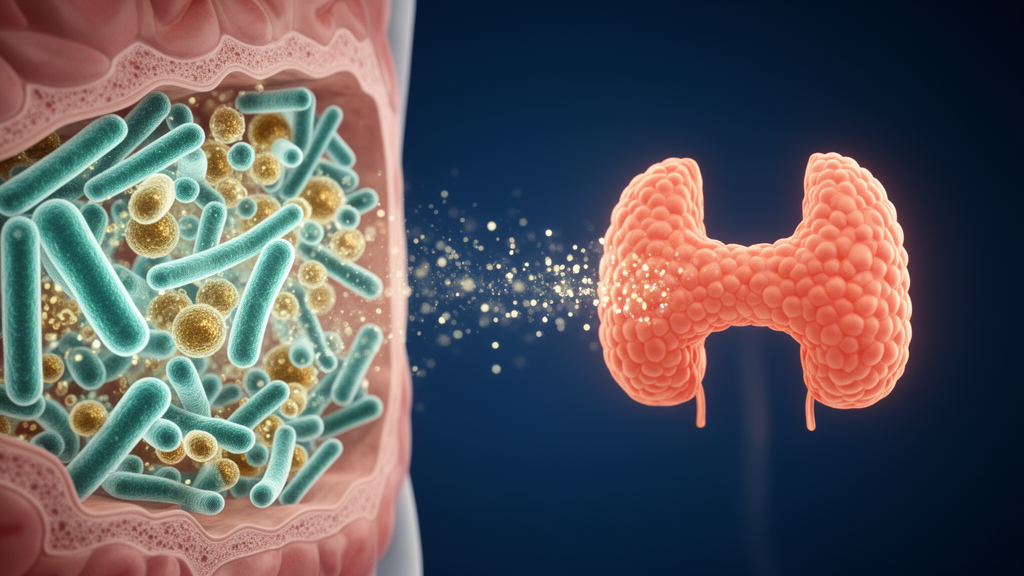
The trillions of microbes inhabiting the human gut have long been suspected of influencing diseases far beyond the digestive tract, and few connections have drawn as much recent attention as the link between gut bacteria and autoimmune thyroid disorders. Now, a sweeping systematic review and meta-analysis published in Frontiers in Endocrinology has synthesized evidence from 30 studies encompassing more than 3,000 individuals, providing the most comprehensive picture to date of how the gut microbiome differs in people with Hashimoto’s thyroiditis and Graves’ disease. The findings, published in the journal’s Thyroid Endocrinology section, reveal consistent microbial signatures that could reshape how researchers think about the origins and treatment of these increasingly common conditions.
Autoimmune thyroid diseases affect millions worldwide, with Hashimoto’s thyroiditis standing as the leading cause of underactive thyroid function and Graves’ disease driving most cases of overactive thyroid. Both conditions arise when the immune system mistakenly attacks the thyroid gland, but the environmental triggers that set this process in motion remain incompletely understood. The gut microbiome has emerged as a compelling suspect because of its established role in training and calibrating the immune system. Gut bacteria ferment dietary fibers into short-chain fatty acids such as butyrate, propionate, and acetate, molecules that nourish the intestinal lining and help maintain the delicate balance between immune tolerance and inflammatory reactivity.
The research team, led by investigators applying rigorous PRISMA guidelines, systematically searched major databases including PubMed, Scopus, and Web of Science for studies comparing gut microbial composition in patients with autoimmune thyroid disease against healthy controls. After screening hundreds of records and applying strict inclusion criteria, the analysts pooled data from 30 qualifying studies. These investigations employed 16S ribosomal RNA gene sequencing to catalog bacterial communities in stool samples, allowing researchers to quantify differences in microbial diversity and abundance between patient and control groups with statistical precision.
The meta-analysis revealed a striking and consistent finding: individuals with autoimmune thyroid disease exhibit significantly reduced gut microbial diversity compared with healthy individuals. This reduction in alpha diversity, a measure of the variety of species within a single person’s gut, suggests a less resilient and less functionally versatile microbial community. Reduced diversity has been linked to a range of inflammatory and autoimmune conditions, and its presence in thyroid autoimmunity reinforces the hypothesis that microbial imbalance, or dysbiosis, may contribute to disease development rather than simply accompany it.
Beyond overall diversity, the analysis identified specific bacterial groups that consistently differ between patients and controls. Beneficial butyrate-producing bacteria, including members of the genera Faecalibacterium and Lachnospira, appear depleted in individuals with Hashimoto’s thyroiditis. These organisms are key suppliers of short-chain fatty acids that strengthen the gut barrier and promote anti-inflammatory immune signaling. Their reduction could weaken the intestinal lining, allowing bacterial fragments to cross into the bloodstream and trigger immune responses that cross-react with thyroid tissue, a mechanism known as molecular mimicry.
At the same time, the analysis documented an expansion of potentially pro-inflammatory taxa in patients with autoimmune thyroid disease. Species associated with lipopolysaccharide production, an inflammatory bacterial cell wall component, were enriched in patient groups, alongside increases in opportunistic organisms such as certain Escherichia and Shigella species. This shift in microbial composition toward inflammation-promoting bacteria provides a plausible biological pathway through which gut dysbiosis could fuel the chronic immune activation that characterizes thyroid autoimmunity.
The findings also revealed distinct microbial patterns between Hashimoto’s thyroiditis and Graves’ disease, suggesting that these two conditions, while related, may involve different gut microbial contributions. In Hashimoto’s thyroiditis, reductions in beneficial SCFA-producing bacteria were particularly pronounced, whereas Graves’ disease showed its own pattern of altered abundance in specific taxa. These differences hint that microbiome profiling could eventually help clinicians distinguish between autoimmune thyroid conditions or identify patients at risk of progression, although the researchers caution that the current evidence remains observational.
Importantly, the meta-analysis found that microbial alterations were not simply a consequence of thyroid hormone imbalances or medication use. Subgroup analyses examining patients at different stages of disease and treatment status indicated that dysbiosis persists across clinical contexts, supporting the idea that gut microbial changes may precede or actively participate in disease development. However, the cross-sectional design of most included studies prevents definitive conclusions about cause and effect, and the researchers emphasize that longitudinal studies and interventional trials are needed to establish whether microbiome changes drive thyroid autoimmunity or merely reflect it.
The implications of this work extend beyond basic science into potential clinical applications. If the observed microbial signatures can be validated in larger, prospective cohorts, they could inform the development of microbiome-based diagnostic tools or guide the use of targeted probiotics, dietary interventions, or fecal microbiota transplantation as adjunct therapies. Several strains of Lactobacillus and Bifidobacterium have shown promise in small studies of autoimmune conditions, and the current analysis provides a rationale for testing whether such interventions could modulate immune activity in thyroid disease. The researchers also highlight the need for standardized sequencing protocols and reporting guidelines to reduce heterogeneity across future studies.
As autoimmune thyroid disorders continue to rise in prevalence globally, driven by factors ranging from iodine intake to environmental exposures, understanding the contribution of the gut microbiome has become an urgent research priority. This meta-analysis consolidates a rapidly expanding literature into a coherent framework, confirming that microbial dysbiosis is a reproducible feature of autoimmune thyroid disease and pointing toward specific bacterial targets for future investigation. While much work remains to translate these associations into therapies, the study marks a significant step toward a more integrated view of thyroid autoimmunity, one in which the gut microbiome plays a central role in disease susceptibility, progression, and potentially treatment.
Subject of Research: Gut microbiota alterations in autoimmune thyroid disorders revealed by systematic review and meta-analysis
Article Title: Retraction: Exploring the role of gut microbiota in autoimmune thyroid disorders: a systematic review and meta-analysis
Article References: Retraction: Exploring the role of gut microbiota in autoimmune thyroid disorders: a systematic review and meta-analysis. (n.d.). https://doi.org/10.3389/fendo.2026.2023216
Image Credits: AI Generated
DOI: 10.3389/fendo.2026.2023216
Keywords: gut microbiota, autoimmune thyroid disease, Hashimoto's thyroiditis, Graves' disease, dysbiosis, meta-analysis, thyroid hormones, short-chain fatty acids, intestinal permeability, microbiome, systematic review, endocrinology
Cite Scienmag News
Morgan Morrow. (October 16, 2026). Landmark Study Reveals How Gut Microbiome Shapes Autoimmune Thyroid Disease. Scienmag. https://scienmag.com/landmark-study-reveals-how-gut-microbiome-shapes-autoimmune-thyroid-disease/
Morgan Morrow. "Landmark Study Reveals How Gut Microbiome Shapes Autoimmune Thyroid Disease." Scienmag, 16 October 2026, https://scienmag.com/landmark-study-reveals-how-gut-microbiome-shapes-autoimmune-thyroid-disease/. Accessed 16 October 2026.
Morgan Morrow. "Landmark Study Reveals How Gut Microbiome Shapes Autoimmune Thyroid Disease." Scienmag. October 16, 2026. https://scienmag.com/landmark-study-reveals-how-gut-microbiome-shapes-autoimmune-thyroid-disease/


