


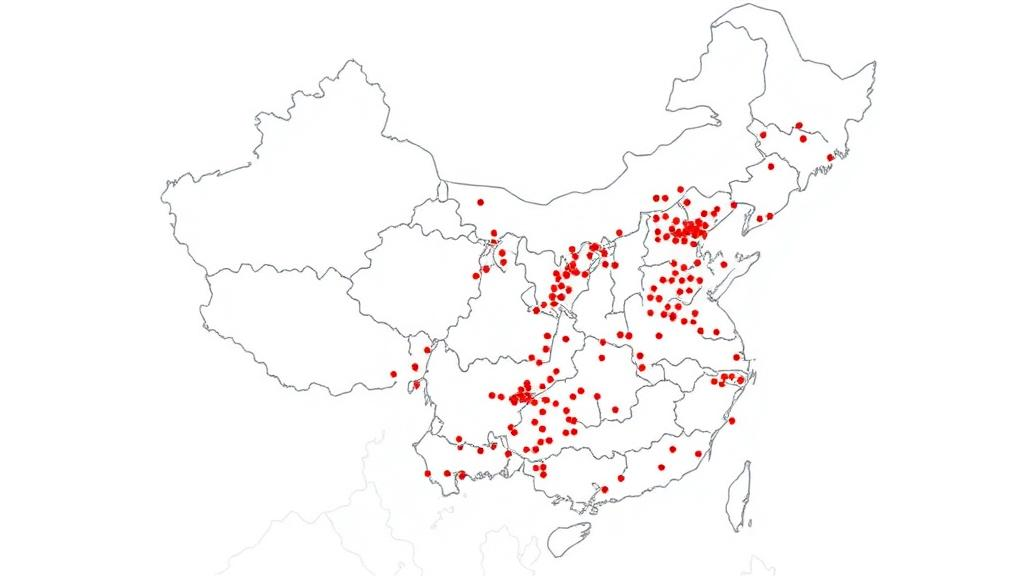
In one of the largest epidemiological investigations of thyroid health ever conducted, researchers have mapped the prevalence of thyroid dysfunction across all 31 provinces of mainland China, drawing on health check-up data from more than 10.7 million adults. The study, published in BMC Endocrine Disorders, reveals that subclinical hypothyroidism alone affects roughly one in twelve Chinese adults, and that abnormal thyroid function rarely travels alone. Instead, it clusters with a wide range of conditions affecting the heart, liver, kidneys, blood vessels, and metabolism, painting a picture of thyroid disease as a systemic marker of multimorbidity rather than an isolated glandular problem.
The research team, led by investigators from Peking University’s School of Public Health in collaboration with the Meinian Institute of Health, analyzed records from 10,748,391 adults who underwent health examinations between 2017 and 2023. Every included participant had complete thyroid function results covering the three core laboratory measures used to define thyroid status: serum thyroid-stimulating hormone (TSH), free triiodothyronine (FT3), and free thyroxine (FT4). This trio of hormones allows clinicians to distinguish an overactive gland from an underactive one, and to separate overt disease, in which hormone levels are clearly abnormal, from subclinical disease, in which the pituitary’s regulatory signal is disturbed while the circulating thyroid hormones themselves remain within reference limits.
Using this framework, the researchers classified participants into four diagnostic categories. Overt hyperthyroidism, in which TSH is suppressed and thyroid hormones are elevated, had a weighted prevalence of 0.76 percent. Subclinical hyperthyroidism, marked by suppressed TSH with normal hormone levels, was slightly more common at 0.82 percent. Overt hypothyroidism, in which TSH rises while thyroid hormones fall, affected 0.58 percent of the population. The standout figure was subclinical hypothyroidism, defined by elevated TSH with normal free thyroid hormones, which reached a weighted prevalence of 8.27 percent. Taken together, the findings suggest that roughly one in ten Chinese adults carries some form of thyroid dysfunction, the vast majority of it silent or minimally symptomatic.
The demographic patterns were consistent with long-standing clinical observations but now quantified at unprecedented scale. Thyroid dysfunction was more prevalent in women than in men across all categories, reflecting the well-documented female predominance of autoimmune thyroid disease. Prevalence also rose with age for most conditions, with the notable exception of overt hyperthyroidism, which did not follow the same age-related climb. Socioeconomic geography mattered as well: people living in cities with lower gross domestic product levels showed higher rates of thyroid dysfunction, a gradient that the authors suggest may reflect differences in iodine nutrition, environmental exposures, diagnostic access, or broader patterns of chronic disease burden.
Perhaps the most striking feature of the study is its geographic resolution. Subclinical hyperthyroidism was concentrated in coastal regions of China, while both overt and subclinical hypothyroidism were more widely distributed across inland provinces. This coastal-inland divide echoes historical patterns of iodine intake, since coastal populations typically consume more iodine-rich seafood while inland areas have historically experienced both iodine deficiency and, in some regions, excessive iodine from drinking water and local food supplies. Because both too little and too much iodine can disrupt thyroid function, these regional gradients provide public health authorities with a geographic roadmap for targeted screening and nutritional intervention.
Beyond prevalence, the study’s central contribution is its systematic examination of multimorbidity. Rather than asking whether thyroid dysfunction is linked to a single disease, the investigators assessed associations with 21 medical conditions spanning multiple organ systems. The results reveal two distinct clinical signatures. Hyperthyroidism, whether overt or subclinical, was primarily associated with a fast resting heart rate, abnormal liver enzymes, decreased high-density lipoprotein cholesterol, and hyperglycemia. These associations make physiological sense: excess thyroid hormone accelerates cardiac rhythm, increases metabolic turnover that can strain the liver, and reshapes lipid and glucose metabolism in ways that mimic or exacerbate metabolic syndrome.
Hypothyroidism told a different story. Both overt and subclinical forms were more closely associated with abnormal liver enzymes, impaired renal function, dyslipidemia, obesity, and fatty liver disease. An underactive thyroid slows lipid clearance, promoting elevated cholesterol and triglycerides; it reduces metabolic rate, favoring weight gain and hepatic fat accumulation; and it can reduce kidney perfusion and glomerular filtration, blurring the boundary between endocrine and renal pathology. The convergence of hypothyroidism with fatty liver and dyslipidemia is particularly relevant for China, where non-alcoholic fatty liver disease and cardiometabolic risk factors have been rising sharply alongside economic development and dietary change.
The study also uncovered sex-specific differences in how subclinical thyroid dysfunction relates to atherosclerotic markers, specifically increased carotid intima-media thickness and the presence of carotid plaques, both established indicators of subclinical vascular disease. This finding suggests that even mild thyroid hormone disturbances may participate in early vascular remodeling differently in men and women, potentially through effects on blood pressure, lipid profiles, inflammation, or heart rate. Because carotid intima-media thickness predicts future cardiovascular events, the observation raises the possibility that subclinical thyroid status could help stratify cardiovascular risk, although the cross-sectional design of the study cannot establish whether thyroid dysfunction causes vascular change or merely co-occurs with it.
Methodologically, the study demonstrates the power of big data resources in epidemiology. By mining an existing national health check-up database rather than mounting a bespoke survey, the team achieved a sample size and geographic coverage that would be prohibitively expensive through conventional means. The authors describe this approach as a rapid and cost-effective complement to nationally representative studies. The trade-offs are equally clear: health check-up populations skew toward urban, insured, and health-conscious individuals, and the cross-sectional design captures a snapshot rather than tracking how thyroid dysfunction develops over time. Weighted prevalence estimates help correct for some sampling imbalances, but the figures should be read as describing the examined population rather than the entire nation with survey-grade precision.
The clinical implications are nonetheless substantial. With subclinical hypothyroidism affecting more than eight percent of adults, and with thyroid dysfunction consistently co-occurring with cardiovascular, metabolic, hepatic, and renal abnormalities, the authors argue for continued surveillance of thyroid health and for patient-centered, multidisciplinary management strategies at the health system level in China. In practice, that means a person diagnosed with hypothyroidism should not simply receive a thyroid hormone prescription in isolation; their lipid profile, liver enzymes, kidney function, weight, and cardiovascular risk deserve coordinated attention. Conversely, patients presenting with dyslipidemia, fatty liver, or unexplained tachycardia may merit thyroid function testing. As China’s population ages and cardiometabolic disease burden grows, this study provides the quantitative foundation for integrating one of the body’s master metabolic regulators into the broader agenda of chronic disease prevention.
Subject of Research: Prevalence and multimorbidity patterns of thyroid dysfunction among adults in China
Article Title: Prevalence and multimorbidity patterns of thyroid dysfunction in Chinese adults
Article References: Shen, D., Man, S., Zu, Y., Yang, X., Deng, Y., Chen, S., Yu, C., Li, L., Wang, B., Pan, H., & Lv, J. (2026). Prevalence and multimorbidity patterns of thyroid dysfunction in Chinese adults. BMC Endocrine Disorders. https://doi.org/10.1186/s12902-026-02589-0
Image Credits: AI Generated
DOI: 10.1186/s12902-026-02589-0
Keywords: thyroid dysfunction, hypothyroidism, hyperthyroidism, subclinical hypothyroidism, multimorbidity, epidemiology, China, TSH, thyroid-stimulating hormone, fatty liver, dyslipidemia, cardiovascular risk
Cite Scienmag News
Ophelia Keating. (October 8, 2026). Landmark Study of 10.7 Million Adults Maps Thyroid Dysfunction Across China. Scienmag. https://scienmag.com/landmark-study-of-10-7-million-adults-maps-thyroid-dysfunction-across-china/
Ophelia Keating. "Landmark Study of 10.7 Million Adults Maps Thyroid Dysfunction Across China." Scienmag, 8 October 2026, https://scienmag.com/landmark-study-of-10-7-million-adults-maps-thyroid-dysfunction-across-china/. Accessed 8 October 2026.
Ophelia Keating. "Landmark Study of 10.7 Million Adults Maps Thyroid Dysfunction Across China." Scienmag. October 8, 2026. https://scienmag.com/landmark-study-of-10-7-million-adults-maps-thyroid-dysfunction-across-china/


