


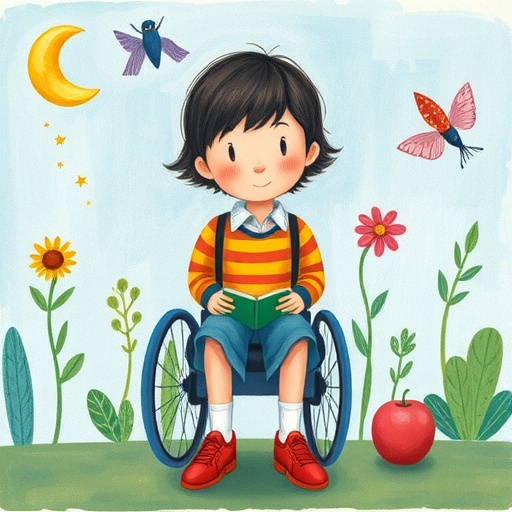
A recent comprehensive study conducted by Edith Cowan University’s (ECU) School of Education has uncovered a significant and troubling gap in the representation of children with disabilities within Australian children’s picture books. The study, which meticulously analyzed 90 award-listed titles from across the country, reveals that these books largely neglect to include characters with disabilities, offering an insight into a pervasive issue that calls for immediate attention within the literary and educational communities.
Associate Professor Helen Adam, the lead researcher in this project, emphasized the critical nature of the findings. “Our research revealed a glaring omission—the near-total absence of disability representation among the characters in the picture books we examined,” she explained. The study highlights that out of the 90 award-listed books scrutinized, only a single title included a character with a physical disability, and even then, that character occupied a peripheral position, appearing only briefly in the background and receiving minimal narrative focus.
This underrepresentation of children with disabilities in literature poses significant implications for both disabled and non-disabled children. Picture books serve not only as tools to teach foundational literacy skills but also as vital mediums through which young readers come to understand the diversity of human experiences. When children with disabilities are invisibilized in these formative texts, it perpetuates harmful stereotypes and contributes to societal marginalization, reinforcing a narrow perception of normality that excludes a substantial proportion of the population.
The Australian Bureau of Statistics defines disability as a long-term limitation or impairment affecting everyday activities, a definition that encompasses a broad spectrum of physical, intellectual, and sensory challenges. Despite this breadth, the study found that the visible markers of disability, such as wheelchair use, were scarcely depicted. This absence is especially conspicuous given that more overt and symbolic representations tend to be favored in picture books, as subtler or less visible disabilities—such as neurodiversity or intellectual impairments—are inherently more difficult to portray in this literary format.
While the study notes progress in other areas of inclusivity within children’s literature, particularly regarding cultural diversity and the portrayal of non-traditional family structures, the representation of children with disabilities remains critically lagging. This disparity is not merely a matter of aesthetic diversity but speaks to deeper systemic issues within publishing and educational practices that prioritize certain narratives over others.
The ramifications of this underrepresentation extend beyond literature, influencing how children with disabilities perceive themselves and how their peers understand and interact with difference. Literature that excludes or marginalizes disabled characters implicitly endorses ableism and fails to equip children with the empathy and social awareness necessary to thrive in a diverse society.
Associate Professor Adam urges authors, illustrators, publishers, educators, and caregivers to acknowledge this gap and collaborate towards creating a richer, more inclusive literary landscape. Such cooperation involves conscious decisions to incorporate inclusive language and imagery, challenge entrenched ableist norms, and promote stories where characters of all abilities are affirmed and valued.
Importantly, the study also touches upon the significance of authorship diversity. The presence of creators with lived experiences of disability can profoundly enrich narratives, offering authenticity and nuanced portrayals that may otherwise be absent. Encouraging diversity among writers and illustrators is therefore essential in cultivating stories that genuinely reflect the experiences of children with disabilities.
The research underscores how children’s picture books serve as potent instruments of socialization and advocacy. By embedding inclusive representation within early literacy materials, society can nurture a generation attuned to difference and committed to equity. The absence of such representation is not a neutral omission but a cultural signal that contributes to marginalization and social exclusion.
Moreover, the challenges faced by children with disabilities extend beyond literature into real-world experiences where environmental and social barriers abound. Inclusion in children’s books is one tangible step toward dismantling these barriers, fostering recognition and respect from an early age.
Given the influence of picture books on early childhood development and identity formation, the study’s findings highlight an urgent imperative. The publishing industry, educational systems, and families must prioritize the creation and dissemination of materials that mirror the full spectrum of human diversity, including disability, to ensure that all children can see themselves and others positively reflected in the stories they absorb.
This groundbreaking research from Edith Cowan University sets the stage for transformative change, calling attention to the critical need for inclusive narratives that empower all children and help dismantle societal stigmas associated with disability. The journey toward equitable representation is ongoing, but it begins with recognizing and addressing the pervasive gaps illuminated by this study.
News Publication Date: 18-Jun-2025
Web References:
- https://search.informit.org/doi/10.3316/informit.T2025061000010801537025028
- https://www.ecu.edu.au/newsroom/articles/research/study-finds-australian-childrens-picture-books-failing-to-represent-diverse-families
References:
Australian Bureau of Statistics (2022). Definition of disability.
Cite Scienmag News
Courtney Benton. (August 26, 2025). Lack of Representation of Children with Disabilities as Protagonists in Australian Picture Books. Scienmag. https://scienmag.com/lack-of-representation-of-children-with-disabilities-as-protagonists-in-australian-picture-books/
Courtney Benton. "Lack of Representation of Children with Disabilities as Protagonists in Australian Picture Books." Scienmag, 26 August 2025, https://scienmag.com/lack-of-representation-of-children-with-disabilities-as-protagonists-in-australian-picture-books/. Accessed 6 September 2026.
Courtney Benton. "Lack of Representation of Children with Disabilities as Protagonists in Australian Picture Books." Scienmag. August 26, 2025. https://scienmag.com/lack-of-representation-of-children-with-disabilities-as-protagonists-in-australian-picture-books/


