


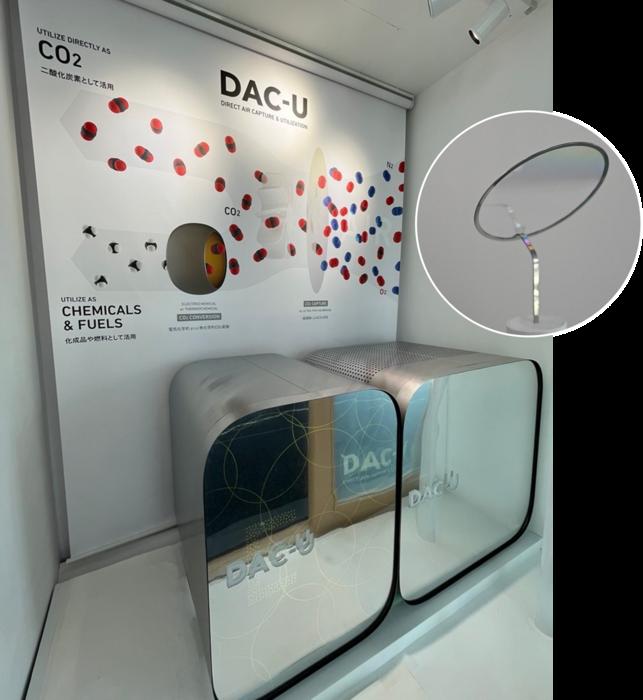
Osaka, Japan—Amid the ambitious strides towards a sustainable future, Kyushu University is making headlines by showcasing an advanced carbon capture and utilization device at Expo 2025. This innovative device, designed to pull carbon dioxide directly from the atmosphere, represents a significant leap in sustainability. The exhibit, part of the “Future Society Showcase,” invites visitors to engage with cutting-edge technology that aims to redefine our understanding and use of carbon emissions.
Imagine a compact machine, as discreet as an outdoor air conditioning unit, tirelessly filtering the air around it. This machine captures CO₂, transforming it into valuable resources for everyday use—from fizzy beverages to clean cooking fuel. The display not only highlights the innovative technology but also emphasizes a vision for homes of the future, where air can be a renewable resource.
Located in the largest demonstration carbon capture test plant in Japan, the exhibit is a focal point for environmental innovation during the six-month event from April 13 to October 13, 2025. Visitors to the Expo have the unique opportunity to learn firsthand about the potential applications of carbon capture through guided reservations at the plant. This approach bridges the gap between theoretical environmental science and practical application, fostering public understanding of sustainability measures.
At the heart of this initiative is Kyushu University’s Direct Air Capture and Utilization (DAC-U) device, part of the NEDO-Moonshot Project. Spearheaded by the renowned Professor Shigenori Fujikawa, the project taps into cutting-edge research conducted at the International Institute for Carbon-Neutral Energy Research. It embodies innovation in energy technology, aimed at combating the challenges posed by climate change.
The DAC-U device stands out not only for its design but also for its underlying principles. The machine utilizes an ultra-thin nanomembrane filter, a technological marvel merely 1/300th the thickness of conventional plastic wrap. This filter, engineered to selectively allow CO₂ to pass while rejecting other atmospheric gases, represents a significant advancement in carbon capture efficiency. Fujikawa describes this innovation as a radical departure from traditional methods of carbon capture, which are often energy-intensive and require vast expanses of land.
Climate change poses a grave threat to our environment, driven primarily by the increasing levels of CO₂ due to human activities, particularly the use of fossil fuels. Recognition of this urgency instills a sense of responsibility among innovators and researchers. The exhibit at Expo 2025 serves as a platform to engage the global community in discussions about the necessity of carbon capture technologies, emphasizing that they are not merely optional but essential to mitigate the effects of climate change.
One pivotal message presented by Professor Fujikawa is centered around reimagining CO₂ not as a detrimental gas but as a resource. Conversely, capturing this gas offers potential solutions to pressing energy needs and associated costs. With responsible management and innovative processing, captured CO₂ can serve to meet diverse requirements in our daily lives, from agricultural applications to energy production and beyond.
Visitors at the exhibit can observe the workings of the nanomembrane filter in action. The display features an engaging spinning disk that visually represents the core technology, capturing the imagination of attendees. Through interactive presentations, visitors can appreciate the intricacy and efficiency of the process, reinforcing the notion that carbon capture can indeed be integrated seamlessly into everyday life and operations, making responsible use of this abundant yet often overlooked resource.
Current technologies for carbon capture are often hampered by their resource requirements, necessitating substantial financial investment, land allocation, and energy consumption. In stark contrast, the innovative capabilities of DAC-U allow for a nimble approach, with a focus on decentralized, smaller-scale solutions that can thrive even in densely populated urban environments where large footprints for carbon capture technologies are unfeasible.
This shift in strategy depicts a broader paradigm where carbon capture can occur ubiquitously, transforming various spaces—be it homes, schools, or factories—into active contributors to environmental conservation efforts. The ultimate objective remains to create local solutions applicable to average households, aligning with the ongoing endeavors for a more self-sufficient and environmentally conscious society.
As explorations continue, Fujikawa and his team are committed to enhancing the machine’s capabilities, striving to optimize its efficiency while scaling down its size. The vision extends beyond mere technological achievement; it encapsulates an entire ethos centered on sustainability, local production, and consumption practices. By advancing this technology, Kyushu University aims to pave the way toward realizing a carbon-neutral society, one where capturing and recycling carbon integrates seamlessly into daily human activity.
In summary, Kyushu University’s exhibit at Expo 2025 serves as a crucial catalyst in redefining the narrative around carbon dioxide—transforming it from a villain of climate change to an ally in sustainable development. With innovations such as the DAC-U device, the university is at the forefront of addressing global environmental challenges, reinforcing the belief that solutions are not only possible but achievable.
As the world looks toward the future, exhibits like those at Expo 2025 illustrate the potential outcomes of innovative research and collaboration in tackling one of humanity’s most pressing crises—inspiring hope and action for a sustainable tomorrow.
News Publication Date: October 5, 2023
Web References:
References:
Cite Scienmag News
Sloane Callahan. (April 11, 2025). Kyushu University Highlights Carbon-Neutral Innovations at Expo 2025. Scienmag. https://scienmag.com/kyushu-university-highlights-carbon-neutral-innovations-at-expo-2025/
Sloane Callahan. "Kyushu University Highlights Carbon-Neutral Innovations at Expo 2025." Scienmag, 11 April 2025, https://scienmag.com/kyushu-university-highlights-carbon-neutral-innovations-at-expo-2025/. Accessed 3 September 2026.
Sloane Callahan. "Kyushu University Highlights Carbon-Neutral Innovations at Expo 2025." Scienmag. April 11, 2025. https://scienmag.com/kyushu-university-highlights-carbon-neutral-innovations-at-expo-2025/


