

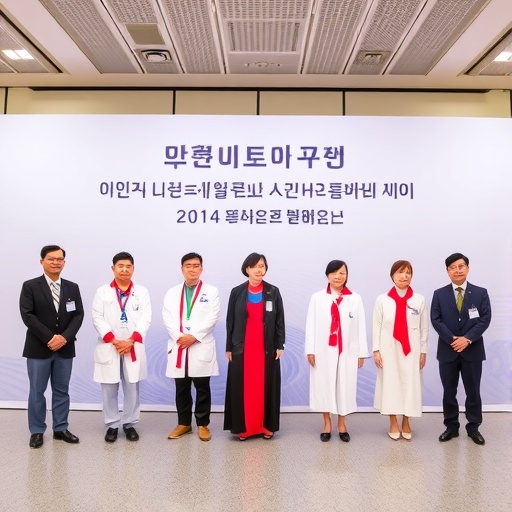
Korea University College of Medicine has inaugurated a groundbreaking chapter in medical education and research with the launch of its Korea University Medical Scientist Training Program (KU-MSTP). This ambitious program, formally introduced during a landmark international symposium and inauguration ceremony on November 21, aims to cultivate the next generation of physician-scientists armed to drive forward medical innovation. By building an integrated training pipeline that seamlessly connects fundamental science with clinical application, Korea University is setting a new standard for interdisciplinary medical education on a global scale.
At the heart of this initiative is an understanding that the future of medicine hinges on professionals capable of navigating both scientific inquiry and patient-centered care. To galvanize this vision, the inaugural KU-MSTP International Symposium gathered a cadre of distinguished scholars and global research leaders. Among the keynote guests was Professor Barbara Kazmierczak, Director of Yale’s Medical Scientist Training Program, whose visit underscored the deepening collaboration between these two prestigious institutions. This partnership promises a dynamic exchange of knowledge, joint academic endeavors, and cross-continental educational programs that enrich the training landscape.
The event also featured influential voices such as Professor Anthony Ferrante from Columbia University, Dr. Fathi Karouia from NASA, and Professor John Nicholls of the University of Hong Kong. Their participation highlighted the interdisciplinary nature of modern biomedical research, which now transcends traditional boundaries to include emerging fields like space medicine. The presence of such luminaries offers young physician-scientists unparalleled access to cutting-edge perspectives and collaborative opportunities that blend clinical exploration with innovative research domains.
Korea University’s innovative educational model was showcased through thematic sessions addressing critical areas including infectious diseases, inflammation, metabolic disorders, and novel physician-scientist education strategies. One pivotal feature was the KU Physician-Scientist Data Blitz, a rapid-fire presentation platform allowing emerging scholars to exhibit pioneering research findings. This mechanism fosters a vibrant academic environment where investigative curiosity meets rigorous scientific validation, empowering trainees to sharpen their communication skills while engaging with a network of experts.
Leadership of the KU-MSTP program is thoughtfully distributed among specialized faculty experts who oversee distinct stages of medical and scientific training. From undergraduate recruitment through residency support, to full-time doctoral education and postdoctoral career development, the program ensures continuity and consistency. This structured mentorship model addresses the often fragmented pathways faced by physician-scientists, providing a coherent and nurturing trajectory designed to elevate research capacity and clinical excellence concurrently.
Professor Jee Hoon Roh, Deputy Director of KU-MSTP and a neurologist by training, emphasized the program’s ambitious curricular innovations and expanded scholarship avenues. Particularly noteworthy is the impending transition to an integrated six-year medical curriculum, an educational reform poised to enhance early research immersion and interdisciplinary competence. These changes reflect a strategic commitment to prepare physician-scientists who can adeptly translate clinical dilemmas into actionable scientific hypotheses.
Moreover, Director Hyun Soo Kim highlighted the critical role of physician-scientists in advancing medicine through transformative research. He articulated the urgency for clinicians trained to dissect complex clinical problems and generate impactful biomedical solutions. The inauguration of KU-MSTP represents a foundational milestone toward cultivating a uniquely Korean physician-scientist ecosystem that balances domestic strengths with global scientific engagement.
The program’s emphasis on international collaboration is exemplified by partnerships with renowned institutions such as Yale University and Johns Hopkins University. These alliances facilitate access to diverse research infrastructures, advanced methodologies, and global mentorship networks. Importantly, these collaborations also underpin joint doctoral opportunities and research training pathways, reinforcing the developmental continuum that KU-MSTP aspires to establish.
Dean Seong Bom Pyun reflected on the essential role of mentorship, identifying exemplary role models as pivotal catalysts for nurturing physician-scientists’ professional growth. Recognizing the varied backgrounds of clinical specialists entering foundational medical science, the program expands MD-PhD pathways to embrace such talent. By fostering an inclusive training environment, the program ensures that cutting-edge research skills are accessible beyond traditional academic trajectories, thereby enriching the biomedical research community.
Looking forward, Korea University College of Medicine is committed to broadening its physician-scientist training ecosystem through continuous program expansion. Planned initiatives include institutionalizing recurring international symposia and scholar seminars to sustain dynamic knowledge exchange. Furthermore, the program seeks to establish multi-institutional research forums that will facilitate large-scale collaborative projects, amplifying the impact of physician-scientist-led innovations on global health.
The inauguration of KU-MSTP signals a transformative era in physician-scientist education by reinforcing the synergy between research and clinical practice. Through meticulous program design, international partnerships, and a vibrant scholarly milieu, Korea University is cultivating leaders prepared to address pressing medical challenges with scientific rigor. This endeavor not only promises to elevate Korea’s biomedical research stature but also contributes meaningfully to the worldwide pursuit of medical breakthroughs.
In sum, the KU-MSTP initiative embodies an integrated and forward-thinking approach to training physician-scientists, blending educational reforms with global collaboration and robust mentorship. Its success will likely influence medical training paradigms internationally, serving as a model for how interdisciplinary and translational medicine can be effectively taught. As the program evolves, it is poised to drive a new wave of innovation and excellence in healthcare, ultimately benefiting patients and scientific communities worldwide.
Subject of Research: Physician-Scientist Training and Development Programs in Medical Education
Article Title: Korea University Launches Innovative Physician-Scientist Training Program to Shape Future Medical Leaders
News Publication Date: November 21, 2023
Web References: Korea University College of Medicine
Image Credits: KU Medicine
Keywords: Basic research, Scientific approaches, Scientific method, Scientific organizations


