


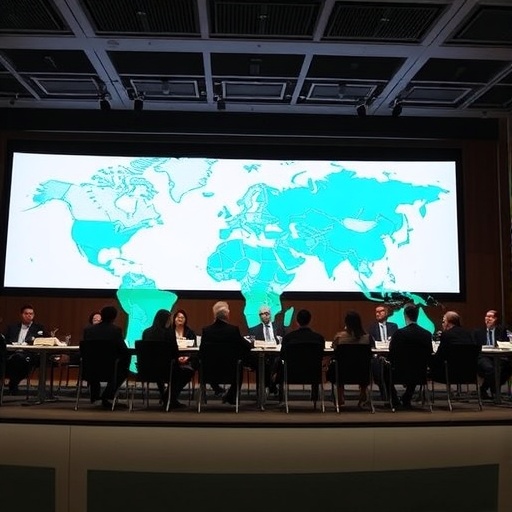
The Korea University College of Medicine recently held a landmark event that promises to reshape the future of global health research and interdisciplinary collaboration. On Friday, July 4, at the state-of-the-art SK Future Hall on its Seoul campus, the institution welcomed a cadre of esteemed international scholars and experts for the inaugural K-CLUB (Korea Club for Leading-edge University Biomedical-science) International Symposium. Themed “Health for Humanity,” this symposium presented an ambitious platform for examining the multifaceted challenges and opportunities in contemporary health sciences that affect people worldwide.
This pioneering symposium was designed with the vision to drive forward biomedical innovation through cross-disciplinary dialogue and global partnership. It served as a catalyst for nurturing collaborative research networks that address pervasive human health concerns such as climate change-related health effects, emerging infectious diseases, and persistent global health disparities. The event was more than a gathering; it was a concerted effort to harness diverse academic expertise and clinical insights to forge a future where science directly benefits humanity.
The intense opening session, overseen by Professor Sun Wook Hwang, Vice Dean of Research, plunged into “Therapeutic Mechanisms for Clinical Translation.” Distinguished presentations explored the molecular and cellular pathways involved in hepatocellular carcinoma progression, highlighting the urgent need for novel therapeutic approaches. Additionally, the discussion illuminated the promise held by low-cost, natural product-derived treatments intended particularly for resource-limited settings, underscoring the global imperative of equitable healthcare solutions. Speakers such as Professor Henry Chan from The Chinese University of Hong Kong and Professor Olaniyan Tope of Nigeria’s Kwara State University led these discussions, integrating clinical research with practical application considerations.
The symposium’s second theme, “Biomedical Convergence for Global Healthcare,” chaired by Professor Sung Gu Kang from the Korea University Anam Hospital’s Department of Urology, underscored the transformative potential of integrating engineering, molecular biology, and clinical medicine. Among the diverse topics discussed were international cooperative efforts in prostate cancer research and the intricate vascular biology underlying disease pathogenesis. Contributors included leading figures such as Professor Isaac Kim of Yale School of Medicine and Professor Hanjoong Jo of Georgia Tech. Their work demonstrated how converging disciplines can accelerate innovative drug development and enhance strategies for combating complex diseases on a global scale.
Broadening the scope, the third session—“Integration of Health Policy & Human Behaviors,” under the leadership of Professor Eunsoo Choi from the Department of Psychology—examined the interplay between policy frameworks, behavioral sciences, and epidemiology. Presentations delved into cardiovascular risk factor management strategies influenced by psychosocial determinants, spatial social psychology’s role in community health, resilience mechanisms to climate-change-induced pandemics, and cutting-edge research in human virology. Esteemed scholars such as Professor Lentflow from the University of Cambridge and Professor Waheed from Pakistan’s National University of Sciences and Technology contributed insights that meld policy analysis with behavioral health to optimize preventive and therapeutic interventions worldwide.
Korea University’s faculty members across a broad spectrum of basic and clinical science disciplines actively engaged in the symposium, enriching the discourse through their expertise. Vice Dean of Academic Affairs Hyeon Soo Kim (Department of Anatomy), Professor Man-Seong Park (Microbiology), and Professor Jee Hoon Roh (Physiology) participated in dynamic sessions. Clinical specialists including Professor Sung-soo Park (Surgery), Professor Ki Jin Ryu (Obstetrics and Gynecology), Professor Jinwoo Park (Neurology), and Professor Sun Young Yim (Gastroenterology) contributed critical perspectives that bridged foundational science with patient-centered care. Their involvement highlighted the institution’s commitment to holistic biomedical education and research.
Graduate students also played a pivotal role in the symposium by presenting posters and engaging in interactive discussions. This inclusion demonstrated the academic vigor of Korea University’s medical community and its dedication to fostering the next generation of physician-scientists and biomedical researchers. Their participation ensured that emerging ideas and fresh perspectives influenced ongoing dialogues about advancing human health through innovation and collaboration.
In his keynote address, Dean Seong Bom Pyun articulated a compelling vision for Korea University College of Medicine. Emphasizing the dismantling of disciplinary and geographic silos, he underscored the necessity of multidisciplinary, international partnership to effectively confront global health crises. Dean Pyun acknowledged the invaluable contributions from partner institutions including Yale School of Medicine and the National University of Singapore School of Medicine. These collaborations aim to cultivate highly skilled physician-scientists and expand student exchange initiatives, thereby creating a fertile environment for shared knowledge and resources.
The event’s conclusion featured remarks from Dean Jae-yong Park of the College of Health Science, who expressed hope that the K-CLUB platform would stimulate ongoing knowledge exchange and propel innovations in healthcare both within Korea and internationally. He anticipated that the rich discussions from this inaugural symposium would translate into concrete collaborative research efforts, fostering tangible improvements in clinical practice and biomedical technology.
Looking to the future, Korea University College of Medicine intends to leverage the momentum generated by the K-CLUB International Symposium to solidify its position as a leading global research institution. The college plans to deepen ties with distinguished scholars worldwide, advancing research agendas that intersect fundamental biological sciences, clinical innovation, and public health. This strategic expansion is poised to cultivate transformative educational programs and consolidate global biomedical research endeavors.
The K-CLUB International Symposium’s focus on integrating scientific disciplines, engaging global expertise, and emphasizing translational research represents a paradigm shift in medical symposia. It reflects a comprehensive approach to healthcare innovation—one that prioritizes equitable access, global collaboration, and the seamless translation of scientific discovery into clinical reality. This pioneering effort by Korea University College of Medicine not only enhances the institution’s international stature but also contributes meaningfully to the collective endeavor of improving human health worldwide.
Overall, this landmark event underscored the intricate complexity of current global health challenges and demonstrated how collective academic and clinical expertise can forge innovative pathways forward. The stimulating discussions, vibrant exchange of ideas, and strong institutional commitments provide an inspiring model for how universities can lead in addressing humanity’s most pressing health concerns through interdisciplinary collaboration and international partnership.
News Publication Date: July 4, 2024
Web References: https://mediasvc.eurekalert.org/Api/v1/Multimedia/df4b114a-f98e-4bef-abe3-90b9b9180822/Rendition/low-res/Content/Public
Cite Scienmag News
Ophelia Keating. (September 4, 2025). Korea University College of Medicine Advances ‘Health for Humanity’ Theme at K-CLUB International Symposium Featuring Leading Global Scholars. Scienmag. https://scienmag.com/korea-university-college-of-medicine-advances-health-for-humanity-theme-at-k-club-international-symposium-featuring-leading-global-scholars/
Ophelia Keating. "Korea University College of Medicine Advances ‘Health for Humanity’ Theme at K-CLUB International Symposium Featuring Leading Global Scholars." Scienmag, 4 September 2025, https://scienmag.com/korea-university-college-of-medicine-advances-health-for-humanity-theme-at-k-club-international-symposium-featuring-leading-global-scholars/. Accessed 4 September 2026.
Ophelia Keating. "Korea University College of Medicine Advances ‘Health for Humanity’ Theme at K-CLUB International Symposium Featuring Leading Global Scholars." Scienmag. September 4, 2025. https://scienmag.com/korea-university-college-of-medicine-advances-health-for-humanity-theme-at-k-club-international-symposium-featuring-leading-global-scholars/


