


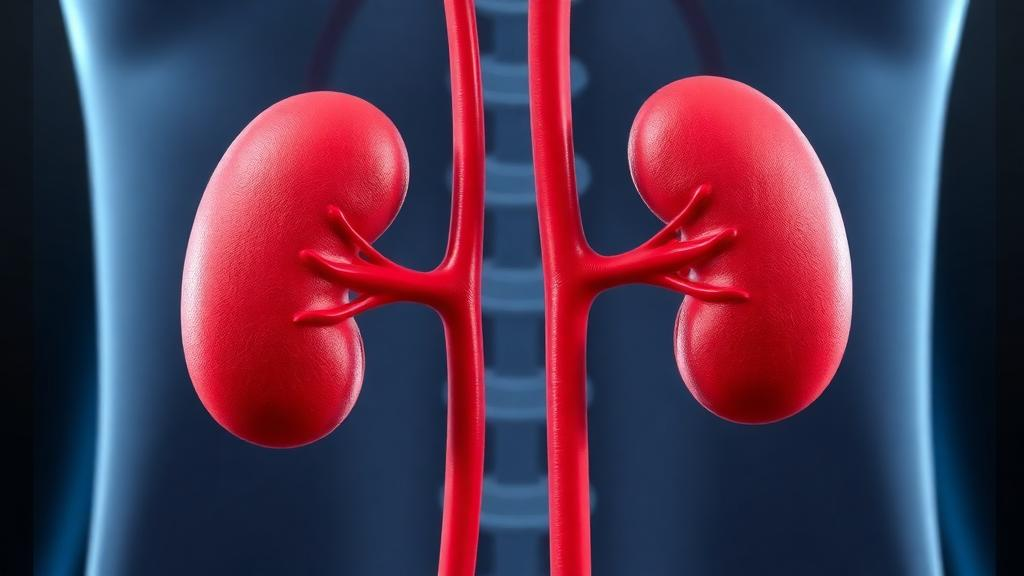
In one of the most consequential findings for the field of living kidney donation in recent years, a research team at King Faisal Specialist Hospital and Research Centre in Riyadh, Saudi Arabia, has demonstrated that kidneys donated by people with thin basement membrane disease (TBMD) perform just as well in recipients as kidneys from donors whose biopsies appear completely normal. The study, published in Frontiers in Transplantation, is the largest cohort analysis to date comparing long-term outcomes of transplantation from these two donor types, and its conclusions could reshape how transplant programs around the world evaluate living donor candidates who show blood in their urine.
Thin basement membrane disease is a genetically influenced kidney disorder characterized by diffuse thinning of the glomerular basement membrane, the delicate filtration barrier within each kidney’s roughly one million filtering units. It is one of the most frequent causes of isolated microscopic hematuria (IMH), a condition in which red blood cells are detectable in the urine under a microscope but produce no other symptoms and no abnormal findings on routine testing. IMH itself is remarkably common, with reported prevalence in the general population ranging from approximately 1 percent to 20 percent depending on age, sex, screening methods, and geographic region. In a previous study by the same Saudi group, roughly 45 percent of potential kidney donors with IMH were found to have TBMD on renal biopsy, suggesting that the condition is far from rare among individuals volunteering to donate a kidney.
Although TBMD is typically regarded as benign, it exists on a genetic spectrum with Alport syndrome, a more serious hereditary kidney disease. Both conditions are linked to mutations in the COL4A3 and COL4A4 genes, which encode the collagen chains that form the structural backbone of the glomerular basement membrane. This genotypic overlap has long raised concerns among nephrologists and transplant surgeons: if a donor carries a subtle collagen defect, could the transplanted kidney deteriorate in the recipient, develop proteinuria, or trigger immune complications such as anti-glomerular basement membrane nephritis? Until now, the evidence base for answering these questions has been thin. A previous study involving only 11 recipients of kidneys from donors with biopsy-confirmed TBMD reported favorable midterm outcomes, but its small sample size and the inherent difficulty of distinguishing early Alport syndrome from benign TBMD limited the strength of its conclusions.
The new study addressed this gap with a retrospective cohort analysis of 93 living donor-recipient pairs transplanted between November 2015 and February 2024. Of these, 39 donors (41.9 percent) had biopsy-proven TBMD, while 54 donors (58.1 percent) had normal biopsy findings despite persistent microscopic hematuria. Every potential donor in the study underwent a rigorous evaluation protocol: urinalysis performed on at least two separate occasions to confirm persistent hematuria, measurement of albumin and total protein excretion, assessment of kidney function using serum creatinine and cystatin C-based estimated glomerular filtration rate, and CT imaging to exclude structural abnormalities. Donors with reduced kidney function, albuminuria, proteinuria, or structural abnormalities were deemed ineligible for donation and excluded from the study entirely.
The diagnostic centerpiece of the protocol was the kidney biopsy itself, evaluated using a tri-modal approach that combined light microscopy with hematoxylin and eosin, Jones silver, and periodic acid-Schiff staining; panel-wide immunofluorescence for IgG, IgA, IgM, C3, and C1q to systematically rule out IgA nephropathy and other immune complex-mediated lesions; and transmission electron microscopy. A diagnosis of TBMD was established only when electron microscopy demonstrated diffuse thinning of the glomerular basement membrane, defined as a mean thickness below 250 nanometers. To avoid tissue shrinkage artifacts that can distort measurements from paraffin-embedded material, ultrastructural evaluation was performed on fresh cortical tissue immediately fixed in 2.5 percent glutaraldehyde, post-fixed in 1 percent osmium tetroxide, and embedded in epoxy resin. Pathologists used a digital measurement method across three distinct glomerular cross-sections, drawing perpendicular lines from the outer endothelial cell membrane to the base of the podocyte plasma membrane across a minimum of 20 randomly selected peripheral capillary loops per glomerulus. This conservative 250-nanometer threshold, the authors note, aligns with contemporary international nephropathology standards and prevents the over-acceptance of donors with subtle, early-stage basement membrane attenuation.
The results are striking in their consistency. At 12 months post-transplant, mean serum creatinine levels, a key marker of kidney filtering capacity, did not differ significantly between recipients of TBMD donor kidneys and those of normal biopsy donors, measuring 95 micromoles per liter versus 88.5 micromoles per liter, a difference that was not statistically significant. Renal function and graft survival remained stable over a follow-up period extending up to nine years, with a median of three years. The incidence of delayed graft function and biopsy-confirmed acute rejection was low and similar between groups, with acute rejection occurring in 15.4 percent of the TBMD group and 11.1 percent of the normal biopsy group within the first year. Blood pressure remained well controlled in both groups throughout follow-up, with no significant differences in systolic or diastolic readings at the final visit.
Perhaps the most intriguing finding concerns the persistence of microscopic hematuria in the recipients themselves. Persistent isolated microscopic hematuria was observed in 87.2 percent of recipients who received kidneys from TBMD donors and 73.1 percent of those who received kidneys from normal biopsy donors. In other words, the blood in the urine traveled with the kidney. Yet despite this high rate of persistent hematuria, not a single recipient in either group developed albuminuria, the leakage of the protein albumin into the urine that serves as an early warning sign of progressive kidney damage. This stands in apparent contrast to donor-focused data from other research groups, which demonstrated that persistent glomerular hematuria in living donors is associated with an increased long-term risk of progressive post-nephrectomy kidney disease and proteinuria in the donor’s remaining kidney. The distinction is critical: while that research highlights potential long-term safety vulnerabilities within the native kidney setting of the donor, the new data focuses on allograft performance inside the recipient, where the transplanted organ appears remarkably resilient.
One-year graft survival was excellent and sustained at the latest follow-up, reaching 97.4 percent in the TBMD group and 98.1 percent in the normal biopsy group. Kaplan-Meier survival analysis confirmed equivalent long-term graft survival trajectories between the two groups, and Cox proportional hazards models found that none of the donor or recipient factors examined, including age, sex, and HLA mismatch status, significantly predicted graft failure or the composite outcome of death or graft failure. In a sensitivity analysis designed to probe the potential impact of heritable traits, the researchers stratified the 93 pairs into a high familial risk group of siblings, parents, and children, and a low or unrelated risk group of paired kidney exchange participants, spouses, and unrelated donors. Twelve-month creatinine levels, persistent hematuria rates, rejection rates, and 36-month graft survival were statistically indistinguishable between the two strata, suggesting that rigorous clinical screening and the tri-modal biopsy protocol effectively mitigated immediate heritable risks even in closely related donor-recipient pairs.
The implications for kidney paired donation programs are particularly noteworthy. In these programs, incompatible donor-recipient pairs exchange kidneys with other pairs to enable transplantation, and maintaining balanced exchanges requires confidence that all donated organs offer comparable graft quality. A potential challenge arises when one donor is found to have TBMD on biopsy while the paired donor shows no histologic abnormalities, raising concerns about fairness and equivalence in organ quality. The new findings provide reassurance that kidneys from donors with TBMD can be considered acceptable for inclusion in paired exchange programs without disadvantaging the recipient who receives them.
The study is not without limitations. Its retrospective design and the absence of long-term prospective donor data introduce the potential for selection and information biases, and the median follow-up of three years provides only short-to-intermediate-term insights. More significantly, the lack of routine genetic testing during the historical study period precludes the complete exclusion of heterozygous COL4A mutations and related hereditary conditions. While genomic sequencing was technically available, samples had to be sent to international laboratories abroad, resulting in turnaround times that were impractical for active transplant timelines. Consequently, the clinical protocol relied strictly on comprehensive clinical screening and tri-modal biopsy evaluation. Recognizing the high proportion of first-degree familial donors within the Saudi Arabian population and the risks of consanguineous heritable traits, the center has recently updated its protocol to implement in-house genetic testing for all prospective living donors presenting with isolated microscopic hematuria, with ongoing prospective follow-up of genetically stratified donor cohorts now underway. The authors emphasize that further large-scale, prospective, and genetically stratified studies including both recipients and donors are warranted to confirm long-term allograft safety and to refine donor selection criteria, and that parallel long-term studies focusing on donor outcomes remain essential to ensure that the benefits to recipients are never purchased at the expense of the living donors themselves.
Subject of Research: Comparative long-term outcomes of kidney transplantation from donors with isolated microscopic hematuria and thin basement membrane disease versus donors with isolated microscopic hematuria and normal histology: the largest cohort analysis to date
Article Title: Comparative long-term outcomes of kidney transplantation from donors with isolated microscopic hematuria and thin basement membrane disease versus donors with isolated microscopic hematuria and normal histology: the largest cohort analysis to date
Article References: Shah, Y., Broering, D., Obeid, D., Aleid, H., Nazmi, A., Alahdal, H., Marquez, K. A. H., AlHussain, T., & Ali, T. (2026). Comparative long-term outcomes of kidney transplantation from donors with isolated microscopic hematuria and thin basement membrane disease versus donors with isolated microscopic hematuria and normal histology: the largest cohort analysis to date. Frontiers in Transplantation, 5, Article 1952224. https://doi.org/10.3389/frtra.2026.1952224
Image Credits: AI Generated
DOI: 10.3389/frtra.2026.1952224
Keywords: kidney transplantation, thin basement membrane disease, living donation, transplant outcomes, nephrology, Comparative, long-term, outcomes, kidney, transplantation, donors, isolated
Cite Scienmag News
Drew Townsend. (October 15, 2026). Kidneys From Donors With Thin Basement Membrane Disease Show Excellent Long-Term Transplant Outcomes. Scienmag. https://scienmag.com/kidneys-from-donors-with-thin-basement-membrane-disease-show-excellent-long-term-transplant-outcomes/
Drew Townsend. "Kidneys From Donors With Thin Basement Membrane Disease Show Excellent Long-Term Transplant Outcomes." Scienmag, 15 October 2026, https://scienmag.com/kidneys-from-donors-with-thin-basement-membrane-disease-show-excellent-long-term-transplant-outcomes/. Accessed 15 October 2026.
Drew Townsend. "Kidneys From Donors With Thin Basement Membrane Disease Show Excellent Long-Term Transplant Outcomes." Scienmag. October 15, 2026. https://scienmag.com/kidneys-from-donors-with-thin-basement-membrane-disease-show-excellent-long-term-transplant-outcomes/


