


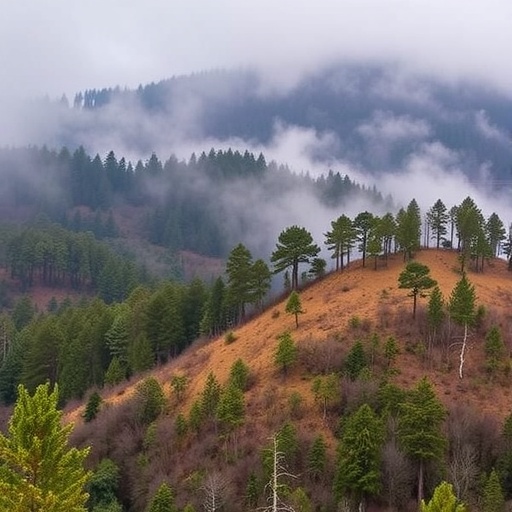
In the heart of Nepal, where the sky meets verdant landscapes, lies the Khaptad National Park—an area designed to balance ecology and human interaction. This sanctuary, with its remarkable biodiversity, is both a crown jewel of the region and a site of emerging human development challenges. Recent research by Gupta and Ishikawa delves into land cover dynamics and community perceptions surrounding this national park, aiming to highlight the intricate dance between nature conservation and community needs.
Understanding land cover dynamics in Khaptad National Park doesn’t simply revolve around mapping trees or grasslands. The park’s ecosystem embodies a delicate balance of flora and fauna that has thrived for centuries. However, development pressures stemming from nearby communities demand a nuanced approach to land management. The combination of agricultural expansion, infrastructural development, and tourism has transformed the area, prompting researchers to investigate how these changes affect both the environment and local livelihoods.
The researchers employed a mix of remote sensing technologies and ground surveys to assess changes in land cover over time. Their analysis indicates a notable transformation in the park’s landscape, primarily driven by human activities. Forest cover has decreased in certain patches, replaced by agricultural fields and settlements as community members seek to improve their living standards. Such insights reveal that conservation strategies in Khaptad must account for socioeconomic dynamics, ensuring that locals are active participants rather than passive observers.
Community perception plays a crucial role in the sustainability of ecological preservation efforts. Gupta and Ishikawa’s study highlights that local communities possess a wealth of indigenous knowledge tied to their long-standing relationship with the park. Many residents recognize the importance of maintaining biodiversity but also express concerns about their future. As agricultural lands encroach upon park boundaries, questions about food security, economic viability, and cultural heritage arise.
Education and awareness are vital in shaping community perceptions. The study notes that fostering an understanding of ecological interdependencies can encourage community members to embrace conservation initiatives. Workshops and outreach programs designed to inform locals about the ecological value of Khaptad could bridge the gap between traditional lifestyles and modern conservation practices. Exploring ways to harmonize community development with environmental stewardship could empower residents to actively engage in protecting their land.
The potential for ecotourism is another pivotal aspect of the research. Khaptad National Park is already recognized for its stunning landscapes and rich biodiversity, making it an attractive destination for tourists. The study suggests that promoting ecotourism could create alternative revenue streams for the local population, allowing them to rely less on exploitative land-use practices. By harnessing both natural beauty and cultural heritage, Khaptad has the potential to establish a thriving tourism economy, while preserving its ecological integrity.
However, the researchers emphasize that sustainable tourism must be carefully managed to avoid the pitfalls of over-commercialization. There is a need for policies that regulate tourism development and establish guidelines ensuring minimal environmental impact. Integrating community voices in these policymaking processes is vital. Empowering locals to manage tourism initiatives ensures that benefits accrue to the community, cultivating a climate in which sustainable practices are respected and enforced.
Gupta and Ishikawa’s comprehensive analysis also prompts a deeper exploration of climate change repercussions, which further complicate the ecological landscape of Khaptad. Fluctuating temperatures and erratic precipitation patterns threaten the delicate ecosystems within the park. Species that have adapted to historical climate patterns may struggle against these shifts, prompting possible migrations or declines. The intertwined relationships between species and their habitats underscore the urgency for adaptive management strategies.
Another essential component of the research is the dynamic feedback loop between community needs and environmental policies. Local populations often depend on park resources for fuel, food, and materials, creating potential conflicts between conservation and daily survival. Crafting equitable resource-sharing agreements could alleviate some of these tensions, ensuring that conservation respects the socio-economic realities of local lives. By aligning conservation goals with the aspirations of local people, a more collaborative framework for park management can emerge.
Further insights from the research suggest that monitoring land use changes and community perspectives should be conducted regularly to inform ongoing adaptation strategies. The authors advocate for an iterative approach to managing Khaptad National Park, wherein conservation measures evolve based on both ecological assessments and community feedback. Such an adaptable methodology can ensure that ecological protections align with social realities, fostering a culture of cooperation between stakeholders.
The implications of Gupta and Ishikawa’s work extend beyond the boundaries of Khaptad National Park. The findings echo a global call for integrated conservation strategies that recognize the complex interplay between human and natural systems. As nations worldwide grapple with the consequences of development, insights from this case study provide valuable lessons for other biodiverse regions facing similar predicaments.
As we look to the future, the research on Khaptad National Park illuminates the path forward for conservation efforts worldwide. It poses critical questions about how we can best harness local knowledge while promoting sustainable practices. The balance between human development and environmental conservation becomes not just a local concern but a global imperative. Ensuring that future generations inherit both cultural richness and ecological health is a challenge that demands our collective attention.
In conclusion, Gupta and Ishikawa’s research on land cover dynamics and community perceptions serves as a vital resource for understanding the evolving narrative of Khaptad National Park. It encapsulates the complexities of balancing conservation with human needs and emphasizes the importance of community involvement in environmental stewardship. The fate of Khaptad rests not only in its natural beauty but also in the empowerment of its people to safeguard a treasured legacy.
Gupta, A., Ishikawa, M. Land cover dynamics and community perception for development of Khaptad National Park, Nepal.
Discov. For. 1, 54 (2025). https://doi.org/10.1007/s44415-025-00054-9
Cite Scienmag News
Margaret Porter. (December 10, 2025). Khaptad National Park: Land Cover Changes & Community Views. Scienmag. https://scienmag.com/khaptad-national-park-land-cover-changes-community-views/
Margaret Porter. "Khaptad National Park: Land Cover Changes & Community Views." Scienmag, 10 December 2025, https://scienmag.com/khaptad-national-park-land-cover-changes-community-views/. Accessed 5 September 2026.
Margaret Porter. "Khaptad National Park: Land Cover Changes & Community Views." Scienmag. December 10, 2025. https://scienmag.com/khaptad-national-park-land-cover-changes-community-views/


