


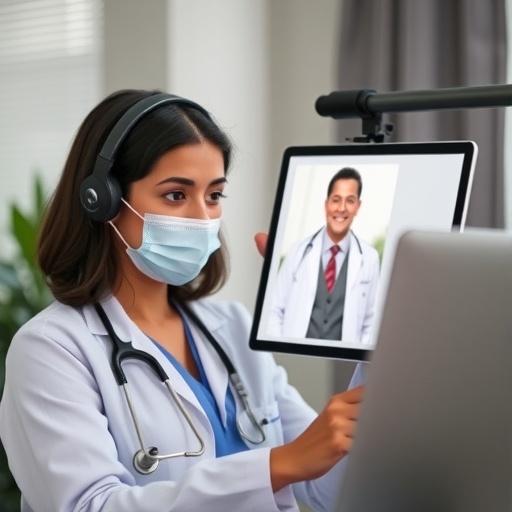
In today’s rapidly evolving healthcare landscape, telemedicine has emerged as a pivotal element, reshaping the dynamics of patient care and professional interactions among healthcare practitioners. A recent study has shed light on this phenomenon, identifying essential competencies that contribute to effective physician-to-physician teleconsultation. Authored by Ghasemi, Changiz, and Omid, the paper titled “Essential competencies for an effective physician-to-physician teleconsultation” explores nuanced specifics that can considerably elevate the quality of remote medical consultations.
As the world navigates through unprecedented challenges, owing to the pandemic and technological advancements, the study underscores the critical need for healthcare professionals to adapt to teleconsultation methods. The conventional face-to-face interactions have transformed dramatically, and so too have the skill sets required to maintain effective communication between physicians. This study dissects these competencies, forming a framework that could serve as a foundation for training programs aimed at enhancing the skills of medical practitioners in telemedicine.
A significant aspect of the study discusses the role of communication in teleconsultations. In traditional settings, body language and physical cues aid in conveying information and building rapport; however, these elements are often diminished in virtual environments. Therefore, the research emphasizes the need for physicians to develop superior verbal communication skills and to become adept at using various digital tools to convey clinical content effectively. Clear articulation of medical terminology not only enhances understanding but fosters trust, which is essential in any doctor-patient or doctor-doctor interaction.
Moreover, the research highlights the importance of technological literacy as a fundamental competency for physicians engaged in teleconsultation. Medical practitioners must be proficient in using software and hardware tools necessary for virtual consultations. Familiarity with video conferencing platforms, electronic health records, and telehealth applications is not merely advantageous; it is crucial. This knowledge enables healthcare providers to troubleshoot potential issues during consultations promptly, ensuring an uninterrupted flow of communication and safeguarding patient safety.
Patient-centered care remains a vital theme in the study’s findings. The authors advocate that even in virtual consultations, physicians must prioritize the patient’s needs and preferences. This approach requires active listening skills, empathy, and the ability to engage patients in shared decision-making processes. Physicians should create an environment that encourages open dialogue, ensuring that patients feel valued and understood, despite the physical absence.
The study also delves into the ethical considerations surrounding teleconsultation. Maintaining patient confidentiality and data security in digital communications is of utmost importance. Physicians must be well-versed in the legal frameworks and ethical guidelines governing telehealth. Understanding these aspects not only protects patient information but also reinforces trust, as patients are more likely to engage in consultations knowing their data is secure.
Furthermore, the authors engage with the concept of cultural competence, which has gained prominence in discussions surrounding healthcare disparities. In the context of teleconsultation, physicians are called to give careful consideration to the diverse cultural backgrounds of their colleagues and patients. This expertise ensures that communication and the delivery of care remain inclusive and respectful. The recognition of cultural nuances can greatly enhance the quality of dialogue and lead to better clinical outcomes.
The research additionally points towards the significance of clinical judgment and decision-making skills within teleconsultation frameworks. Physicians need to be able to assess information accurately and make informed decisions without the benefits of physical examination. The ability to synthesize information from digital sources, assessments, and patient histories becomes paramount in delivering competent healthcare services. This necessity underscores ongoing education and training to keep physicians abreast of best practices in telemedicine.
The findings of this study hold immense implications for medical education. As healthcare systems around the globe increasingly adopt telemedicine, it becomes essential to integrate telehealth competencies into medical training programs and curricula. Future physicians should be equipped not only with traditional medical knowledge but also with the skills necessary to navigate the complexities of digital patient interactions effectively.
The research posits that ongoing professional development is essential for all physicians engaged in teleconsultation. Given the fast-paced evolution of technology and emerging telehealth practices, continuous education through workshops, seminars, and online courses will help healthcare professionals remain relevant and proficient in delivering care through virtual channels.
Additionally, the study emphasizes the collaborative nature of teleconsultation. It is not uncommon for several physicians to be involved in the patient’s care through telemedicine, warranting a need for teamwork and collaborative skills. Physicians must learn to navigate these interactions, ensuring cohesive and coordinated care among their peers. This collaborative framework not only enhances patient care but also enriches the professional experience for physicians participating in teleconsultation.
As we move towards a more integrated technological future, the relevance of research like this cannot be overstated. Adapting to the demands of telemedicine will not only improve physician-patient relationships but also align healthcare practices with modern expectations. The competencies identified in this study provide a roadmap for effective teleconsultation, offering a path forward as the healthcare landscape continues to evolve.
In conclusion, Ghasemi, Changiz, and Omid’s study serves as a crucial resource for healthcare professionals at all levels. The essential competencies outlined here encompass a variety of skills needed for effective physician-to-physician teleconsultation, from technological literacy and communication to ethical considerations and cultural competence. It is imperative that the medical community embraces these findings and prepares adequately for an increasingly digital medical world.
For those wishing to further explore the study’s insights and recommendations, the full article can be accessed through BMC Medical Education, where it contributes to our understanding of telemedicine’s role in modern healthcare and the essential skills physicians must develop to enhance their practice within this evolving framework.
Ghasemi, S., Changiz, T. & Omid, A. Essential competencies for an effective physician-to-physician teleconsultation.
BMC Med Educ (2025). https://doi.org/10.1186/s12909-025-08362-6
Cite Scienmag News
Courtney Benton. (November 25, 2025). Key Skills for Successful Physician Teleconsultations. Scienmag. https://scienmag.com/key-skills-for-successful-physician-teleconsultations/
Courtney Benton. "Key Skills for Successful Physician Teleconsultations." Scienmag, 25 November 2025, https://scienmag.com/key-skills-for-successful-physician-teleconsultations/. Accessed 3 September 2026.
Courtney Benton. "Key Skills for Successful Physician Teleconsultations." Scienmag. November 25, 2025. https://scienmag.com/key-skills-for-successful-physician-teleconsultations/


