


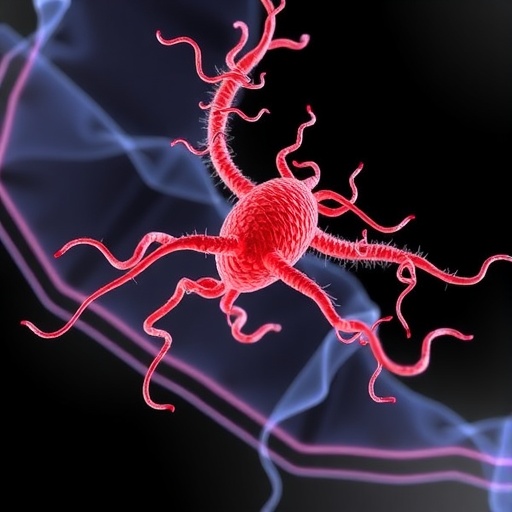
In a groundbreaking study set to redefine our understanding of parasitic infections, researchers have uncovered critical insights into the molecular mechanisms guiding the egress of Babesia divergens from host cells. This parasitic protozoan, notorious for causing babesiosis in humans and animals, utilizes a complex interplay of kinases and proteases—enzymes pivotal to cellular signaling and protein degradation—to orchestrate its exit strategy from infected red blood cells. The discovery held within this latest research, published in Nature Microbiology in 2026, not only deepens scientific comprehension of Babesia pathogenesis but also paves the way for revolutionary therapeutic interventions aimed at halting the parasite’s life cycle.
Babesia divergens, a tick-borne intracellular parasite, imposes significant health risks globally by invading and replicating within erythrocytes. Its success hinges on a finely tuned process of entering, replicating, and ultimately egressing the host cell to infect new cells. While prior studies captured aspects of the invasion and replication phases, the nuances of egress—how the parasite leaves the host cell—remained elusive. This new investigation spotlights the indispensable role of specialized kinases and proteases in this critical transition phase, warning that these molecules represent viable drug targets that could interrupt the parasite’s propagation.
The researchers employed a suite of sophisticated molecular and biochemical techniques to dissect the egress process. By harnessing genetic manipulation tools alongside precision protease inhibitors, they delineated the specific proteins activated prior to and during egress. Detailed kinase activity assays illuminated a hierarchy of essential enzymes whose sequential activation facilitates the timely breakdown of host cell barriers. Simultaneously, proteases catalyze proteolytic cleavage events that dismantle structural components within the infected erythrocyte, enabling parasite release without premature host cell lysis that could alert the immune system.
Central to the findings is the identification of at least two key kinases that act in concert to trigger egress. These kinases propagate intracellular signaling cascades responsible for orchestrating cytoskeletal rearrangements and membrane destabilization. This mechanism mirrors egress strategies observed in related apicomplexan parasites; however, the study underscores unique kinase-substrate interactions specific to Babesia divergens. Targeting these kinases could thus disrupt parasite exit while minimizing off-target effects on the host, presenting an alluring therapeutic window.
Proteases emerged as equally critical players, functioning downstream of the kinase activation checkpoints. The study distinguishes both serine and cysteine proteases with specialized roles, potentially orchestrated in a proteolytic cascade. Their enzymatic actions facilitate degradation of the parasitophorous vacuole membrane and red blood cell cytoskeleton, both necessary to liberate the parasite. Inhibiting these proteases effectively trapped parasites within host cells, demonstrating the druggability of these enzymes.
This dual enzyme dependency confirms that Babesia divergens egress is a highly regulated, multi-step event rather than a passive rupture. Such regulation likely serves to optimize parasite survival and transmission efficacy. By finely controlling host cell exit, the parasite minimizes immune detection and preserves its infectious potential. Consequently, interrupting any node within these kinase or protease pathways offers a strategic approach to stymie disease progression.
Crucially, the study reports that small molecule inhibitors that selectively target these kinases and proteases exhibit profound anti-parasitic efficacy in vitro. These compounds, some of which have known safety profiles, provide promising scaffolds for drug development. By repurposing or refining these inhibitors, researchers anticipate accelerated pipelines toward viable babesiosis treatments that circumvent current limitations such as drug resistance and toxicity.
Further examination using advanced imaging techniques revealed precise spatiotemporal dynamics of kinase activation and protease deployment within infected cells. Fluorescent tagging visualized the sequential events of host membrane remodeling and parasite motility preceding egress. These insights enhance the conceptual framework underlying parasite-host interactions, offering clues to the molecular choreography that may be conserved across related pathogens.
This investigation arrives at a pivotal moment when tick-borne diseases are on the rise globally, and babesiosis remains underdiagnosed and undertreated. The elucidation of Babesia divergens egress mechanisms directly addresses longstanding gaps in knowledge and invigorates the field’s capacity to combat parasitic infections through targeted molecular approaches.
Beyond therapeutic implications, the research carries profound biological significance. Understanding egress is fundamental to parasite biology and informs vaccine development strategies that might, for example, aim to prime immune responses against key egress factors. Additionally, the paradigm established here may inspire comparative studies across other apicomplexan genera, such as Plasmodium and Toxoplasma, where similar egress challenges impact global health.
The collective work of Elsworth, Keroack, Rezvani, and colleagues represents a landmark contribution with extraordinary multidisciplinary integration—from enzymology and molecular genetics to pharmacology and cellular imaging. Their comprehensive dissection of Babesia divergens egress transcends descriptive biology, translating mechanistic insight into actionable drug targets.
Looking forward, the researchers propose extending these findings through in vivo validation and therapeutic trials, aiming to confirm efficacy and safety in animal models. They also suggest exploration of combination therapies that simultaneously disrupt kinase and protease functions, potentially enhancing anti-parasitic potency and mitigating resistance emergence.
As vector-borne diseases continue to challenge global health security, this study exemplifies the transformative power of basic science intertwined with translational goals. The unveiled molecular machinery driving Babesia divergens host cell egress not only enriches our biological lexicon but also signals a new dawn in the quest for effective interventions against a stealthy and pernicious parasite.
With rising concerns over climate change’s impact on tick distribution and infection rates, advancing our molecular understanding of Babesia divergens is both urgent and timely. This research equips the scientific community with novel frameworks and tools to outmaneuver a pathogen that has long evaded full therapeutic mastery.
In sum, the elucidation of essential and druggable kinases and proteases that mediate Babesia divergens host cell egress stands as a monumental stride toward precision medicine for babesiosis. It bridges a critical knowledge gap, offering hope for innovative treatments that can safeguard vulnerable populations and alleviate the burden of this expanding infectious disease threat.
Cite Scienmag News
Drew Townsend. (January 27, 2026). Key Kinases, Proteases Enable Babesia divergens Exit. Scienmag. https://scienmag.com/key-kinases-proteases-enable-babesia-divergens-exit/
Drew Townsend. "Key Kinases, Proteases Enable Babesia divergens Exit." Scienmag, 27 January 2026, https://scienmag.com/key-kinases-proteases-enable-babesia-divergens-exit/. Accessed 5 September 2026.
Drew Townsend. "Key Kinases, Proteases Enable Babesia divergens Exit." Scienmag. January 27, 2026. https://scienmag.com/key-kinases-proteases-enable-babesia-divergens-exit/


