


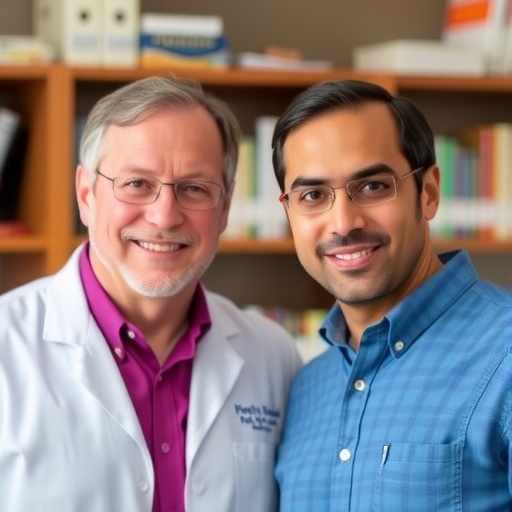
Today, the National Academy of Medicine announced the election of two distinguished scientists, Karel Svoboda, Ph.D., and Jay Shendure, M.D./Ph.D., recognizing their profound contributions to medical science and biotechnology. This honor is widely regarded as one of the highest accolades in health and medicine, spotlighting individuals who have demonstrated exceptional professional achievement and enduring impact on the advancement of medical sciences, healthcare, and public health globally. The election of Svoboda and Shendure underscores their pivotal roles at the frontier of biomedical research and technological innovation.
Karel Svoboda holds the position of executive vice president and director of the Allen Institute’s Neural Dynamics “moonshot,” a visionary initiative aimed at decoding the fundamental principles of neural circuit function. Svoboda’s pioneering work has unraveled synaptic mechanisms that govern learning as well as the neural circuits that orchestrate planning and movement. His research has been critical in illuminating how complex behaviors arise from neuronal interactions, bridging gaps between cellular neurophysiology and cognitive function. Central to his achievements is the development of sophisticated microscopes, molecular tools, and computational software that enable unprecedented cellular imaging within intact brain tissue, thereby facilitating an integrative understanding of neural dynamics in living organisms.
In reflecting on his election, Svoboda emphasized the importance of curiosity-driven, fundamental brain research, recognizing how biophysical methodologies catalyze transformative advances in medical science. His career trajectory encompasses a deep commitment to innovation, demonstrated during his tenure at HHMI’s Janelia Research Campus where he led efforts at the intersection of neuronal biophysics and cognition. By integrating biophysical approaches with experimental neuroscience, Svoboda has elucidated the core principles of information processing within mammalian neural circuits, advancing both theoretical frameworks and practical methodologies in brain science.
Jay Shendure, appointed as the lead scientific director of the Seattle Hub for Synthetic Biology and professor at the University of Washington School of Medicine, earned commendation for his role in pioneering the second wave of genomics technologies. His work has revolutionized gene discovery techniques, non-invasive prenatal testing, cancer diagnostics, synthetic biology, and the study of gene regulation and embryonic development at the single-cell resolution. Shendure’s innovative approaches have transformed the capacity to analyze complex biological phenomena dynamically, enabling insights into cellular heterogeneity and molecular mechanisms across developmental timelines.
Shendure’s research has particularly advanced exome sequencing applications, which have become indispensable tools for identifying genetic variants linked to Mendelian disorders and autism spectrum disorders. His contributions extend to cell-free DNA diagnostics — a non-invasive method enabling early cancer detection and prenatal assessment through circulating nucleic acids. Additionally, his investigations into whole organism lineage tracing have unveiled cellular ancestry in developmental biology, utilizing cutting-edge genomic tools to map cellular fates over time.
The election of these two scientists is part of a cohort of 100 individuals recognized by the National Academy of Medicine this year, cementing their status among the most influential thought leaders in biomedical research. Rui Costa, D.V.M./Ph.D., President and CEO of the Allen Institute, lauded Svoboda and Shendure’s work as embodying the Institute’s mission to tackle profound questions in biology. Their innovative methodologies and interdisciplinary pursuits exemplify new paradigms for studying life processes, with implications that resonate across neuroscience, genomics, and synthetic biology.
Consistent with the Allen Institute’s commitment to open science, the impactful findings, datasets, and technological advancements produced by Svoboda and Shendure are shared openly with the global scientific community. This open-access approach fosters collaboration, accelerates discovery, and broadens the translational potential of their work to address pressing health challenges. Their contributions are not confined to academic spheres but also hold transformative promise for clinical applications and therapeutic development.
Svoboda’s academic journey began with a B.A. in Physics from Cornell University followed by a Ph.D. in Biophysics from Harvard University. His postdoctoral and professional career has been marked by the invention of innovative imaging technologies—tools that have reshaped how scientists visualize neural circuits with cellular precision in vivo. Among his accolades are the Society for Neuroscience Young Investigator Award and the prestigious Brain Prize from the Lundbeck Foundation, reflecting his leadership in neuroscience. Furthermore, he is a member of the National Academy of Sciences, emphasizing the broad scientific esteem he commands.
Shendure’s research group in Seattle has been at the technological vanguard, developing methodologies that have propelled understanding of human genetic diseases and developmental biology. His distinguished honors include the Curt Stern Award, the Richard Lounsbery Award, and the Mendel Award, each recognizing exceptional contributions to human genetics and genomics. Like Svoboda, Shendure is also a member of the National Academy of Sciences, indicative of his strategic impact on the genetic and genomic sciences.
The election of both Svoboda and Shendure to the National Academy of Medicine not only celebrates their past achievements but also propels their potential to drive future innovations. Their research exemplifies the synthesis of technology, fundamental biology, and translational medicine, setting new benchmarks for how interdisciplinary science can unlock life’s most intricate mysteries and translate them into tangible health benefits.
The Allen Institute remains a vital catalyst for high-impact scientific inquiry and discovery, driven by a philosophy that values innovation, transparency, and collaborative progress. Svoboda and Shendure’s trajectories emphasize the transformative power of merging cellular-level insights with genome-scale technologies in a quest to understand foundational principles of health, disease, and development. As these researchers continue their work, the broader biomedical ecosystem is poised to benefit from the tools, data, and conceptual breakthroughs they produce.
In summary, the National Academy of Medicine’s recognition of Karel Svoboda and Jay Shendure highlights their career-defining achievements at the convergence of neuroscience and genomics. Their pioneering methodologies, from advanced neural imaging technologies to synthetic biology and genomic diagnostics, are reshaping our understanding of complex biological systems. This accolade affirms their leadership in biomedical innovation and sets an inspiring precedent for future generations of scientists striving to unravel the underpinnings of life and to develop interventions that improve human health worldwide.
News Publication Date: Not specified in the source content.
Web References:
- https://alleninstitute.org/person/karel-svoboda-2/
- https://alleninstitute.org/person/jay-shendure/
- https://alleninstitute.org/
Cite Scienmag News
Cassandra Pierce. (October 20, 2025). Karel Svoboda and Jay Shendure Elected to National Academy of Medicine. Scienmag. https://scienmag.com/karel-svoboda-and-jay-shendure-elected-to-national-academy-of-medicine/
Cassandra Pierce. "Karel Svoboda and Jay Shendure Elected to National Academy of Medicine." Scienmag, 20 October 2025, https://scienmag.com/karel-svoboda-and-jay-shendure-elected-to-national-academy-of-medicine/. Accessed 4 September 2026.
Cassandra Pierce. "Karel Svoboda and Jay Shendure Elected to National Academy of Medicine." Scienmag. October 20, 2025. https://scienmag.com/karel-svoboda-and-jay-shendure-elected-to-national-academy-of-medicine/


