


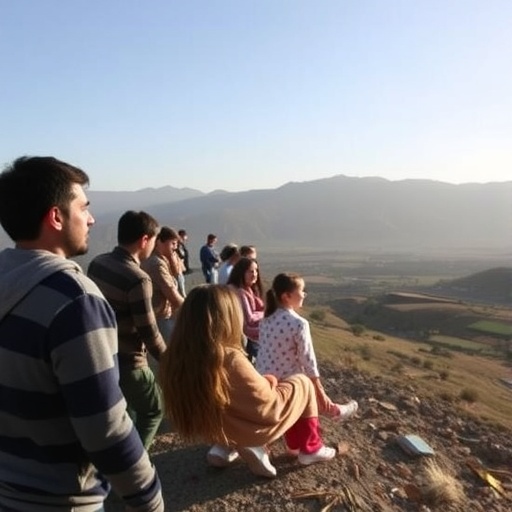
In the aftermath of prolonged conflicts, the question of mental health among affected populations often remains underexplored. Recent developments in Azerbaijan, particularly after the second Karabakh War, illuminate this pressing issue. According to the pioneering research conducted by A. Bunyatova, a substantial psychological legacy has emerged amongst children and adolescents in the region. This study aims to shed light on the challenges these young individuals face while navigating their emotional and psychological landscapes in a post-war environment.
Bunyatova’s work delves into how armed conflicts, like the one experienced during the second Karabakh War, significantly influence the mental well-being of young people. The traumatic experiences stemming from violence, displacement, and loss can have lasting implications. It is particularly concerning when considering that children’s brains are still developing, making them vulnerable to the adverse effects of trauma. This research effectively highlights the critical need for mental health interventions tailored to this demographic.
The research utilized a mixed-methods approach, combining quantitative surveys with qualitative interviews to gain comprehensive insights into the psychological state of young Azerbaijani individuals. By employing various assessment tools, the study examines symptoms of anxiety, depression, and post-traumatic stress disorder (PTSD). The findings revealed alarming rates of these mental health challenges, reflecting a pressing crisis within the community.
Interestingly, Bunyatova’s analysis also uncovers variations in mental health outcomes based on gender. Female adolescents reported higher levels of anxiety and depressive symptoms when compared to their male counterparts, prompting discussions regarding the role of societal expectations and gender differences in coping mechanisms. The socio-cultural context is paramount in understanding how these young individuals process their trauma.
In addition, the study highlights the significance of social support systems, which play a crucial role in mitigating the psychological impacts of war. Children who were able to lean on family, friends, and community resources showed resilience and better mental health outcomes. Conversely, those isolated or lacking supportive relationships experienced heightened symptoms of mental distress. Thus, fostering a nurturing environment can be paramount in aiding recovery.
The role of educational institutions in addressing mental health is also brought into focus. Schools often represent a critical space for intervention, where children can receive psychological support and counseling. Unfortunately, many educational settings in post-conflict areas are ill-equipped to handle psychological crises, often prioritizing academic success over emotional well-being. Bunyatova advocates for the integration of mental health education and resources within schools to cultivate a more supportive framework.
Moreover, Bunyatova’s research underscores the importance of culturally sensitive approaches to mental health care. Psychological interventions that do not take into account cultural norms may be less effective. Thus, the study calls for mental health practitioners to engage with the local culture and tailor therapy to resonate with the lived experiences of adolescents. Involving community leaders and utilizing local knowledge can enhance the relevance and acceptance of mental health initiatives.
Equally important is the role of technology in addressing these mental health challenges. The proliferation of digital platforms provides new avenues for outreach and support, particularly for younger generations who are increasingly connected online. Telepsychology and digital mental health apps can bridge gaps in access to traditional services, enabling children and adolescents to seek help in a more comfortable and accessible manner.
However, despite the potential of technology, Bunyatova warns of the challenges that accompany this shift. There is a risk of over-reliance on digital solutions, which may not adequately address the complexities of individual mental health needs. Therefore, a balanced approach that combines traditional therapeutic interventions with emerging technologies is essential.
The findings of Bunyatova’s study are timely, as they align with a growing global awareness of mental health following crises. Policymakers, healthcare providers, and educators must prioritize mental well-being, particularly among vulnerable populations such as children and adolescents. Developing comprehensive mental health policies can aid communities in rebuilding their collective psyche in the wake of conflict.
This research illuminates the critical intersection of war, mental health, and youth in Azerbaijan, providing invaluable insights for future studies. The psychological scars left by conflict are not merely personal but communal, influencing future generations. As such, addressing mental health is not only an individual responsibility but also a societal imperative.
In conclusion, the legacy of war extends far beyond the battlefield, manifesting profoundly in the minds of young individuals. Bunyatova’s comprehensive study presents a call to action for societal engagement in addressing these mental health challenges. Without collective efforts to understand and support the psychological needs of children and adolescents, the long-term implications for both individuals and society at large could be dire. Thus, the time for action is now—louder voices are needed to advocate for mental health as an integral component of community recovery and resilience.
Bunyatova, A. War’s psychological legacy: a study of mental health challenges among children and adolescents in Azerbaijan after the second Karabakh War.
Discov Ment Health 5, 100 (2025). https://doi.org/10.1007/s44192-025-00246-x
Cite Scienmag News
Glenn Wilkins. (August 23, 2025). Karabakh War’s Lasting Mental Health Impact on Youth. Scienmag. https://scienmag.com/karabakh-wars-lasting-mental-health-impact-on-youth/
Glenn Wilkins. "Karabakh War’s Lasting Mental Health Impact on Youth." Scienmag, 23 August 2025, https://scienmag.com/karabakh-wars-lasting-mental-health-impact-on-youth/. Accessed 6 September 2026.
Glenn Wilkins. "Karabakh War’s Lasting Mental Health Impact on Youth." Scienmag. August 23, 2025. https://scienmag.com/karabakh-wars-lasting-mental-health-impact-on-youth/


