


Researchers Kazuko Hamaoka, Kasumi Kusakari, and Hirokazu Tanimoto have demonstrated an alternative computational approach that utilizes temporal information of the system to recover cellular force fields in traction force microscopy. Traction force microscopy is a simple, non-invasive method that can quantify cellular contact forces at the cell-substrate interface. In practice, the technique solves an inverse problem of determining the force field from measured substrate deformation. Because this inverse mathematical problem is ill-posed with a large condition number, it is necessary to suppress the amplification of measurement noise during the inversion process.
To handle measurement noise, previous studies have employed algorithms such as regularization or filtering that utilize spatial information to discriminate noise and true signals. In contrast, the alternative framework developed by Hamaoka, Kusakari, and Tanimoto utilizes temporal information of the system instead. The method employs the Kalman filter, described as a simple data assimilation algorithm in time series analysis, to recover the force field. By shifting emphasis toward sequential data assimilation, this framework provides an alternative means of distinguishing true mechanical signals from noise.
Using numerically generated data, the researchers show that the method is more accurate than standard algorithms including L2-regularization and is effective at filtering out temporal noise. Furthermore, using experimental data on locomoting cells, the authors demonstrate that the method can reliably infer time-varying cellular traction forces during locomotion. These numerical and experimental results confirm that the data assimilation framework reliably tracks dynamic forces while filtering out temporal noise.
The authors also demonstrate two extensions of the proposed method: the incorporation of additional knowledge and the direct inference of low-dimensional force characteristics. These practical advantages will motivate the use of the proposed framework for analyzing dynamic cell mechanics.
Subject of Research: Development of a Kalman filter-based method for traction force microscopy to improve accuracy in quantifying cellular contact forces.
Article Title: Traction force microscopy using temporal information
Article References: Hamaoka, K., Kusakari, K., & Tanimoto, H. (2026). Traction force microscopy using temporal information. PLOS Computational Biology, 22(11), e1014855. https://doi.org/10.1371/journal.pcbi.1014855
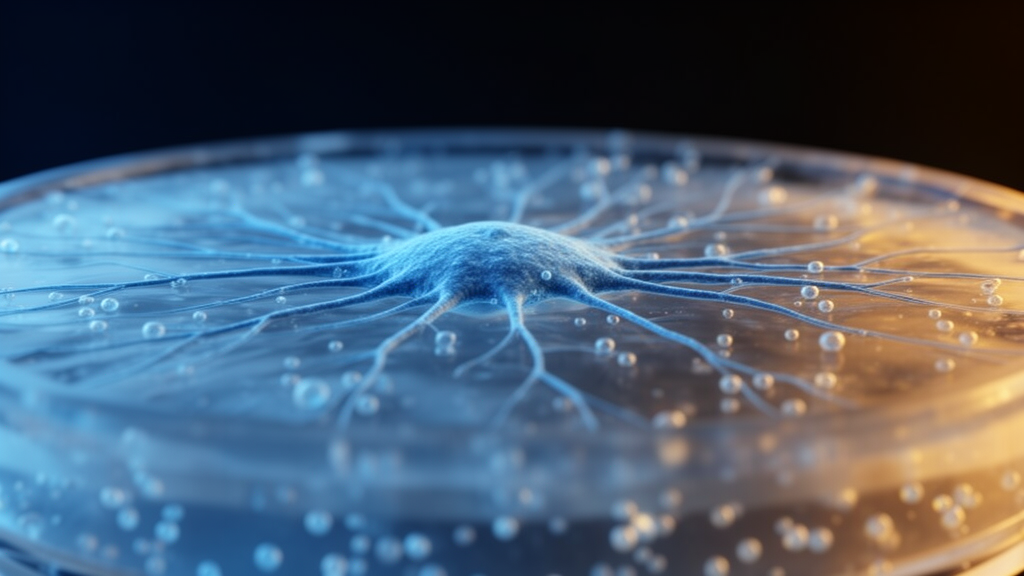
Image Credits: AI Generated
DOI: 10.1371/journal.pcbi.1014855
Keywords: traction force microscopy, Kalman filter, cellular mechanics, inverse problem, noise filtering, cell-substrate interface, time series analysis, L2-regularization, Traction, force, microscopy, temporal
Cite Scienmag News
Drew Townsend. (November 10, 2026). Kalman Filter Improves Traction Force Microscopy Accuracy. Scienmag. https://scienmag.com/kalman-filter-improves-traction-force-microscopy-accuracy/
Drew Townsend. "Kalman Filter Improves Traction Force Microscopy Accuracy." Scienmag, 10 November 2026, https://scienmag.com/kalman-filter-improves-traction-force-microscopy-accuracy/. Accessed 10 November 2026.
Drew Townsend. "Kalman Filter Improves Traction Force Microscopy Accuracy." Scienmag. November 10, 2026. https://scienmag.com/kalman-filter-improves-traction-force-microscopy-accuracy/




