

Sunday, July 26, 2026
Science
No Result
View All Result
  • Login
  • HOME
  • SCIENCE NEWS
  • CONTACT US
  • HOME
  • SCIENCE NEWS
  • CONTACT US
No Result
View All Result
Scienmag
No Result
View All Result
Home Science News Chemistry

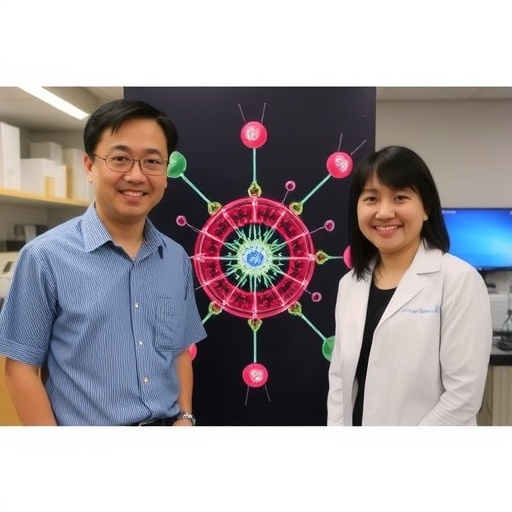
KAIST Finds Molecular Switch Activating Cell Growth Signaling for Anticancer Therapy

July 26, 2026
in Chemistry
Reading Time: 2 mins read
0
KAIST Finds Molecular Switch Activating Cell Growth Signaling for Anticancer Therapy

KAIST Finds Molecular Switch Activating Cell Growth Signaling for Anticancer Therapy

65
SHARES
587
VIEWS
Share on FacebookShare on Twitter
ADVERTISEMENT

Cells have internal “growth switches” that respond to nutrient availability—especially amino acids. When food is plentiful, cells accelerate protein synthesis and metabolism; when it is scarce, they slow down. A team from KAIST and Yonsei University reports a molecular explanation for how amino acid signals are converted into mTORC1-dependent growth signaling, offering a potential blueprint for more targeted anticancer strategies.

The central node in this pathway is mTORC1, a protein complex long known to act as the cell’s growth switch. Although direct mTORC1 inhibitors can suppress tumor growth, they may also disrupt normal cellular functions because mTORC1 is required for healthy metabolism. The new work therefore focuses on the earlier steps that sense nutrients and trigger mTORC1, aiming to intervene upstream.

Researchers examined the multi-tRNA synthetase complex (MSC), a large assembly best known for charging tRNAs with amino acids during translation. Using experiments that track MSC behavior after amino acid stimulation, they found that the MSC releases a protein called LARS1. This release provides a mechanistic link between nutrient cues and activation of mTORC1.

LARS1 (leucyl-tRNA synthetase 1) turned out to be more than a translation enzyme: it also functions as an intracellular leucine sensor. Upon nutrient sufficiency, LARS1 undergoes phosphorylation, a chemical modification that changes how proteins interact. Phosphorylation weakens LARS1’s grip on IARS1, the MSC subunit that anchors it.

A “switch model” emerges. In nutrient-poor conditions, LARS1 remains bound within the MSC and the growth signal stays off. When nutrients rise, phosphorylation acts like a deployment signal, causing LARS1 to dissociate from IARS1. Freed LARS1 then activates mTORC1, turning growth back on.

To define this mechanism structurally, the team used cryo-electron microscopy (cryo-EM), generating a near-atomic view of the LARS1:IARS1 complex. The structure revealed how LARS1 and IARS1 normally assemble tightly, and how phosphorylation would disrupt their interface to enable dissociation.

Finally, the researchers engineered phosphomimetic LARS1 variants designed to imitate the phosphorylated state. These mutants significantly boosted mTORC1 activity, supporting the conclusion that LARS1 phosphorylation is the key molecular switch translating amino acid signals into growth signaling.

The study, published online in Nature Communications on June 11, advances a detailed molecular map of nutrient sensing by the MSC. By identifying the steps upstream of mTORC1 activation, it also highlights a route to therapies that may suppress abnormal tumor growth signals without directly shutting down mTORC1 itself.

Subject of Research: Amino acid–responsive nutrient sensing mechanism linking the MSC to mTORC1 via LARS1 phosphorylation.

Article Title: Cryo-EM structure of the LARS1:IARS1 complex reveals a nutrient-responsive switch controlling mTORC1 signaling

News Publication Date: 11-Jun-2026

Web References: http://dx.doi.org/10.1038/s41467-026-74085-x

References: Nature Communications (published online June 11, 2026). DOI: 10.1038/s41467-026-74085-x.

Image Credits: Credit: KAIST

Tags: amino acid signalinganticancer therapy targetscancer cell growth regulationintracellular leucine sensingleucyl-tRNA synthetase 1 (LARS1)molecular switch for cell growthmTORC1 pathwaynutrient sensing mechanismsregulation of cell metabolismtargeted cancer treatment strategiestRNA synthetase complexupstream mTORC1 activation
Share26Tweet16
Previous Post

Plant-Forward Planetary Diet Cuts Heart Disease Risk, Study Finds

Next Post

Genetic Makeup Predicts Cancer Patients’ Benefits and Side Effects from Immunotherapy

Related Posts

Can sparkling water be gentler on your teeth than other drinks?
Chemistry

Can sparkling water be gentler on your teeth than other drinks?

July 26, 2026
Versatile On-Support Phosphitylation Enables Efficient Oligonucleotide Functionalization
Chemistry

Versatile On-Support Phosphitylation Enables Efficient Oligonucleotide Functionalization

July 26, 2026
UW Chemists Develop New Approach to Improve Electron Transfer Selectivity
Chemistry

UW Chemists Develop New Approach to Improve Electron Transfer Selectivity

July 26, 2026
Researchers Enhance Hydrogen Production with Single-Element Dual-Site Substitution
Chemistry

Researchers Enhance Hydrogen Production with Single-Element Dual-Site Substitution

July 17, 2026
Satellite Observations Improve Global Mapping of Soil Moisture
Chemistry

Satellite Observations Improve Global Mapping of Soil Moisture

July 17, 2026
Noble Metal-Modified Zinc Oxide Nanoflakes Show Enhanced Gas Sensing Properties
Chemistry

Noble Metal-Modified Zinc Oxide Nanoflakes Show Enhanced Gas Sensing Properties

July 17, 2026
Next Post
Genetic Makeup Predicts Cancer Patients’ Benefits and Side Effects from Immunotherapy

Genetic Makeup Predicts Cancer Patients’ Benefits and Side Effects from Immunotherapy

  • Mothers who receive childcare support from maternal grandparents show more

    Mothers who receive childcare support from maternal grandparents show more parental warmth, finds NTU Singapore study

    27656 shares
    Share 11059 Tweet 6912
  • University of Seville Breaks 120-Year-Old Mystery, Revises a Key Einstein Concept

    1061 shares
    Share 424 Tweet 265
  • Bee body mass, pathogens and local climate influence heat tolerance

    682 shares
    Share 273 Tweet 171
  • Researchers record first-ever images and data of a shark experiencing a boat strike

    546 shares
    Share 218 Tweet 137
  • Groundbreaking Clinical Trial Reveals Lubiprostone Enhances Kidney Function

    531 shares
    Share 212 Tweet 133
Science

Embark on a thrilling journey of discovery with Scienmag.com—your ultimate source for cutting-edge breakthroughs. Immerse yourself in a world where curiosity knows no limits and tomorrow’s possibilities become today’s reality!

RECENT NEWS

  • Five Changes to Rethink Urban Heat Assessment and Action Planning
  • Resting-State EEG Reveals Spectral Power and Connectivity Changes in MSA
  • Skin-Adhesive Bimodal Patch Measures Occlusal Function for Dental Assessment
  • In situ monazite isotopes trace mantle fluids fueling Jiaodong gold formation

Categories

  • Agriculture
  • Anthropology
  • Archaeology
  • Athmospheric
  • Biology
  • Biotechnology
  • Blog
  • Bussines
  • Cancer
  • Chemistry
  • Climate
  • Earth Science
  • Editorial Policy
  • Marine
  • Mathematics
  • Medicine
  • Pediatry
  • Policy
  • Psychology & Psychiatry
  • Science Education
  • Social Science
  • Space
  • Technology and Engineering

Subscribe to Blog via Email

Enter your email address to subscribe to this blog and receive notifications of new posts by email.

Join 5,146 other subscribers

© 2025 Scienmag - Science Magazine

Welcome Back!

Login to your account below

Forgotten Password?

Retrieve your password

Please enter your username or email address to reset your password.

Log In
No Result
View All Result
  • HOME
  • SCIENCE NEWS
  • CONTACT US

© 2025 Scienmag - Science Magazine

Discover more from Science

Subscribe now to keep reading and get access to the full archive.

Continue reading
