

Sunday, July 12, 2026
Science
No Result
View All Result
  • Login
  • HOME
  • SCIENCE NEWS
  • CONTACT US
  • HOME
  • SCIENCE NEWS
  • CONTACT US
No Result
View All Result
Scienmag
No Result
View All Result
Home Science News Technology and Engineering

KAIST Creates AI to Detect Early Cerebrovascular Disease Signs at Home

July 12, 2026
in Technology and Engineering
Reading Time: 2 mins read
0
KAIST Creates AI to Detect Early Cerebrovascular Disease Signs at Home

KAIST Creates AI to Detect Early Cerebrovascular Disease Signs at Home

65
SHARES
587
VIEWS
Share on FacebookShare on Twitter
ADVERTISEMENT

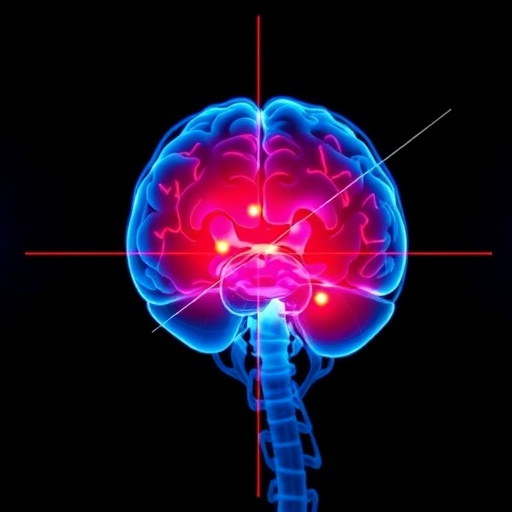
South Korean researchers have unveiled an innovative artificial intelligence (AI) system capable of detecting early signs of cerebrovascular disease by monitoring subtle behavioral changes in older adults at home. Developed through a collaboration led by KAIST, this technology utilizes contactless sensors to analyze daily activity patterns, sleep quality, circadian rhythms, and indoor environmental factors, providing an unprecedented window into prodromal risk stages before clinical symptoms emerge.

Traditional diagnosis of cerebrovascular disease typically occurs only after noticeable symptoms prompt medical consultations, which risks delaying critical treatment. By contrast, the KAIST-led team harnessed lifelog data from 1,224 elderly participants, collecting over 13,000 biweekly samples in real residential settings through sensors monitoring movement, sleep, and environmental variables like humidity. Integrating these data with patient age and chronic disease histories, their AI model identified digital behavioral markers indicative of escalating stroke risk.

A key breakthrough lies in the system’s ability to differentiate between individuals in a stable pre-risk phase and those in an imminent diagnostic window, defined as within four weeks before clinical diagnosis. Impressively, this binary classification achieved 96.5% accuracy, demonstrating the AI’s potential to flag patients approaching critical periods well before conventional detection methods. Patterns such as irregular nocturnal activity between 10 p.m. and 2 a.m., usually reserved for sleep, alongside diminished evening activity and increased sedentary time, were hallmark signs identified by the algorithm.

The research further integrated explainable AI techniques, uncovering lifestyle and environmental contributors behind its predictions. For example, dry indoor air—characterized by low humidity—emerged as a significant environmental risk factor for imminent cerebrovascular events. This insight offers actionable data points that caregivers and healthcare professionals could monitor and potentially modify to mitigate risk.

While this technology is not designed to replace clinical diagnosis, it offers a vital support tool for early intervention by continuously and non-invasively surveillance behavioral health markers. Professor Lisa Lim, lead author and civil engineering expert, highlights that their approach shifts the paradigm from reactive healthcare towards prevention and timely medical engagement by detecting warning signals embedded in everyday life routines.

Future research aims to validate these promising findings in larger cohorts to establish generalizability and clinical efficacy. With cerebrovascular diseases remaining a leading cause of morbidity and mortality worldwide, such AI-driven home monitoring holds promise for reducing stroke incidence through personalized risk assessment and proactive health management.

This study was published in the high-impact journal npj Digital Medicine on June 2, 2026, marking a milestone in digital healthcare innovation by demonstrating how subtle lifestyle alterations detected at home can inform disease trajectory prediction and prevention strategies.

Subject of Research: AI-based early detection of cerebrovascular disease through home monitoring
Article Title: AI home monitoring for behavioral markers of cerebrovascular disease
News Publication Date: 2-Jun-2026
Web References: http://dx.doi.org/10.1038/s41746-026-02836-7
Image Credits: KAIST

Keywords
Artificial Intelligence, Cerebrovascular Disease, Early Detection, Behavioral Markers, Digital Health, Home Monitoring, Lifelog Data, Explainable AI

Tags: AI accuracy in health risk classificationAI-based early detection of cerebrovascular diseasebehavioral analysis for stroke risk predictioncircadian rhythm monitoring in seniorscontactless sensors for health monitoringdigital behavioral markers of cerebrovascular diseasehome-based elderly health surveillanceindoor environmental impact on cerebrovascular healthlifespan data analysis for disease preventionmachine learning models for early stroke detectionpre-symptomatic detection of stroke riskreal-world sensor data for medical diagnostics
Share26Tweet16
Previous Post

Anthropometric Traits and Metabolic Biomarkers Linked to Pancreatic Cancer Risk

Related Posts

Transient Simulation Advances in Bioresorbable Flexible Electronic Circuits
Technology and Engineering

Transient Simulation Advances in Bioresorbable Flexible Electronic Circuits

July 11, 2026
Trends and Advances in Pediatric Mycoplasma pneumoniae Pneumonia Research
Technology and Engineering

Trends and Advances in Pediatric Mycoplasma pneumoniae Pneumonia Research

July 11, 2026
Urban Navigation Services Increase Traffic Congestion in Cities
Technology and Engineering

Urban Navigation Services Increase Traffic Congestion in Cities

July 11, 2026
Ultra-fine bubbles revolutionize future of inkjet printing technology
Technology and Engineering

Ultra-fine bubbles revolutionize future of inkjet printing technology

July 11, 2026
AGA Introduces Nigel, AI Assistant for Gastroenterology and Hepatology
Technology and Engineering

AGA Introduces Nigel, AI Assistant for Gastroenterology and Hepatology

July 10, 2026
Soil Type Influences Impact of Carbon and Nitrogen on Nitrous Oxide Emissions
Technology and Engineering

Soil Type Influences Impact of Carbon and Nitrogen on Nitrous Oxide Emissions

July 10, 2026
  • Mothers who receive childcare support from maternal grandparents show more

    Mothers who receive childcare support from maternal grandparents show more parental warmth, finds NTU Singapore study

    27656 shares
    Share 11059 Tweet 6912
  • University of Seville Breaks 120-Year-Old Mystery, Revises a Key Einstein Concept

    1061 shares
    Share 424 Tweet 265
  • Bee body mass, pathogens and local climate influence heat tolerance

    682 shares
    Share 273 Tweet 171
  • Researchers record first-ever images and data of a shark experiencing a boat strike

    546 shares
    Share 218 Tweet 137
  • Groundbreaking Clinical Trial Reveals Lubiprostone Enhances Kidney Function

    531 shares
    Share 212 Tweet 133
Science

Embark on a thrilling journey of discovery with Scienmag.com—your ultimate source for cutting-edge breakthroughs. Immerse yourself in a world where curiosity knows no limits and tomorrow’s possibilities become today’s reality!

RECENT NEWS

  • KAIST Creates AI to Detect Early Cerebrovascular Disease Signs at Home
  • Anthropometric Traits and Metabolic Biomarkers Linked to Pancreatic Cancer Risk
  • Sedentary Time and Sleep Impact Cognitive Health in Older Diabetics
  • Digital therapy offers new support for dementia caregivers

Categories

  • Agriculture
  • Anthropology
  • Archaeology
  • Athmospheric
  • Biology
  • Biotechnology
  • Blog
  • Bussines
  • Cancer
  • Chemistry
  • Climate
  • Earth Science
  • Editorial Policy
  • Marine
  • Mathematics
  • Medicine
  • Pediatry
  • Policy
  • Psychology & Psychiatry
  • Science Education
  • Social Science
  • Space
  • Technology and Engineering

Subscribe to Blog via Email

Enter your email address to subscribe to this blog and receive notifications of new posts by email.

Join 5,146 other subscribers

© 2025 Scienmag - Science Magazine

Welcome Back!

Login to your account below

Forgotten Password?

Retrieve your password

Please enter your username or email address to reset your password.

Log In
No Result
View All Result
  • HOME
  • SCIENCE NEWS
  • CONTACT US

© 2025 Scienmag - Science Magazine

Discover more from Science

Subscribe now to keep reading and get access to the full archive.

Continue reading
