


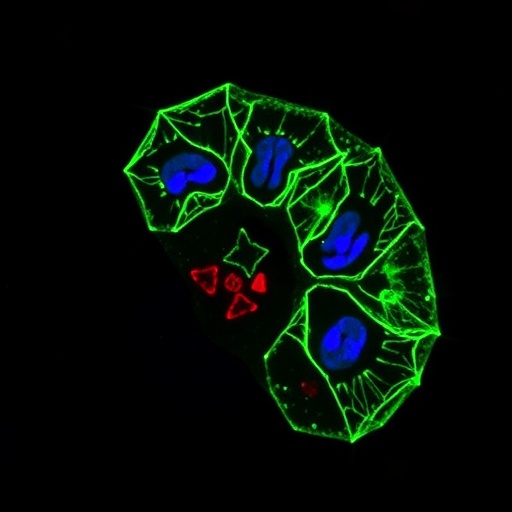
Recent advances in cancer research have turned the spotlight on juglone, a natural compound derived from the black walnut tree, known scientifically as Juglans nigra. This unique chemical has garnered attention for its potential therapeutic effects against various types of cancer, particularly bladder cancer. The findings presented by Zhang et al. in their groundbreaking study elucidate the intricate network mechanisms through which juglone exerts its anti-cancer effects. The study offers insights into the biological targets associated with autophagy, a crucial cellular process that regulates the degradation of dysfunctional components in response to stress, thereby maintaining cellular homeostasis.
Bladder cancer remains a significant health challenge globally, with its aggressive nature and high recurrence rates. Traditional treatment options, including chemotherapy and immunotherapy, often come with severe side effects and limited effectiveness. Thus, there is an urgent need for innovative therapeutic strategies that can mitigate these issues. Zhang and his colleagues suggest that harnessing the properties of natural compounds like juglone could be key to developing more effective treatments against this malignancy. Their research implies that targeting autophagy-related pathways might offer a novel approach in the battle against bladder cancer.
In their study, the authors employed a multi-faceted approach to dissect the mechanisms underlying juglone’s action. They explored various autophagy-related biological targets, emphasizing the significance of these pathways in cancer biology. Autophagy is often described as a double-edged sword in cancer; while it can suppress tumor initiation, it can also promote the survival of established tumors. Understanding how juglone influences these pathways could provide crucial insights into its potential role in cancer therapy.
One of the pivotal findings of this study is that juglone activates autophagy through a specific signaling cascade. This activation appears to promote the degradation of oncogenic proteins that contribute to bladder cancer progression. By finding and modifying these targets, juglone may not only halt the advancement of cancer but may also sensitize tumor cells to chemotherapeutic agents. This dual mechanism—directly inhibiting cancer cell survival while enhancing the efficacy of existing treatments—positions juglone as a promising candidate in the arsenal against bladder cancer.
Furthermore, the research delves into the molecular interactions that juglone initiates within the cancer cell environment. By using advanced bioinformatics tools, the authors constructed interaction networks that highlight the complexity of juglone’s effects. These networks reveal an intertwining of pathways that regulate cell survival, proliferation, and death. Such insights are invaluable, as they identify potential combinatorial targets that could be exploited in therapeutic strategies.
The study also emphasizes the safety profile of juglone, which presents a significant advantage over conventional chemotherapy drugs that often lead to adverse effects. With natural compounds increasingly recognized for their therapeutic potential, juglone emerges as a candidate with fewer deleterious effects. This therapeutic index is particularly appealing for bladder cancer patients, who often endure arduous treatment regimens. Thus, integrating juglone into established treatment protocols could enhance patient quality of life while boosting overall treatment efficacy.
Moreover, the authors underscore the importance of preclinical studies in affirming juglone’s therapeutic potential. The pathways and mechanisms identified in their research merit further exploration in clinical settings to validate the findings and assess the compound’s effectiveness in human subjects. The transition from lab bench to bedside is crucial for ensuring that potential therapies can be successfully implemented in clinical practice.
The implications of this study extend beyond bladder cancer alone. The pathways influenced by juglone could also have relevance in other cancer types. A broader application would not only expand the therapeutic utility of juglone but also motivate further research into other natural compounds that might exhibit similar properties. The field of oncology is at a pivotal juncture, where there is a pressing need to investigate alternative treatment modalities that leverage the power of nature.
Additionally, this research serves as a reminder of the profound relationship between natural compounds and human health. Traditional medicinal practices have long recognized the potential of plant-derived substances; however, modern science is just beginning to unlock their full potential. The findings related to juglone exemplify how integrating historical knowledge with contemporary research methodologies can yield significant breakthroughs in cancer therapy.
As the scientific community digests the findings presented by Zhang et al., it is crucial to consider the next steps in this research trajectory. Future studies should aim to elucidate the detailed molecular mechanisms through which juglone mediates its effects, alongside rigorous clinical trials to evaluate its safety and efficacy in humans. Collaboration across disciplines will be essential to translate these findings into viable treatment options.
In conclusion, the study by Zhang and colleagues represents a significant stride in the quest for novel cancer therapies. Juglone’s potential to impact autophagy-related pathways presents an exciting opportunity to develop innovative treatment strategies for bladder cancer patients and beyond. This research epitomizes the dynamic nature of cancer biology, where understanding the basic cellular processes can lead to revolutionary advancements in clinical oncology. A concerted effort to explore the full therapeutic spectrum offered by juglone and similar natural compounds may pave the way for a new era of cancer treatment that prioritizes both efficacy and patient well-being.
Zhang, Y., Yang, E., Zhang, X. et al. Autophagy-related biological targets and network mechanisms of juglone against bladder cancer.
J Cancer Res Clin Oncol 151, 194 (2025). https://doi.org/10.1007/s00432-025-06243-5
Cite Scienmag News
Nathaniel Bowman. (August 30, 2025). Juglone’s Autophagy Targets in Bladder Cancer Treatment. Scienmag. https://scienmag.com/juglones-autophagy-targets-in-bladder-cancer-treatment/
Nathaniel Bowman. "Juglone’s Autophagy Targets in Bladder Cancer Treatment." Scienmag, 30 August 2025, https://scienmag.com/juglones-autophagy-targets-in-bladder-cancer-treatment/. Accessed 3 September 2026.
Nathaniel Bowman. "Juglone’s Autophagy Targets in Bladder Cancer Treatment." Scienmag. August 30, 2025. https://scienmag.com/juglones-autophagy-targets-in-bladder-cancer-treatment/


