


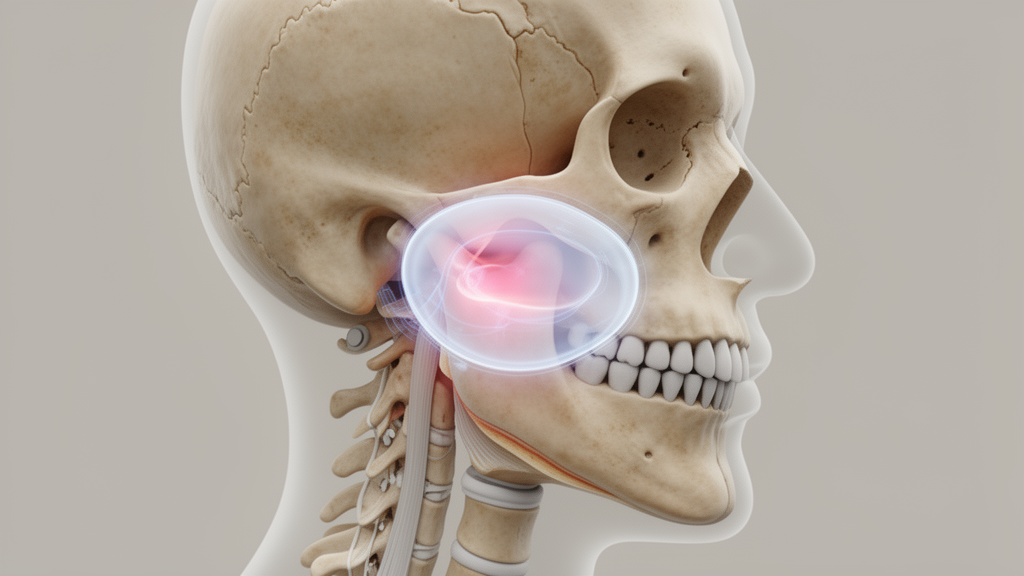
Temporomandibular disorders, the group of conditions that cause pain and dysfunction in the jaw joints and the muscles that move them, are often treated as a single problem with a menu of possible fixes. A new editorial published in Frontiers in Rehabilitation Sciences argues that this framing is exactly what holds the field back. Writing from institutions in Spain and the United States, the authors contend that effective management of temporomandibular disorders and orofacial pain cannot begin with treatment selection at all. It must begin with an accurate diagnosis, an understanding of the individual patient’s priorities, clearly defined therapeutic goals, and an honest appraisal of the strength of the evidence behind every option on the table.
The editorial anchors its argument in a 2026 position statement from the American Association for Dental, Oral, and Craniofacial Research, which emphasizes conservative, reversible, and patient-centered management of these conditions. Against that backdrop, the authors survey a Research Topic of contributions spanning clinical observation, evidence synthesis, technological feasibility studies, pilot interventions, and research mapping. Their central question is deceptively simple: how can educational and multimodal approaches be combined into coherent, individualized, evidence-based strategies rather than piled on top of one another?
Diagnostic accuracy, the authors insist, is the first and most neglected step. Temporomandibular disorders are not one clinical entity, and not all craniofacial pain should be forced into a jaw-disorder framework. The Diagnostic Criteria for Temporomandibular Disorders integrate physical diagnoses with an evaluation of pain-related disability and psychosocial factors, while the International Classification of Orofacial Pain places jaw disorders within the wider spectrum of possible causes of facial pain. To illustrate why this distinction matters, the editorial highlights a case report describing severe postherpetic neuralgia accompanied by peripheral facial paralysis, treated with acupuncture and electroacupuncture as part of a multi-component intervention. Improvements in pain and facial nerve function were noted, but the condition involved was neuropathic orofacial pain, not a temporomandibular disorder, and the combined nature of the intervention means the benefit cannot be attributed to acupuncture alone. The case is a reminder that clinical observation and evidence of treatment efficacy are different things.
Diagnostic specificity matters just as much at the boundary between jaw disorders and headache. A systematic search by Quilghini and colleagues identified five randomized controlled trials of physiotherapy in patients with chronic headache and temporomandibular disorders, with mixed results and substantial heterogeneity in quality, interventions, and outcomes. The findings support further research in appropriately selected patients, but they also carry a warning: the mere coexistence of jaw problems, cervical symptoms, and headache is not proof of a single underlying disorder. Meanwhile, a BMJ evidence review supports interventions aimed at promoting movement, functional ability, and coping strategies in chronic jaw pain, and the accompanying guideline strongly recommends supervised jaw exercises and stretching, postural exercises, certain manual techniques, cognitive behavioral therapy, and standard care that includes education and home exercise. The editorial’s conclusion is that multimodal management should involve deliberate integration of treatment elements, not simple accumulation.
Education occupies a central place in that model. Patient education, the authors argue, should go beyond delivering facts about anatomy, pathology, or treatment. It should help patients understand their own symptoms, participate in clinical decisions, address unhelpful responses to pain, and build confidence in self-management. Clinical education matters equally. Professionals must be able to distinguish temporomandibular disorders from other causes of orofacial pain, recognize diagnostic uncertainty and the limits of their own competence, and know when referral or interdisciplinary assessment is required. In a field where symptoms overlap with headaches, neuropathic pain, and sleep-related conditions, that boundary-drawing skill is essential.
New technologies could change how that education is delivered, although the evidence remains early. In two uncontrolled feasibility studies, Conen and colleagues used augmented reality for psychoeducation and mindfulness-based body scanning in chronic low back pain, reporting high feasibility and positive user experience while stressing that controlled trials are needed before any efficacy claim can be made. The results cannot be directly transferred to orofacial pain, but they suggest a possible avenue for future research. The editorial draws a sharp line here: technology may alter how educational and behavioral interventions are delivered, but it does not change the evidence required to demonstrate clinical effectiveness. Novelty, engagement, and patient satisfaction are valuable, yet they are not equivalent to effectiveness. The same caution applies elsewhere in the field — a recent network meta-analysis found no statistically significant differences in pain outcomes between biofeedback and its comparators, underscoring the importance of measuring the specific constructs an intervention is actually intended to change.
Oral devices require similarly careful interpretation, the authors say, because their clinical purposes differ. Wang and colleagues examined sports mouthguards as protective devices intended to reduce dental and orofacial trauma — a fundamentally different indication from the stabilization or occlusal appliances used in jaw-disorder management or the mandibular advancement devices prescribed for obstructive sleep apnea. Sleep bruxism, obstructive sleep apnea, and temporomandibular disorders may coexist in the same patient, but co-occurrence does not establish diagnostic equivalence or causality, and each condition should be assessed separately under its own diagnostic framework. The evidence base itself is thin in places: portable electromyographic assessment of sleep bruxism currently rests on very low-certainty evidence, reinforcing the need for diagnostic validation before such tools drive clinical decisions.
The contrast between promising clinical observations and demonstrated causality is clearest for more invasive interventions. Macedo de Sousa and colleagues monitored 25 patients with myogenic temporomandibular disorder who received a single session of bilateral intramuscular botulinum toxin type A injections, reporting improvements in pain, functional limitations, and oral-health-related quality of life with no adverse effects over 12 weeks. The editorial is blunt about what such a study cannot show: without a control group, efficacy cannot be established, because natural disease course, regression to the mean, patient expectations, concurrent care, and contextual effects cannot be separated from any genuine treatment effect. Nor does the absence of adverse events in a small, short-term cohort establish long-term safety. The wider evidence points the same way — a multicenter trial found no additional pain relief from botulinum toxin compared with saline injections over nine months, BMJ guidance conditionally advises against botulinum toxin and reversible splints, and British guidance permits selected splint use but considers the botulinum toxin evidence uncertain. Interpretation, the authors note, always depends on the population, comparator, outcome, and care pathway.
Even the sheer volume of research requires cautious reading. A bibliometric analysis by Liao and colleagues found substantial growth in research on dry needling and pain, mapping themes in clinical effectiveness, trial design, outcome assessment, and risk management. Such analyses describe how a field has developed, but publication counts, citations, and research clusters cannot establish therapeutic efficacy. The editorial lays out a hierarchy of what each study design can actually support: case reports generate hypotheses, feasibility studies examine acceptability and implementation, bibliometric studies map research activity, and controlled comparative trials provide more direct estimates of treatment effects. Clinical claims, it argues, must stay aligned with the design behind them.
The unifying message is that the clinically important question is not whether physiotherapy, education, needling, an oral device, a pharmacological intervention, or an emerging technology works in all cases. Treatment should instead be based on the specific pain condition, relevant functional impairments, psychosocial factors, patient priorities, and the therapeutic goal. A multimodal approach begins with a question that precedes treatment selection: what needs to change for this particular patient? Diagnosis identifies the condition but does not by itself define the plan of care. Assessment should identify modifiable biological, psychological, behavioral, and functional factors; education should establish shared understanding and promote self-management; and further interventions should be chosen against explicit treatment targets. Multimodal care does not mean every patient needs several treatments — complementary interventions should be combined only when each meets a specific clinical need and offers sufficient expected benefit to justify its burden, cost, and potential risk. For clinicians, the authors conclude, the task is to recognize the boundaries between jaw disorders and other causes of orofacial pain, communicate uncertainty without overstating diagnosis or treatment effects, and refer when needs exceed their expertise. For researchers, future studies should test not only whether an intervention works on average, but for whom, toward which goal, and with what additional benefit — revisiting those decisions as the patient progresses.
Subject of Research: Educational strategies and multimodal, diagnosis-informed management of temporomandibular disorders and orofacial pain
Article Title: Editorial: Educational strategies and multimodal treatments for effective management of temporomandibular disorders and orofacial pain
Article References: Sánchez-Romero, E. A., Cid-Verdejo, R., Sillevis, R., & Cuenca-Zaldívar, J. N. (2026). Editorial: Educational strategies and multimodal treatments for effective management of temporomandibular disorders and orofacial pain. Frontiers in Rehabilitation Sciences, 7, Article 2011567. https://doi.org/10.3389/fresc.2026.2011567
Image Credits: AI Generated
DOI: 10.3389/fresc.2026.2011567
Keywords: temporomandibular disorders, orofacial pain, patient education, multimodal care, evidence-based practice, physiotherapy, botulinum toxin, interdisciplinary care, Editorial, Educational, strategies, multimodal
Cite Scienmag News
Ophelia Keating. (October 23, 2026). Jaw Pain Care Needs Diagnosis First, Experts Say, Not More Treatments. Scienmag. https://scienmag.com/jaw-pain-care-needs-diagnosis-first-experts-say-not-more-treatments/
Ophelia Keating. "Jaw Pain Care Needs Diagnosis First, Experts Say, Not More Treatments." Scienmag, 23 October 2026, https://scienmag.com/jaw-pain-care-needs-diagnosis-first-experts-say-not-more-treatments/. Accessed 23 October 2026.
Ophelia Keating. "Jaw Pain Care Needs Diagnosis First, Experts Say, Not More Treatments." Scienmag. October 23, 2026. https://scienmag.com/jaw-pain-care-needs-diagnosis-first-experts-say-not-more-treatments/


