
Thursday, December 4, 2025
Science
No Result
View All Result
  • Login
  • HOME
  • SCIENCE NEWS
  • CONTACT US
  • HOME
  • SCIENCE NEWS
  • CONTACT US
No Result
View All Result
Scienmag
No Result
View All Result
Home Science News Bussines

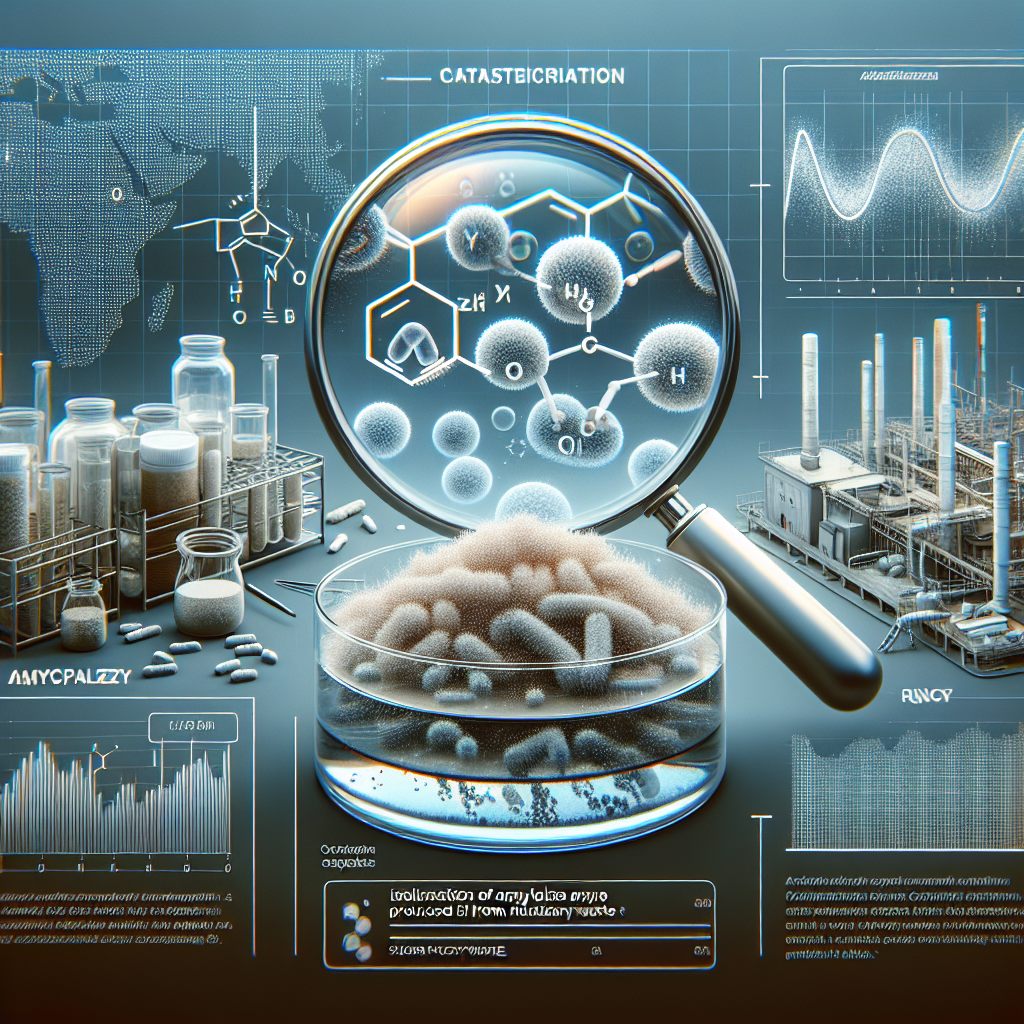
Isolation and characterization of amylase enzyme produced by indigenous bacteria from sugar factory waste

July 5, 2024
in Bussines
Reading Time: 2 mins read
0
Isolation and characterization of amylase enzyme produced by indigenous bacteria from sugar factory waste
66
SHARES
603
VIEWS
Share on FacebookShare on Twitter
ADVERTISEMENT

Amylases are important enzymes that break down complex carbohydrates to simple sugar molecules. They are important for digesting food and allowing the body mobilize carbohydrates for metabolism. Amylases are also commonly used commonly used as biocatalysts in many industries including food processing, detergents and pharmaceutical preparations. Indonesia is a net importer of amylases which has implications for the cost of relevant industrial processes and new product development. To reduce production costs, it is important to produce amylase locally using native microorganisms.

Amylases are important enzymes that break down complex carbohydrates to simple sugar molecules. They are important for digesting food and allowing the body mobilize carbohydrates for metabolism. Amylases are also commonly used commonly used as biocatalysts in many industries including food processing, detergents and pharmaceutical preparations. Indonesia is a net importer of amylases which has implications for the cost of relevant industrial processes and new product development. To reduce production costs, it is important to produce amylase locally using native microorganisms.

That is exactly what a team of chemists and biotechnologists at Universitas Negeri Malang, led by Eli Hendrik Sanjaya set out to do. An expert in wastewater processing and treatment, Dr. Sanjaya’s group attempted to isolate amylase-producing bacteria from the liquid waste of sugar local factories and optimize the production of the amylase enzyme.

The research team achieved this through seven stages: preparing samples, isolating amylase-producing bacteria, producing crude amylase extract, testing amylase activity, optimizing amylase production, determining the specific activity, and identifying the bacteria through genotyping.

The researchers successfully identified three bacterial isolates (G-7, G-8, and G-12) that produce amylase enzymes from sugar factory waste. They noted that the optimal conditions for amylase production were 37°C, at pH 7.0, during the exponential growth phase. Isolate G-8 produced the enzyme most efficiently at 24 hours with a specific activity of 0.198 U/mg. Isolates G-7 and G-12 reached their peak production at 48 hours, with specific activities of 0.108 U/mg and 0.208 U/mg, respectively.

16S rRNA gene analysis identified the three local strains as Bacillus infantis, Bacillus flexus, and Pseudomonas nitroreducens, respectively.

“All three species have shown great potential for amylase enzymes production,” notes Dr. Sanjaya. This is the impetus the local industry might need to drive industrial processes towards sustainability. “We can hopefully reduce amylase imports in Indonesia. To meet industrial demand, amylase enzyme activity can be increased by purifying the enzyme amylase from crude extract.”

Read this article in The Open Biotechnology Journal here;

For publishing scholarly article in Bentham journals, please visit:


Journal

The Open Biotechnology Journal

DOI

10.2174/0118740707296261240418114958

Article Title

Isolation and Characterization of Amylase Enzyme Produced by Indigenous Bacteria from Sugar Factory Waste

Article Publication Date

30-May-2024

Share26Tweet17
Previous Post

Partially-hiding functional encryption for degree-2 polynomials with fine-grained access control

Next Post

Cranfield and LIPTON Teas and Infusions begin advanced climate change mitigation and resilience field trials

Related Posts

blank
Bussines

Physician Reactions to Patient Expectations Influence Their Earnings

November 17, 2025
blank
Bussines

Breakthrough in Satellite Beam Hopping: Fast, High-Precision Satellite-Ground Synchronization Achieved

November 15, 2025
blank
Bussines

For Platforms Relying on Gig Workers, Bonuses Can Cut Both Ways

November 15, 2025
blank
Bussines

New Research Questions Accuracy of Efficiency Rankings Used by Governments and Businesses

November 14, 2025
blank
Bussines

Study Reveals Access Barriers to Cultural Institutions in Disadvantaged Neighborhoods

November 13, 2025
blank
Bussines

SETI Institute Appoints Dr. Christina (Chrissy) Richey as Director of Partnerships & Business Development

November 13, 2025
Next Post
Project team on site in Kenya

Cranfield and LIPTON Teas and Infusions begin advanced climate change mitigation and resilience field trials

  • Mothers who receive childcare support from maternal grandparents show more parental warmth, finds NTU Singapore study

    Mothers who receive childcare support from maternal grandparents show more parental warmth, finds NTU Singapore study

    27587 shares
    Share 11032 Tweet 6895
  • University of Seville Breaks 120-Year-Old Mystery, Revises a Key Einstein Concept

    995 shares
    Share 398 Tweet 249
  • Bee body mass, pathogens and local climate influence heat tolerance

    652 shares
    Share 261 Tweet 163
  • Researchers record first-ever images and data of a shark experiencing a boat strike

    522 shares
    Share 209 Tweet 131
  • Groundbreaking Clinical Trial Reveals Lubiprostone Enhances Kidney Function

    490 shares
    Share 196 Tweet 123
Science

Embark on a thrilling journey of discovery with Scienmag.com—your ultimate source for cutting-edge breakthroughs. Immerse yourself in a world where curiosity knows no limits and tomorrow’s possibilities become today’s reality!

RECENT NEWS

  • Boosting Cancer Immunotherapy by Targeting DNA Repair
  • Addressing Dumpsite Risks: A Action Framework for LMICs
  • Evaluating eGFR Equations in Chinese Children
  • Global Guidelines for Shared Decision-Making in Valvular Heart Disease

Categories

  • Agriculture
  • Anthropology
  • Archaeology
  • Athmospheric
  • Biology
  • Blog
  • Bussines
  • Cancer
  • Chemistry
  • Climate
  • Earth Science
  • Marine
  • Mathematics
  • Medicine
  • Pediatry
  • Policy
  • Psychology & Psychiatry
  • Science Education
  • Social Science
  • Space
  • Technology and Engineering

Subscribe to Blog via Email

Enter your email address to subscribe to this blog and receive notifications of new posts by email.

Join 5,191 other subscribers

© 2025 Scienmag - Science Magazine

Welcome Back!

Login to your account below

Forgotten Password?

Retrieve your password

Please enter your username or email address to reset your password.

Log In
No Result
View All Result
  • HOME
  • SCIENCE NEWS
  • CONTACT US

© 2025 Scienmag - Science Magazine

Discover more from Science

Subscribe now to keep reading and get access to the full archive.

Continue reading
