


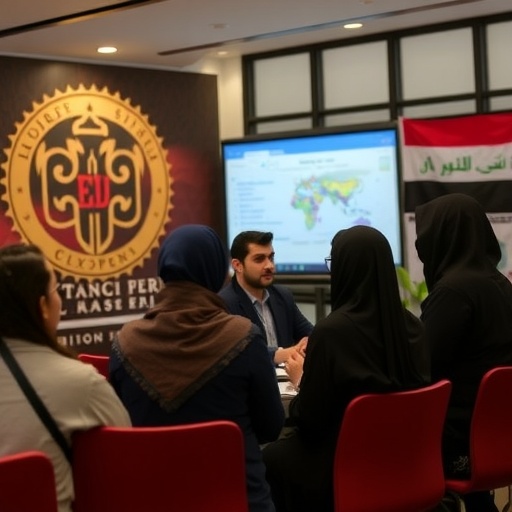
In recent years, the role of English as a dominant global language has sparked intense discussions among linguists, educators, and policymakers. A new qualitative study by Namiq and Zafarghandi delves into this very phenomenon, specifically examining the experiences of Iraqi postgraduate students learning English as a Foreign Language (EFL). As the world becomes increasingly interconnected, understanding how English functions not just as a means of communication but as a tool of influence and power becomes crucial.
The study highlights that for many students in Iraq, English is not merely a subject studied in isolation. Instead, it symbolizes a broader narrative entrenched in imperial history, colonial legacies, and modern globalization trends. The authors contend that this perception shapes students’ motivations, aspirations, and even their identities. By dissecting the motivational constructs surrounding English language acquisition, the researchers aim to reveal how these students engage with a language that carries both prestige and a complex social history.
One of the striking findings in the study is the internal conflict felt by many Iraqi students. While they recognize the importance of English for career advancement and educational opportunities, they also grapple with a sense of cultural dissonance. The study reports that students often feel a disconnect between their cultural identity and the language they are learning, which in their eyes is rooted in the historical imposition of power by English-speaking countries. This duality creates a rich tapestry of emotions that influence not just their language learning experience but also their perceptions of self and society.
Moreover, the research underscores how the impact of English is further magnified by the pervasive influence of Western media. Television shows, movies, and digital content in English have become integral to daily life, further elevating the language’s status. This cultural penetration reinforces the notion that proficiency in English is synonymous with modernity and success. Yet, it also raises critical questions about cultural erasure and the possibility of losing one’s linguistic heritage in the pursuit of global recognition.
The study also emphasizes the role of educators in navigating this complicated landscape. Iraqi EFL teachers are tasked not only with imparting language skills but also with fostering a positive attitude towards English that acknowledges its historical implications. Teachers become crucial mediators in helping students reconcile their aspiration to learn English with their cultural identity. By implementing curricula that are sensitive to this dynamic, educators can cultivate a more enriching learning experience that prioritizes both language proficiency and cultural awareness.
In addition to addressing the educators’ role, the study points to the importance of community support in English language acquisition. Family, friends, and local institutions play a vital part in shaping students’ attitudes towards learning English. Support networks can either amplify feelings of pride and motivation or fuel resistance and disillusionment. Understanding these community dynamics can aid in developing more targeted interventions that bolster students’ commitment to language learning.
The qualitative methodologies employed by Namiq and Zafarghandi bring a nuanced perspective to the table. By conducting in-depth interviews with students, the researchers extracted personal narratives that highlight the individual complexities faced by learners. This qualitative approach contrasts sharply with quantitative studies that may overlook the rich contextual information that personal stories provide. It is through these narratives that a more holistic understanding of the learning experience emerges.
Given the implications of globalization, the findings from the study may resonate beyond Iraq’s borders. Other regions with similar socio-historical contexts may find parallels in their struggles with English. Thus, the insights gathered in this research could prompt a worldwide reevaluation of how languages are taught and perceived. In our increasingly global society, fostering a deep understanding of the interplay between language, culture, and identity is fundamental.
Furthermore, the study prompts an examination of how language policies are shaped at both the national and international levels. Policymakers must grapple with the question of how to balance English’s global importance with the need to preserve local languages and dialects. The findings underscore the urgent need for language policies that not only prioritize English proficiency but also safeguard cultural identities.
As scholars, educators, and policymakers reflect on the implications of English as an imperial language, these discussions will likely shape the future landscape of language education. By engaging with the insights from Namiq and Zafarghandi’s study, stakeholders can work collaboratively to create learning environments that honor both the necessity of English and the richness of cultural diversity.
Ultimately, this study serves as a call to action, urging us to expand our understanding of what it means to learn a language in a globalized world. The need for a nuanced approach that honors both linguistic proficiency and cultural identity has never been more pressing. As English continues to dominate the linguistic landscape, the voices of students like those in this study must be heard, reminding us that language is not merely a set of skills to be acquired but a complex interplay of identity, culture, and power.
Engaging with these complexities will not only reinforce the importance of English in today’s world but also guide us toward a more inclusive and culturally aware approach to language education. As we forge ahead, may we remember that every student holds a unique story that adds to the rich tapestry of global language learning.
Cite Scienmag News
Courtney Benton. (October 13, 2025). Iraqi Postgraduate EFL Students: A Qualitative Analysis. Scienmag. https://scienmag.com/iraqi-postgraduate-efl-students-a-qualitative-analysis/
Courtney Benton. "Iraqi Postgraduate EFL Students: A Qualitative Analysis." Scienmag, 13 October 2025, https://scienmag.com/iraqi-postgraduate-efl-students-a-qualitative-analysis/. Accessed 4 September 2026.
Courtney Benton. "Iraqi Postgraduate EFL Students: A Qualitative Analysis." Scienmag. October 13, 2025. https://scienmag.com/iraqi-postgraduate-efl-students-a-qualitative-analysis/


