

Tuesday, July 7, 2026
Science
No Result
View All Result
  • Login
  • HOME
  • SCIENCE NEWS
  • CONTACT US
  • HOME
  • SCIENCE NEWS
  • CONTACT US
No Result
View All Result
Scienmag
No Result
View All Result
Home Science News Medicine

IOP Publishing launches series of open access journals dedicated to machine learning and artificial intelligence for the sciences

July 18, 2024
in Medicine
Reading Time: 2 mins read
0
IOP Publishing launches series of open access journals dedicated to
68
SHARES
615
VIEWS
Share on FacebookShare on Twitter
ADVERTISEMENT

IOP Publishing (IOPP) is launching the world’s first series of open access journals dedicated to the application and development of machine learning (ML) and artificial intelligence (AI) for the sciences. The new multidisciplinary Machine Learning series will collectively cover applications of ML and AI across the physical sciences, engineering, biomedicine and health, and environmental and earth science. 

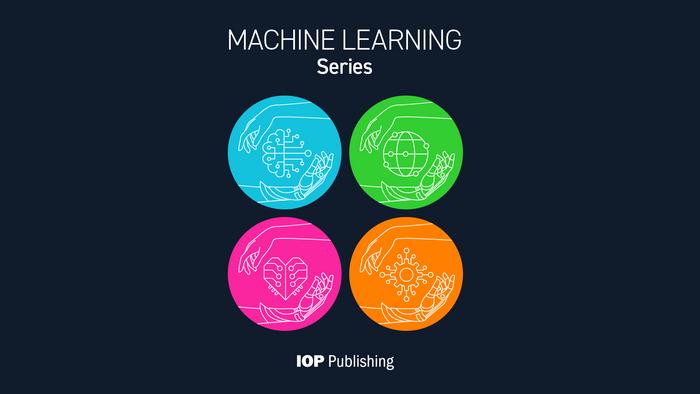
IOP Publishing's Machine Learning series

Credit: IOP Publishing

IOP Publishing (IOPP) is launching the world’s first series of open access journals dedicated to the application and development of machine learning (ML) and artificial intelligence (AI) for the sciences. The new multidisciplinary Machine Learning series will collectively cover applications of ML and AI across the physical sciences, engineering, biomedicine and health, and environmental and earth science. 

Building on the successful launch of Machine Learning: Science and Technology in 2019, IOPP’s Machine Learning series will expand to include three new journals: Machine Learning: Health, Machine Learning: Earth, and Machine Learning: Engineering. The new journals will open for submissions later this year. In addition to research articles and reviews the series will also uniquely publish dataset, benchmark and challenge articles to meet the diverse needs of research communities working at the interface of ML, AI and the sciences.  

“It’s clear that ML and AI have the potential to be transformational in accelerating the advance of new scientific knowledge and discovery,” says Dr. Tim Smith, Head of Portfolio Development at IOPP. “Through our new Machine Learning series, we’re committed to creating a world-leading publishing home that represents the many areas of science where ML is already playing a critical role. We’re excited to introduce even more article formats supporting our open science goals as a publisher and ensuring the reproducibility, integrity and trust of peer-reviewed research.” 

Authors publishing in IOPP’s three new machine learning journals will benefit from free open access publishing throughout 2025, with all article publication charges covered by IOPP.  

As part of the Purpose-Led Publishing coalition, researchers publishing with IOPP can be assured that their work will advance knowledge and contributes to the physical sciences community. Profits generated by IOPP are reinvested into the Institute of Physics, supporting efforts to make science accessible for all. 

For more information about our Machine Learning series, please visit:


Share27Tweet17
Previous Post

New findings could lead to safer, more stable metal batteries

Next Post

Unexpected role of OTX2 drives aggressive medulloblastoma

Related Posts

Palliative care models in aged care homes reviewed
Medicine

Palliative care models in aged care homes reviewed

July 7, 2026
Population approach optimizes imatinib sampling to validate precision dosing at point-of-care
Medicine

Population approach optimizes imatinib sampling to validate precision dosing at point-of-care

July 7, 2026
Study reveals what drives heart disease in Indigenous communities
Medicine

Study reveals what drives heart disease in Indigenous communities

July 7, 2026
? Wait, “antigen-specific T cells” is enough. So: “Cap-free, tail-free synthetic RNA potently activates antigen-specific T cells” – 10 words. Another: “Synthetic RNA lacking cap and tail still triggers antigen-specific T cells” – 10 words. “Chemically synthesized RNA without cap or polyA tail drives CD8+ T cells” – 9 words but uses CD8+ which might be jargon. I’ll avoid CD8+ and say killer T cells. I’ll craft: “Simple synthetic RNA without cap or tail triggers potent killer T cell response” word count: Simple (1) synthetic (2) RNA (3) without (4) cap (5) or (6) tail (7) triggers (8) potent (9) killer (10) T (11) cell (12) response (13) – 13 words, too many. Remove “simple”: “Synthetic RNA without cap or tail triggers potent killer T cell response” – 12 words: Synthetic(1) RNA(2) without(3) cap(4) or(5) tail(6) triggers(7) potent(8) killer(9) T(10) cell(11) response(12). Yes, exactly 12. I’ll use that. No, it says “peptide-coding RNA” but that might be implied. The original says “non-capped and non-polyadenylated” so “without cap or tail” captures that. “triggers potent killer T cell response” is good. So final: Synthetic RNA without cap or tail triggers potent killer T cell response. Wait, is “killer T cell” synonymous with CD8+ T cell? Yes, cytotoxic T lymphocytes. So that’s fine. I’ll output that.Synthetic RNA without cap or tail triggers potent killer T cell response
Medicine

? Wait, “antigen-specific T cells” is enough. So: “Cap-free, tail-free synthetic RNA potently activates antigen-specific T cells” – 10 words. Another: “Synthetic RNA lacking cap and tail still triggers antigen-specific T cells” – 10 words. “Chemically synthesized RNA without cap or polyA tail drives CD8+ T cells” – 9 words but uses CD8+ which might be jargon. I’ll avoid CD8+ and say killer T cells. I’ll craft: “Simple synthetic RNA without cap or tail triggers potent killer T cell response” word count: Simple (1) synthetic (2) RNA (3) without (4) cap (5) or (6) tail (7) triggers (8) potent (9) killer (10) T (11) cell (12) response (13) – 13 words, too many. Remove “simple”: “Synthetic RNA without cap or tail triggers potent killer T cell response” – 12 words: Synthetic(1) RNA(2) without(3) cap(4) or(5) tail(6) triggers(7) potent(8) killer(9) T(10) cell(11) response(12). Yes, exactly 12. I’ll use that. No, it says “peptide-coding RNA” but that might be implied. The original says “non-capped and non-polyadenylated” so “without cap or tail” captures that. “triggers potent killer T cell response” is good. So final: Synthetic RNA without cap or tail triggers potent killer T cell response. Wait, is “killer T cell” synonymous with CD8+ T cell? Yes, cytotoxic T lymphocytes. So that’s fine. I’ll output that.Synthetic RNA without cap or tail triggers potent killer T cell response

July 7, 2026
Clinician backing essential for virtual reality therapy uptake
Medicine

Clinician backing essential for virtual reality therapy uptake

July 7, 2026
In vitro models engineered to mimic chronic wound complexity
Medicine

In vitro models engineered to mimic chronic wound complexity

July 7, 2026
Next Post
Unexpected role of OTX2 drives aggressive medulloblastoma

Unexpected role of OTX2 drives aggressive medulloblastoma

  • Mothers who receive childcare support from maternal grandparents show more

    Mothers who receive childcare support from maternal grandparents show more parental warmth, finds NTU Singapore study

    27656 shares
    Share 11059 Tweet 6912
  • University of Seville Breaks 120-Year-Old Mystery, Revises a Key Einstein Concept

    1061 shares
    Share 424 Tweet 265
  • Bee body mass, pathogens and local climate influence heat tolerance

    682 shares
    Share 273 Tweet 171
  • Researchers record first-ever images and data of a shark experiencing a boat strike

    546 shares
    Share 218 Tweet 137
  • Groundbreaking Clinical Trial Reveals Lubiprostone Enhances Kidney Function

    531 shares
    Share 212 Tweet 133
Science

Embark on a thrilling journey of discovery with Scienmag.com—your ultimate source for cutting-edge breakthroughs. Immerse yourself in a world where curiosity knows no limits and tomorrow’s possibilities become today’s reality!

RECENT NEWS

  • Postpartum bonding problems tied to abnormal neural processing of infant emotions
  • Salmonella protein SopB curbs early inflammation to slow disease progression
  • Embodied cognition yields interpretable trajectory predictions for autonomous systems.
  • Multi-metal cooperation drives lung cancer chemoresistance, reversed by MiADMSA

Categories

  • Agriculture
  • Anthropology
  • Archaeology
  • Athmospheric
  • Biology
  • Biotechnology
  • Blog
  • Bussines
  • Cancer
  • Chemistry
  • Climate
  • Earth Science
  • Editorial Policy
  • Marine
  • Mathematics
  • Medicine
  • Pediatry
  • Policy
  • Psychology & Psychiatry
  • Science Education
  • Social Science
  • Space
  • Technology and Engineering

Subscribe to Blog via Email

Success! An email was just sent to confirm your subscription. Please find the email now and click 'Confirm Follow' to start subscribing.

Join 5,147 other subscribers

© 2025 Scienmag - Science Magazine

Welcome Back!

Login to your account below

Forgotten Password?

Retrieve your password

Please enter your username or email address to reset your password.

Log In
No Result
View All Result
  • HOME
  • SCIENCE NEWS
  • CONTACT US

© 2025 Scienmag - Science Magazine
