


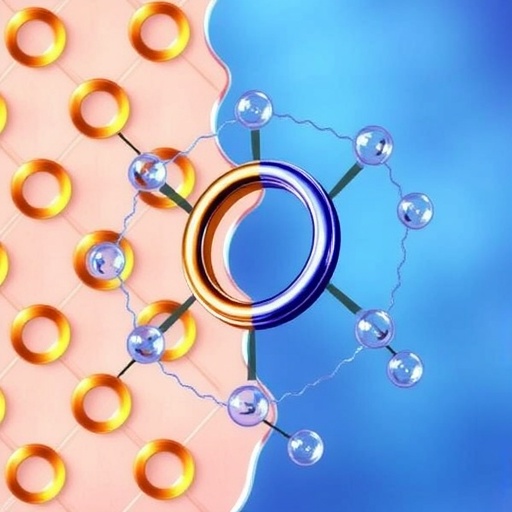
Newcastle University is making waves in the field of adhesive technology with a groundbreaking innovation: a reversible glue that significantly alters the landscape of recycling. Developed by their talented engineers at the School of Engineering, this cutting-edge adhesive not only bonds materials in a similar fashion to traditional glues, but it can also be separated when required, a game-changing feature for an industry increasingly focused on sustainability and waste reduction. As global society grapples with the mounting crisis of plastic waste and the growing need for recyclable materials, this versatile glue presents an exciting solution that could transform how we manage materials at the end of their lifecycle.
This revolutionary glue has emerged as a water-based emulsion, closely resembling common paints, yet it boasts remarkable properties that set it apart from traditional adhesives. The most striking feature of this glue is its reversible bond: materials glued together can be easily separated by exposure to either acidic or alkaline water. This capability allows for the disassembly of complex products containing multiple materials, enabling more efficient recycling processes and promoting the reuse and repurposing of components that would otherwise end up in landfills.
Previously, this research team spearheaded the development of an initial version of a reversible glue that employed inexpensive polymers possessing electrical charges. This formulation led to stable emulsions that effectively bonded positively and negatively charged surfaces together. However, while its effectiveness was notable, the original adhesive required two distinct formulations for coating each surface, hence complicating the application process. Additionally, due to its composition, it displayed unwanted dripping characteristics when applied to vertical surfaces.
Recognizing the limitations of their initial formulation, the researchers employed clay additives in their latest version to tackle these challenges. Clays, frequently utilized in various fields as thickening agents, were introduced not just to inhibit dripping but also to facilitate a significant simplification of the adhesive’s manufacturing process. This one-pot approach marks a pivotal shift in adhesive technology, allowing for a single formulation that could effectively bond to dissimilar surfaces while still retaining the critical reversible properties.
Dr. Adriana Sierra-Romero, the lead author of the research paper on this innovative glue, expresses optimism about the wider adoption of reversible adhesives in industrial applications. Although these adhesives are not yet mainstream, their potential for sustainable solutions has garnered increasing interest from various sectors. The glue’s alignment with contemporary trends in sustainability makes it an attractive option for manufacturers seeking to reduce their ecological footprint and develop products that can either be recycled or reused effectively.
The glue utilizes manufacturing processes similar to those of conventional paint production, enabling easy scalability. With an emphasis on employing low-cost materials, the glue can be produced in bulk at a competitive price point. Furthermore, its water-based nature means it avoids the volatile organic solvents typically found in many commercial adhesives. Unlike other adhesives that may fail when exposed to humid conditions, this glue exhibits resilience and performance consistency, even in varied environmental situations. This unique combination of characteristics underlines its attractiveness for potential applications across diverse industries.
While the glue is primarily designed for plastic surfaces, its effectiveness extends to other material types as well. Given that plastics are among the most challenging materials to recycle and manage in the waste stream, the glue’s designed applications predominantly target the packaging industry. Its capabilities extend to bonding commonly used materials such as polypropylene and polyethylene, which have often presented obstacles for traditional adhesives. The implications of this technology reach far beyond packaging; it holds promise for recycling automotive components and optimizing electronic device dismantling processes.
Published in the prestigious journal Soft Matter, this adhesive technology was made possible through funding from the Engineering and Physical Sciences Research Council (EPSRC). The research has also gained recognition, recently being named a finalist in the Royal Society of Chemistry’s Emerging Technologies competition. As the project gains traction, the lead investigator, Mark Geoghegan—who holds the esteemed title of Roland Cookson Professor of Engineering Materials—has expressed his excitement regarding the technology’s development and its potential for future applications.
The collaborative nature of the research team, which includes notable figures such as Professor Katarina Novakovic, also reflects Newcastle University’s commitment to sustainability in engineering. Professor Novakovic emphasizes that the advancement of this technology is critical in the broader context of achieving net zero emissions targets. They have worked diligently to incorporate principles of sustainability into both their research initiatives and their academic curricula, encouraging students to become engaged in advancing sustainable resource management practices.
One of the key facets of this project is its potential for educational impact, as exemplified by the involvement of Emmanuel Abotsi, an MSc student who had the opportunity to work closely with the research team. His engagement highlights how initiatives that focus on the sustainable use of resources can inspire and cultivate future generations of engineers. With an emphasis on practical applications of advanced materials, students are encouraged to contribute to the ongoing dialogue surrounding sustainability within engineering and materials science fields.
Newcastle University has solidified its reputation for excellence in sustainability, evidenced by its impressive 22nd position in the UK and 64th globally, according to the QS World Rankings for Sustainability 2026. Such standing reinforces the institution’s dedication to addressing critical global issues, with research initiatives focused on delivering viable solutions that benefit both industry and society.
Overall, the development of this revolutionary reversible glue is poised to revolutionize recycling practices and has the potential to lead to significant advancements in material science. With its innovative features, scalability, and alignment with sustainability goals, it represents a significant leap forward in adhesive technology, one that could soon gain traction across various industries seeking to embrace more responsible production methods.
Keywords
Recycling, Polymer Engineering, Adhesive Technology, Sustainable Materials, Water-Based Emulsion, Material Science, Engineering Innovation, Packaging Solutions, Plastic Waste Management, One-Pot Formulation, Clay Additives, Sustainable Practices.
Cite Scienmag News
Denise Maddox. (February 5, 2026). Intelligent Adhesion: Advancements in the Creation of Reversible Glue. Scienmag. https://scienmag.com/intelligent-adhesion-advancements-in-the-creation-of-reversible-glue/
Denise Maddox. "Intelligent Adhesion: Advancements in the Creation of Reversible Glue." Scienmag, 5 February 2026, https://scienmag.com/intelligent-adhesion-advancements-in-the-creation-of-reversible-glue/. Accessed 5 September 2026.
Denise Maddox. "Intelligent Adhesion: Advancements in the Creation of Reversible Glue." Scienmag. February 5, 2026. https://scienmag.com/intelligent-adhesion-advancements-in-the-creation-of-reversible-glue/


