


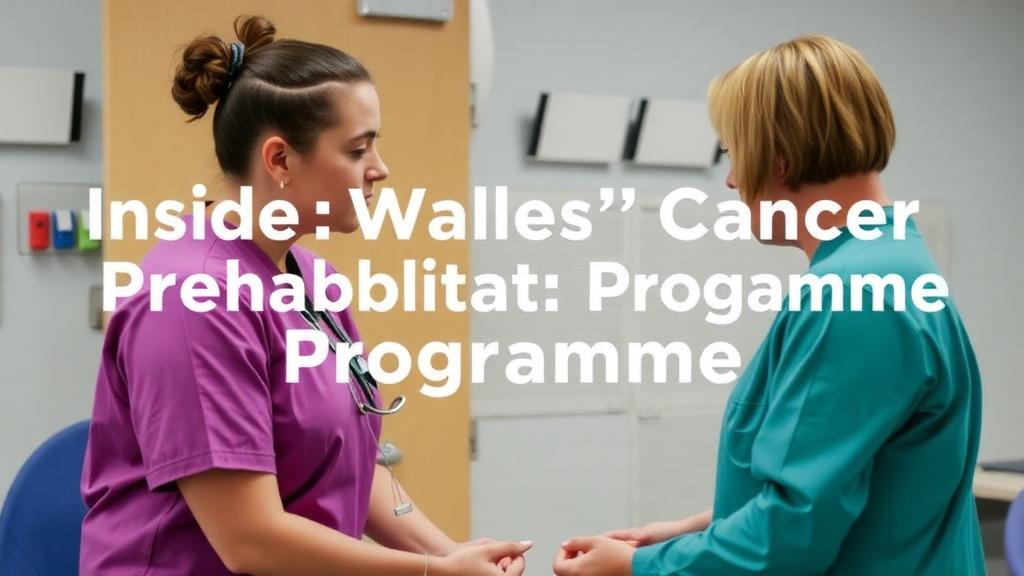
Every month, more than 1,000 people in Wales receive a new cancer diagnosis, and each of them faces a treatment journey that will test their body and mind in profound ways. A growing body of research suggests that the weeks between diagnosis and treatment are not simply a waiting period but a critical window of opportunity. During this interval, patients can build physical strength, improve their nutrition and shore up their mental resilience, a strategy known as prehabilitation. Now, a detailed process evaluation published in BMC Cancer has examined how one such programme, Prehab2Rehab, operates in the real world of the Welsh National Health Service, offering one of the clearest pictures yet of what cancer prehabilitation actually looks like when it leaves the pages of clinical guidelines and enters patients’ lives.
The study, conducted by researchers at Public Health Wales alongside collaborators, focused on a service developed by Cardiff and Vale University Health Board, one of seven health boards within NHS Wales. Prehab2Rehab is a personalised, multimodal intervention designed to support eligible cancer patients before their treatment begins. Rather than addressing a single dimension of health, the programme simultaneously targets three pillars: exercise, nutrition and mental wellbeing. Staff working within the service tailor the intervention to each individual, aiming to improve patients’ lifestyle behaviours and, in turn, their physical and psychological resilience ahead of surgery, chemotherapy or radiotherapy. The underlying logic is straightforward but powerful: a fitter, better-nourished and psychologically steadier patient is better equipped to tolerate aggressive treatment and to recover from it.
To understand how the programme performs in practice, the research team adopted a mixed methods design, with the published paper presenting the qualitative strand of the evaluation in depth. Between April and November 2024, the researchers carried out semi-structured interviews with fourteen members of staff, including those working directly on Prehab2Rehab and others involved in the wider cancer pathway, and fifteen patients who had first-hand experience of the programme. The interviews were analysed using inductive thematic analysis, an approach that allows themes to emerge from the data itself rather than being imposed by a pre-existing framework. The researchers then triangulated these interview findings with secondary data collected by the Prehab2Rehab team, which provided an overview of programme attendance, strengthening the credibility of the conclusions.
The headline finding is encouraging. Most patients who took part in the evaluation found the programme feasible and acceptable, and reported positive experiences overall. The majority of interviewed patients felt that the exercise and diet support and guidance had helped them make genuine improvements to their lifestyle. Before starting treatment, participants reported improved knowledge and confidence to be physically active or to improve their nutrition. In a health system where the interval between diagnosis and treatment can feel like an anxious limbo, the idea that patients can use that time to actively prepare their bodies represents a meaningful shift in the philosophy of cancer care, from passive waiting to active preparation.
One of the most striking findings concerns the role of peer support. Patients reported benefiting from meeting other people going through similar experiences, connections they made through Prehab2Rehab. The psychological value of this should not be underestimated. A cancer diagnosis can be an isolating experience, and the opportunity to share fears, practical tips and encouragement with others on the same pathway appears to have added a dimension to the programme that goes beyond its formal exercise and nutrition components. This suggests that the social architecture of prehabilitation programmes may be as important as their clinical content, a lesson that could inform the design of similar services elsewhere.
However, the evaluation also exposes an uncomfortable truth about equity in prehabilitation. Patients with more available time, stronger social support networks and better baseline physical capacity were able to engage more fully with the programme. In other words, those who arrived with greater resources, whether temporal, social or physical, extracted more benefit from the service. This pattern raises important questions for policymakers and clinicians. If prehabilitation disproportionately helps those who are already better positioned to help themselves, there is a risk that the intervention could widen rather than narrow inequalities in cancer outcomes. The findings suggest that programmes like Prehab2Rehab may need to build in additional scaffolding, such as flexible scheduling, transport support or adapted activities, to reach patients who face barriers to engagement.
The technical logic behind prehabilitation rests on well-established physiological principles. Cancer treatments, particularly major surgery and systemic therapies, impose significant physiological stress on the body. A patient’s cardiopulmonary fitness, muscle mass and nutritional status at the point of treatment are strong predictors of complications, treatment tolerance and recovery speed. Exercise interventions in the pre-treatment period can improve aerobic capacity and muscular strength, while dietary optimisation can address the malnutrition and weight loss that many cancer patients experience. Psychological support, meanwhile, can reduce anxiety and depression, which are themselves associated with poorer adherence to treatment and worse recovery. Prehab2Rehab’s multimodal design reflects this evidence base, attempting to intervene on all three fronts simultaneously rather than in isolation.
The process evaluation methodology itself deserves attention. Unlike a randomised controlled trial, which asks whether an intervention works under ideal conditions, a process evaluation asks how an intervention is actually delivered, received and experienced in the messy reality of routine care. This distinction matters enormously for health services trying to scale up innovations. A programme can have strong trial evidence yet fail in practice if referral pathways are unclear, staff capacity is insufficient or patients find it impractical. By systematically capturing the perspectives of both staff and patients, and by triangulating these accounts with attendance data, the Welsh team has produced the kind of implementation intelligence that health boards across the United Kingdom and beyond can learn from.
Despite its successes, the evaluation identified a significant gap that the programme and the wider health system must address: post-treatment support. Patients and the evaluation highlighted a need for improved rehabilitation after treatment to ensure that the healthy behaviours established during prehabilitation are sustained. This finding points to a structural weakness in many cancer pathways, where support intensifies before treatment and then tapers off precisely when patients are grappling with the physical aftermath of surgery or the fatigue of chemotherapy. Without a bridge from prehabilitation to rehabilitation, the gains made in the pre-treatment window risk erosion. The programme’s very name, Prehab2Rehab, signals an ambition to create that continuum, but the evaluation suggests that the rehabilitation side of the equation requires further development to match the pre-treatment phase.
The implications of this research extend well beyond Wales. Health systems internationally are grappling with how to embed prehabilitation into standard cancer care, driven by evidence that it can improve surgical outcomes and recovery. The Welsh experience demonstrates that such programmes can deliver positive patient experiences and genuine lifestyle change when delivered through a national health service, but it also provides a candid account of the challenges: unequal engagement across patient groups, the need for sustained support beyond the pre-treatment period, and the practical realities of delivering personalised, multimodal care at scale. As cancer survival rates improve and more people live with and beyond the disease, the question of how to prepare patients for treatment, and how to support them afterwards, will only grow in importance. This evaluation offers both a template and a warning: prehabilitation works best when it meets patients where they are, and its benefits endure only if the system is built to carry them forward.
Subject of Research: Process evaluation of the delivery and patient experience of a multimodal cancer prehabilitation programme in Wales
Article Title: How is cancer prehabilitation delivered in practice? A process evaluation of a Welsh cancer prehabilitation programme
Article References: Walklett, J., Christensen, A., Grey, C. N. B., Greene, G., Davies, A. R., & Mugweni, E. (2026). How is cancer prehabilitation delivered in practice? A process evaluation of a Welsh cancer prehabilitation programme. BMC Cancer. https://doi.org/10.1186/s12885-026-17048-1
Image Credits: AI Generated
DOI: 10.1186/s12885-026-17048-1
Keywords: cancer prehabilitation, Prehab2Rehab, process evaluation, NHS Wales, patient experience, exercise intervention, nutrition, peer support, multimodal care, health inequalities, cancer recovery, qualitative research
Cite Scienmag News
Nathaniel Bowman. (October 2, 2026). Inside Wales’ Cancer Prehabilitation Programme: What Patients and Staff Reveal About Getting Ready for Treatment. Scienmag. https://scienmag.com/inside-wales-cancer-prehabilitation-programme-what-patients-and-staff-reveal-about-getting-ready-for-treatment/
Nathaniel Bowman. "Inside Wales’ Cancer Prehabilitation Programme: What Patients and Staff Reveal About Getting Ready for Treatment." Scienmag, 2 October 2026, https://scienmag.com/inside-wales-cancer-prehabilitation-programme-what-patients-and-staff-reveal-about-getting-ready-for-treatment/. Accessed 4 October 2026.
Nathaniel Bowman. "Inside Wales’ Cancer Prehabilitation Programme: What Patients and Staff Reveal About Getting Ready for Treatment." Scienmag. October 2, 2026. https://scienmag.com/inside-wales-cancer-prehabilitation-programme-what-patients-and-staff-reveal-about-getting-ready-for-treatment/


