


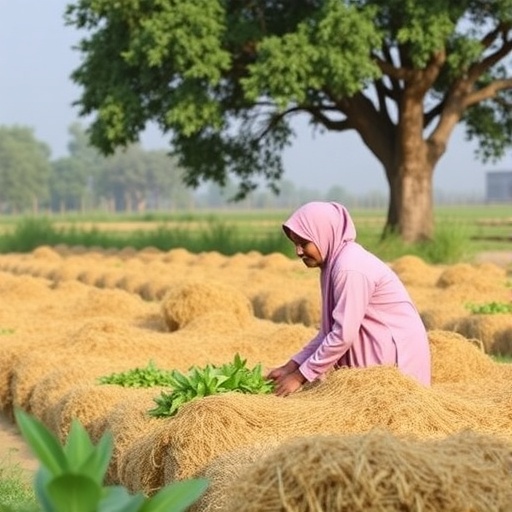
Farmer Producer Organizations (FPOs) have gained increasing attention in recent years as a vital mechanism for empowering smallholder farmers and transforming agricultural landscapes, particularly in India. Research conducted between 2008 and 2023 reveals a steadily growing body of literature examining the multifaceted roles and impacts of FPOs. Peak publication years of 2022 and 2023 underscore the escalating scholarly and policy interest in these organizations as agents of agricultural modernization, equitable market access, and rural livelihood enhancement. This mounting research momentum reflects the urgent need to unpack the opportunities and systemic challenges confronting FPOs within complex agricultural ecosystems.
India emerges as the global epicenter of FPO-related scholarship, leading in published studies and case analyses exploring farmer collectives’ productivity, governance, and outreach dynamics. Notably, the International Journal of Extension Education has surfaced as a key dissemination platform for innovation in extension services supporting FPOs. Among prolific contributors, Kumar S. stands out for his focused examination of operational and financial parameters impacting FPO performance, with significant citations validating the influence of his insights. Seminal works like Trebbin’s 2014 study on linking smallholder farmers to modern retail chains via producer organizations highlight the practical intersections of collective agency and market integration, while Krishnan et al. (2021) probe collaborative innovation in food supply chains as pivotal to sustainable agricultural development.
Despite the promising potential of FPOs to integrate farmers into value chains, many face critical capability deficits, particularly in navigating modern retail ecosystems and scaling business operations effectively. Government support, especially financial aid calibrated to balance welfare priorities with commercial viability, is essential but remains uneven. Research advocates for policy frameworks incentivizing network collaborations, technology enablement, and multi-sectoral engagement involving industry, academia, and public institutions. Nonetheless, vertical integration efforts often marginalize vulnerable farmers; thus, enhancing bargaining power and inclusive decision-making processes is crucial to fostering equitable participation and elevating women’s roles within agricultural governance.
Delving into thematic clusters, one dominant area of study spotlights empowerment in dairy farming through fostering motivation, perception shifts, and sustainable supply chain collaborations. This cluster underscores how small and marginal farmers, typically constrained by limited land holdings and financial barriers, benefit from cooperative strategies that diffuse financial assistance and promote resource efficiency. International case exemplars, such as Brazil’s pork industry, illustrate how strategic alliances between producers and private firms stimulate transformative sectoral growth. However, tensions in stakeholder priorities echo the competing demands between income maximization from lucrative crops and reinforcing food security through staple production, exposing the nuanced complexities in operationalizing sustainability schemes.
Income augmentation among smallholders through collective agricultural actions remains another focal narrative, particularly in the Indian context where fragmented supply chains impair profitability. Farmer Producer Companies and their associative models have catalyzed efficiency gains and cost reductions, as evidenced by initiatives like the “Small Farmers Large Fields” model designed to counteract diseconomies of scale. Yet, attrition rates among farmer participants spotlight challenges in sustaining engagement and financial gains, calling for adaptive frameworks to retain active membership and optimize collective bargaining strength.
Quantitative analyses affirm that FPO membership correlates positively with productivity boosts, income enhancement, and profitability improvements among small and marginal farmers. The dichotomy between market-driven and production-driven FPOs reveals that business acumen and fiscal management are critical determinants of organizational success. Empirical findings demonstrate that affiliation with well-managed FPOs tangibly elevates net profits and return on investment metrics, directly contributing to progressive livelihood security encompassing social, human, economic, and political capital dimensions.
A critical yet underexplored dimension addresses women’s empowerment through FPOs. Although women constitute a significant agricultural labor force, their representation in leadership and decision-making remains disproportionately low. Data indicates that only a marginal fraction of FPOs are helmed by women entrepreneurs, reflecting entrenched gender inequities. Nevertheless, emerging evidence documents incremental advances where FPOs facilitate women’s access to financial services, enhance bargaining capabilities, and bolster market linkages. These gains spotlight pathways to inclusive development, although systemic challenges such as land ownership restrictions and credit access barriers persist, especially within marginalized regions.
Technological adoption and organic farming practices emerge as pivotal catalysts for rural agricultural intensification and sustainability. FPOs function as conduits for disseminating innovative agricultural technologies and promoting organic methods, which collectively enhance productivity, resilience, and profitability. These interventions are vital in contexts characterized by resource scarcity and climatic variability, such as Nepal and other underdeveloped regions. However, consumer acceptance of sustainable agricultural products is often limited by definitional ambiguities and lack of standardized certification frameworks, underscoring the need for clearer organic farming paradigms. Sustainable performance of FPOs hinges upon robust leadership, capacity-building initiatives, and cooperative social capital, which mediate economic, social, and environmental success factors.
In sectors like coconut agriculture, characterized by smallholder predominance and market volatility, FPOs have demonstrated efficacy in improving market efficiency and sustainability outcomes. Beyond profit maximization, these organizations provide critical buffers against price fluctuations, facilitate technology transfer, and support continuous income streams. Understanding these multifaceted benefits requires broadening evaluative measures beyond conventional profitability to encompass resilience and technological inclusivity.
At a more systemic level, the role of agricultural workers in driving innovation and sustainability within food supply chains is increasingly recognized. Technological tools such as artificial intelligence, machine learning, and mobile information systems have been deployed to optimize production, reduce post-harvest losses, and establish equitable market access, as documented in Nigerian agricultural development contexts. Sustainable supply chain management integrates raw material flows with waste reduction imperatives, striking a balance between ecological stewardship and economic viability.
Synthesizing these insights, a Theory of Change framework tailored to FPOs offers a strategic roadmap linking existing challenges to targeted interventions and projected outcomes. This structured approach emphasizes critical leverage points such as institutional strengthening, capacity building, stakeholder collaboration, and enabling environments that collectively enhance FPO effectiveness and sustainability. Visual depictions of this framework elucidate the pathways through which incremental support can translate into systemic transformational impacts.
Nevertheless, the journey toward robust and impactful FPOs is fraught with limitations and research gaps. The reliance on secondary data in existing literature constrains the granularity and contextual accuracy of conclusions. Moving forward, mixed-method research approaches combining quantitative rigor with qualitative depth will be indispensable. Longitudinal studies examining the governance structures and financial sustainability of FPOs over extended periods can yield rich insights into durability and scalability. Comparative case analyses contrasting successful versus struggling FPO models can illuminate best practices and pitfalls. Advanced tools such as network analysis, econometric modeling, and participatory rural appraisal can further unlock nuanced understandings of market linkages, financial flows, and governance dynamics necessary for informed policy formulation.
Policy frameworks must also evolve responsively to alleviate operational bottlenecks. The regulatory labyrinth surrounding documentation and compliance imposes undue burdens on farmer-led Boards of Directors, impeding organizational agility. Digitization, decentralization of facilitation centers, and targeted training programs emerge as critical enablers for streamlining administrative processes. Addressing the chronic deficits in market linkage requires empowering FPOs with market intelligence, value addition capabilities, and strategic partnerships spanning agribusiness, e-commerce platforms, and public procurement channels.
Taxation policies warrant urgent reform to foster an equitable and growth-conducive environment. Ambiguities and inconsistencies in tax treatment under current laws undermine FPOs’ economic viability compared to cooperatives, necessitating unified tax-exemption status alongside simplified regulatory compliance to enable reinvestment into farmer welfare and operational expansion.
Input provision, specifically access to subsidized fertilizers, remains a contested terrain constrained by licensing and bureaucratic barriers. Realigning policies to grant FPOs procurement and marketing privileges akin to cooperatives will address a critical supply chain gap, enhancing farmers’ access to affordable, quality inputs. Simplified regulatory frameworks supported by state-level facilitation can mitigate procedural delays and promote equitable distribution systems.
Leadership crises within FPOs further complicate their performance trajectories. While the entry of external professionals has partially bridged expertise deficits, it simultaneously risks undermining farmer ownership and participatory governance if unchecked. Policies fostering farmer capacity building, leadership training, and protective regulations against external takeovers are essential to maintain the foundational premise of farmer-led empowerment embedded within FPO models.
In conclusion, the vibrant yet challenging landscape of Farmer Producer Organizations in India embodies both immense promise and complex roadblocks. Unlocking the sector’s potential requires a holistic paradigm encompassing nuanced academic inquiry, robust institutional frameworks, responsive policy interventions, and sustained stakeholder collaborations. As FPOs increasingly serve as pivotal nodes in agricultural value chains, reinforcing their structural resilience, operational efficiency, and inclusivity is imperative to catalyze rural transformation, augment farmer incomes, and contribute meaningfully to sustainable food systems in India and beyond.
Cite Scienmag News
Courtney Benton. (June 3, 2025). Inside India’s Farmer Producer Organizations: Status & Challenges. Scienmag. https://scienmag.com/inside-indias-farmer-producer-organizations-status-challenges/
Courtney Benton. "Inside India’s Farmer Producer Organizations: Status & Challenges." Scienmag, 3 June 2025, https://scienmag.com/inside-indias-farmer-producer-organizations-status-challenges/. Accessed 7 September 2026.
Courtney Benton. "Inside India’s Farmer Producer Organizations: Status & Challenges." Scienmag. June 3, 2025. https://scienmag.com/inside-indias-farmer-producer-organizations-status-challenges/


