


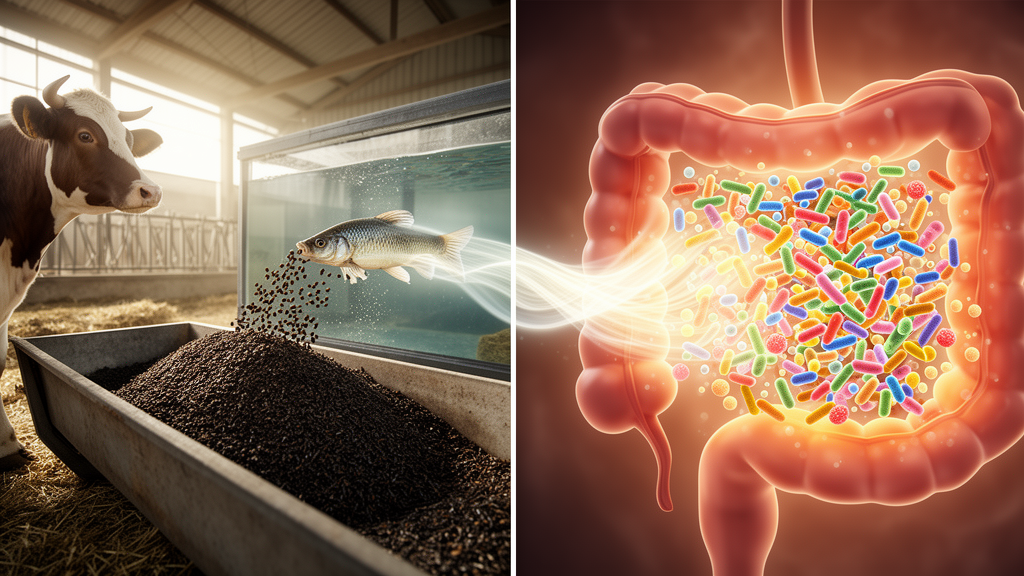
Edible insects such as the black soldier fly and yellow mealworm are quietly becoming one of the most intriguing stories in animal nutrition, and a new narrative review suggests their appeal goes far beyond protein. Researchers at the University of Leeds examined evidence on how insect-based feed ingredients influence gastrointestinal physiology in monogastric livestock and aquaculture species, including poultry, swine, fish, and crustaceans. Their conclusion is that insect meals behave less like simple protein substitutes and more like complex bioactive packages, capable of reshaping the gut microbiota, altering fermentation products, and interacting with the intestinal immune system. Crucially, the authors caution that these effects are neither uniform nor fully understood, and that no single compound or microbial signature yet explains the benefits observed across species.
The nutritional case for insects is straightforward. Depending on species and processing, insect meals typically contain roughly 40 to 70 percent crude protein on a dry matter basis, placing them alongside soybean meal and fishmeal as viable protein sources for monogastric animals. House cricket meal sits at the high end, at 63 to 70 percent protein, while black soldier fly larvae meal ranges from 37 to 63 percent and yellow mealworm larvae from 47 to 60 percent. Essential amino acids such as lysine, methionine, threonine, and valine are present at concentrations compatible with the requirements of livestock and farmed fish. Yet the review stresses that crude protein figures can be misleading, because nitrogen-based estimates count non-protein nitrogen in the chitinous exoskeleton, and the chitin matrix may physically limit enzyme access to proteins.
Three structural components dominate the mechanistic discussion. The first is chitin, a beta-linked polymer of N-acetyl-D-glucosamine that makes up roughly 5 to 17 percent of dry matter in common insect meals. Once dismissed as an anti-nutritional factor because monogastric animals digest it poorly, chitin is increasingly viewed as a fermentable substrate for microbes with chitinolytic capacity, potentially acting in a prebiotic-like manner. The second is the lipid fraction, particularly lauric acid in black soldier fly larvae, a medium-chain fatty acid with recognized antimicrobial activity against Gram-positive bacteria. The third is a family of antimicrobial peptides, including defensins, cecropins, attacins, and diptericins, which insects deploy as part of innate immunity and which show inhibitory activity against bacterial and fungal targets in purified form.
The antimicrobial evidence for insect lipids is among the most concrete in the review. In vitro, black soldier fly fat containing 0.58 grams of lauric acid per 100 milliliters inhibited D-streptococci, and raising the concentration to 0.87 grams per 100 milliliters produced roughly a 2-log reduction in bacterial counts. When piglets were fed black soldier fly-based diets, the reduction in intestinal D-streptococci was smaller, about 0.5 log, a gap the authors highlight as a warning against extrapolating laboratory potency to the gastrointestinal environment. Separately, black soldier fly larvae lipid fractions showed dose-dependent inhibition of multidrug-resistant Aeromonas hydrophila and A. salmonicida, with minimum inhibitory concentrations of 0.09 and 0.38 milligrams per milliliter respectively, evidence obtained outside a feeding model but relevant to aquaculture pathogens.
In poultry, dietary insect inclusion appears to shift microbial ecology without wholesale restructuring it. In layer pullets fed black soldier fly larvae meal in place of fishmeal, the community remained broadly comparable to controls, dominated by Firmicutes with Lactobacillus accounting for about 93 percent of genus-level sequences, but potentially beneficial taxa including Lactobacillus, Bacteroides, Blautia, and Enterococcus increased with higher inclusion, and complete fishmeal replacement produced the highest alpha diversity. A study of free-range chickens given 7.5 percent yellow mealworm meal reported significantly greater cecal microbial alpha and beta diversity, a higher Firmicutes to Bacteroidetes ratio, and enrichment of genera such as Clostridium, Oscillospira, Ruminococcus, Coprococcus, and Sutterella, all without changes in villus height, crypt depth, or mucin composition.
Swine studies tell a similar story with a focus on the vulnerable post-weaning period. Piglets fed diets containing 5 or 10 percent black soldier fly larvae meal showed increased cecal microbial beta diversity and greater abundance of genera associated with fiber fermentation, including Blautia, Coprococcus, Eubacterium, Prevotella, Roseburia, and Ruminococcus, together with a higher proportion of neutral mucins in the small intestine and no signs of inflammation. In growing pigs, replacing soybean meal with 5 or 10 percent yellow mealworm meal reduced Bacteroidetes and significantly increased branched-chain fatty acids, even though total short-chain fatty acid concentrations stayed flat. The authors note this distinction matters: taxonomic shifts do not necessarily predict changes in the metabolites conventionally linked to gut health.
Aquaculture results are arguably the most striking. Rainbow trout fed diets replacing 10 to 30 percent of fishmeal with black soldier fly larvae meal showed increased bacterial richness and diversity, with enrichment of lactic acid- and butyrate-producing bacteria attributed mainly to the fermentable chitin fraction. Juvenile Nile tilapia receiving defatted larvae meal replacing 60 percent of soybean meal survived Aeromonas veronii infection at significantly higher rates, with less intestinal inflammation, more goblet cells, and enhanced mucin 2 expression, accompanied by increased intestinal L-tyrosine that upregulated barrier-related genes in epithelial cells. In Pacific white shrimp, replacing 10 to 20 percent of fishmeal protein reduced opportunistic genera such as Vibrio and improved survival after Vibrio parahaemolyticus challenge, but pushing replacement to 30 percent damaged intestinal morphology, a clear dose limit.
Immune responses appear modulatory rather than simply stimulatory. In gilthead seabream, dietary chitin increased respiratory burst and complement activity without affecting phagocytosis or lysozyme levels, and similar selective effects appear in carp and grouper studies, though most used purified chitin not derived from edible insects. Under experimental Eimeria and Clostridium perfringens challenge, broilers given 5 percent black soldier fly larvae meal showed higher cecal acetate and butyrate and reduced IL-6 expression, while laying hens fed low levels of expanded larvae meal showed reduced TNF-α expression. The review interprets such findings as evidence of immune equilibrium rather than generalized immunosuppression, while acknowledging that inflammatory markers do not respond uniformly across studies, and that improved homeostasis sometimes occurs without major changes in classical cytokines.
The authors are emphatic that these benefits should be understood as properties of the whole insect matrix rather than of any single compound. Antioxidant effects illustrate the point: yellow mealworm supplementation reduced hepatic malondialdehyde in heat-stressed broilers without changing total antioxidant capacity, and black soldier fly pulp improved catalase activity in mirror carp at moderate inclusion, while the highest level impaired intestinal morphology and higher insect meal inclusion in rainbow trout was associated with reduced glutathione peroxidase activity. Because whole meals deliver chitin, fatty acids, peptides, minerals, and micronutrients simultaneously, no in vivo study to date can isolate the contribution of individual constituents.
The review closes with a research agenda shaped by frustration with heterogeneity. Studies vary in insect species, developmental stage, rearing substrate, processing, inclusion level, host age, and trial duration, making comparisons difficult and preventing standardized recommendations. Most trials run for weeks rather than production cycles, leaving questions of microbial resilience and long-term adaptation open, and most involve healthy animals rather than the pathogen, heat, and transport stressors of commercial farms. The authors call for minimum reporting standards, ingredient fractionation experiments, and integrated metagenomic, metatranscriptomic, and metabolomic approaches to identify which insect-derived compounds drive which physiological responses. Until then, they argue, insect feeds should be treated as promising multifunctional matrices whose gut-health potential is real, measurable, and still awaiting mechanistic precision.
Subject of Research: Effects of edible insect-based feed ingredients on gut microbiota and gastrointestinal physiology in monogastric livestock and aquaculture species
Article Title: Edible insect-based feed ingredients as modulators of gastrointestinal physiology in monogastric livestock and aquaculture species
Article References: Sánchez-Velázquez, O. A., & Hernández-Álvarez, A. J. (2026). Edible insect-based feed ingredients as modulators of gastrointestinal physiology in monogastric livestock and aquaculture species. Frontiers in Physiology, 17, Article 1945787. https://doi.org/10.3389/fphys.2026.1945787
Image Credits: AI Generated
DOI: 10.3389/fphys.2026.1945787
Keywords: insect meal, black soldier fly, yellow mealworm, gut microbiota, chitin, lauric acid, antimicrobial peptides, poultry, swine, aquaculture, animal nutrition, intestinal barrier
Cite Scienmag News
William Thompson. (October 23, 2026). Insect Feed Does More Than Feed: Gut Microbe Shifts Detected Across Livestock and Fish. Scienmag. https://scienmag.com/insect-feed-does-more-than-feed-gut-microbe-shifts-detected-across-livestock-and-fish/
William Thompson. "Insect Feed Does More Than Feed: Gut Microbe Shifts Detected Across Livestock and Fish." Scienmag, 23 October 2026, https://scienmag.com/insect-feed-does-more-than-feed-gut-microbe-shifts-detected-across-livestock-and-fish/. Accessed 23 October 2026.
William Thompson. "Insect Feed Does More Than Feed: Gut Microbe Shifts Detected Across Livestock and Fish." Scienmag. October 23, 2026. https://scienmag.com/insect-feed-does-more-than-feed-gut-microbe-shifts-detected-across-livestock-and-fish/


