


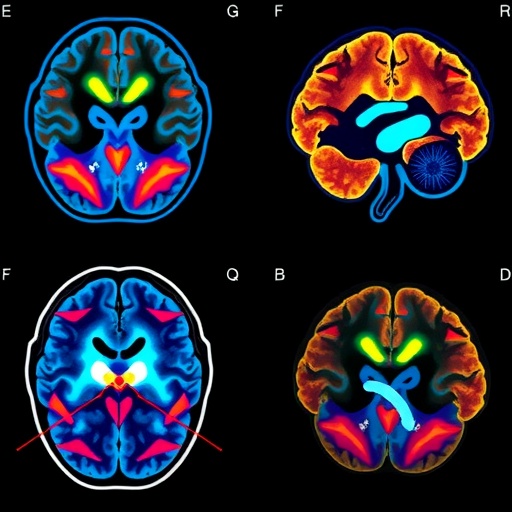
A groundbreaking study published on October 13, 2025, in the renowned journal Oncotarget unveils a novel therapeutic avenue for glioblastoma, one of the deadliest and most treatment-resistant brain cancers. Spearheaded by Dr. Hugo Jimenez and colleagues at Wayne State University School of Medicine’s Karmanos Cancer Institute, the research investigates a revolutionary form of treatment involving tumor-specific amplitude-modulated radiofrequency electromagnetic fields (AM RF EMF). This pioneering approach harnesses low-intensity radiofrequency waves, meticulously tuned to frequencies characteristic of glioblastoma tumors, to disrupt cancer cell growth and division, offering fresh hope for patients facing limited options.
The therapeutic device developed by the biotech company TheraBionic delivers these finely calibrated electromagnetic signals intrabuccally, enabling systemic exposure while maintaining safety and tolerability. Unlike traditional therapies that rely on cytotoxic agents or radiation, this modality targets cancer cells by interfering with internal cellular processes, representing a paradigm shift in cancer treatment methodologies. The modulation frequencies employed are uniquely selected to match tumor-specific signatures, ensuring that the intervention selectively impacts malignant cells with minimal effects on normal brain tissue.
In vitro investigations revealed that exposing multiple glioblastoma cell lines—including tumor stem cells notorious for their role in treatment resistance—to 27.12 MHz carrier waves modulated at glioblastoma-specific frequencies notably curtailed their proliferation. This anti-proliferative action is particularly significant because tumor stem cells often evade conventional chemotherapy and radiation, contributing to tumor recurrence and poor patient prognosis. These findings implicate that AM RF EMF can effectively target the root of glioblastoma persistence and regrowth.
A pivotal mechanistic insight uncovered by the researchers centers on the involvement of Cav3.2, a specific T-type calcium channel encoded by the CACNA1H gene, expressed on glioblastoma cells. Pharmacological blockade of Cav3.2 channels abrogated the treatment’s efficacy, indicating that these channels are indispensable mediators in the cellular response to amplitude-modulated radiofrequency electromagnetic stimulation. This discovery not only elucidates the biological underpinnings of the therapy but also opens avenues for refining treatment efficacy via modulation of calcium signaling pathways.
Further molecular analysis demonstrated that the treatment profoundly disrupts mitotic spindle formation during glioblastoma cell division. The mitotic spindle, a cytoskeletal apparatus essential for chromosomal segregation and successful cytokinesis, was found to be frequently malformed or absent in AM RF EMF-treated cells. Such spindle abnormalities were associated with pronounced mitotic arrest, ultimately leading to reduced tumor cell proliferation. Gene expression profiling highlighted alterations in the “Mitotic Roles of Polo-Like Kinase” pathway, a critical cascade regulating spindle assembly and mitotic progression, reinforcing the mechanistic linkage between radiofrequency exposure and mitotic perturbation.
The specificity of the therapy was underscored by control experiments showing that non-targeted, mismatched modulation frequencies failed to elicit analogous anti-cancer effects, confirming the necessity of precise frequency tuning for therapeutic benefit. This tumor-specific selectivity enhances the safety profile of the treatment modality, minimizing collateral damage to non-cancerous cells and reducing systemic toxicities commonly encountered with conventional chemotherapeutics.
Complementing preclinical evidence, compassionate-use administration of this radiofrequency therapy in two patients with challenging brain tumors provided encouraging clinical signals. A 38-year-old patient with recurrent glioblastoma exhibited both radiographic tumor regression and clinical improvement within a month of treatment initiation. Meanwhile, a 47-year-old patient afflicted with oligodendroglioma tolerated the intervention well, maintaining stable disease as confirmed by serial imaging assessments. Importantly, neither patient experienced serious adverse events, reinforcing the feasibility and safety of this novel treatment approach in a clinical context.
This study represents a seminal proof-of-concept that tumor-specific amplitude-modulated radiofrequency electromagnetic fields can suppress not only the growth of glioblastoma tumors but also the viability of their cancer stem cell populations, which have historically been impervious to treatment. Prior investigations had demonstrated analogous therapeutic potential in liver and breast cancers, suggesting a broader applicability of this non-invasive, non-ablative technology across multiple tumor types. Such a systemic, biophysical mode of cancer treatment could significantly expand the oncologist’s arsenal, especially for malignancies with poor prognosis and limited therapeutic response.
The implications of these findings resonate deeply within the oncology research community, as they herald a shift towards non-toxic, tunable, and highly targeted cancer therapies grounded in electromagnetic biology. By exploiting endogenous cellular vulnerabilities and signaling machinery, this form of therapy offers an innovative route to combat aggressive and recurrent tumors without compromising patient quality of life. The integration of calcium channel biology and mitotic spindle dynamics into therapeutic design underscores the necessity of multi-disciplinary research approaches blending bioelectromagnetics, molecular oncology, and clinical science.
Moving forward, the authors emphasize the urgent need for rigorously designed clinical trials to validate and expand upon these promising preclinical and anecdotal clinical results. Comprehensive studies assessing dosing parameters, frequency optimization, long-term efficacy, and potential synergies with existing standard-of-care treatments will be essential to fully establish this technology as a viable frontline or adjunctive therapy for glioblastoma and related neuro-oncological disorders.
In summary, this pioneering work spotlights the transformative potential of tumor-specific radiofrequency electromagnetic field therapy as a novel, safe, and effective approach against one of the most formidable cancers in medicine. With continued research and clinical validation, this technology promises to reshape the therapeutic landscape of glioblastoma and possibly other hard-to-treat cancers, igniting new hope for patients and clinicians alike confronting these devastating diseases.
News Publication Date: 13-Oct-2025
Web References:
- Oncotarget Volume 16 https://www.oncotarget.com/archive/v16/
- DOI: 10.18632/oncotarget.28770
Cite Scienmag News
Nathaniel Bowman. (October 14, 2025). Innovative Radiofrequency Therapy Inhibits Glioblastoma Progression and Targets Tumor Stem Cells. Scienmag. https://scienmag.com/innovative-radiofrequency-therapy-inhibits-glioblastoma-progression-and-targets-tumor-stem-cells/
Nathaniel Bowman. "Innovative Radiofrequency Therapy Inhibits Glioblastoma Progression and Targets Tumor Stem Cells." Scienmag, 14 October 2025, https://scienmag.com/innovative-radiofrequency-therapy-inhibits-glioblastoma-progression-and-targets-tumor-stem-cells/. Accessed 4 September 2026.
Nathaniel Bowman. "Innovative Radiofrequency Therapy Inhibits Glioblastoma Progression and Targets Tumor Stem Cells." Scienmag. October 14, 2025. https://scienmag.com/innovative-radiofrequency-therapy-inhibits-glioblastoma-progression-and-targets-tumor-stem-cells/


