


Pollinators like bees, butterflies and hoverflies are essential for transferring genetic material crucial for the reproduction of flowering plants, sustaining fruits, vegetables and fibres, as well as supporting biological diversity and climate change adaptation in food production systems. However, their decline threatens global food security and biodiversity, with three-fourths of flowering plants and 35 percent of food crops relying on them for reproduction. The decline in their populations underscores the need for urgent conservation efforts and pollinator-friendly practices. Therein lies the need to begin insect counting through which scientists, farmer collectives and green organisations can monitor population trends, identify species at risk, and implement conservation measures to protect these essential pollinators.

Credit: InsectsCount website
Pollinators like bees, butterflies and hoverflies are essential for transferring genetic material crucial for the reproduction of flowering plants, sustaining fruits, vegetables and fibres, as well as supporting biological diversity and climate change adaptation in food production systems. However, their decline threatens global food security and biodiversity, with three-fourths of flowering plants and 35 percent of food crops relying on them for reproduction. The decline in their populations underscores the need for urgent conservation efforts and pollinator-friendly practices. Therein lies the need to begin insect counting through which scientists, farmer collectives and green organisations can monitor population trends, identify species at risk, and implement conservation measures to protect these essential pollinators.
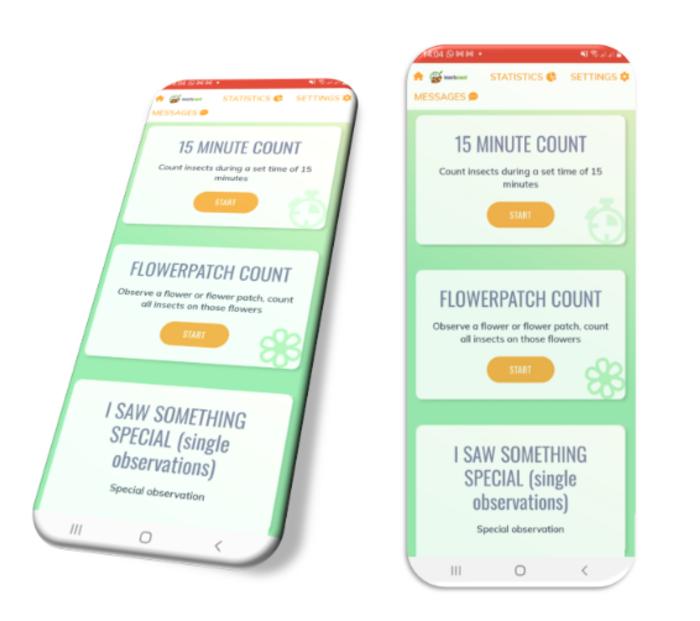
In trying to connect farmer collectives and environment organisations with biodiversity in Europe, the insect counting progressive web application (PWA) InsectsCount has been developed recently by the EU-funded project SHOWCASE – a project focusing on sustainable farming and biodiversity. A PWA allows a user to download an offline version from an accompanying website on their mobile phone. The app encourages standardised counts through 15 minute time-effort observations or recording insects visiting a flower patch for 10 minutes.
The app facilitates users to share data and access meta-information, including statistics comparing the observed species by the user to those found throughout the entire region. This comparison is particularly focused on understanding the relationship between observed species and the region’s land use and management practices.
Why is this app special?
This app distinguishes itself by prioritising collective and standardised insect counting efforts within specific regions, deviating from existing apps by placing a strong emphasis on community participation, particularly within a regional context. Here, coordinators play a vital role in uniting observers and fostering engagement, for example by targeting counts on specific land management, such as flowerstrips in field margins. Through innovative gamification elements, such as awarding badges for meeting observation goals and instilling a sense of collective accomplishment, participant involvement is heightened, setting it apart from similar applications. Michiel Wallis de Vries from the Dutch Butterfly Conservation underscores its uniqueness, noting, “as far as we know, this app is the first to combine pollinator monitoring and gamification.”
Utilising the app: coordinators, registration, and user engagement guide
To effectively use the app, coordinators must first gather observers within a specific region and motivate them to participate actively. Alternatively, groups of users can find a coordinator, as registration is solely possible by creating an observer community. The next step is to initiate their own experimental biodiversity areas (EBAs), which are collaborative regions where diverse stakeholders, including farmers, researchers, NGOs, and citizens, work together to develop and evaluate biodiversity innovations for agricultural systems and surrounding ecosystems, aiming to enhance sustainability and resilience in agriculture. The coordinator can define the region, select appropriate species and land use and management types for a specific region, translate texts to the local language, post news items and send messages to users to motivate them for challenges and other counting activities.
After registering with an EBA, users can customise their preferences, such as joining a regional group, sharing data, selecting language preferences, and specifying the organisms they wish to monitor, such as flower-visiting insects. Once their account is established, users can begin recording the abundance of flower-visiting insects. Farmers also have the option to collect biodiversity data themselves or utilise recorded information to implement specific actions on their farms.
The progressive web application can be downloaded for offline use and easier access for free at https://insectscount.eu/. The source code has also been made freely available.
This initiative was created and executed by SHOWCASE project partners, the Dutch Butterfly Conservation and the Spanish National Research Council, in collaboration with WWF European Policy Office, Swedish University of Agricultural Sciences, and Scienseed. InsectsCount promotes community engagement in citizen science through collaborative gaming and data collection efforts, involving both farmers and volunteers. For more information, reach out to insectscount@vlinderstichting.nl.
Cite Scienmag News
Gavin Prescott. (May 13, 2024). Initiate your own observer community to start insect counting with InsectsCount. Scienmag. https://scienmag.com/initiate-your-own-observer-community-to-start-insect-counting-with-insectscount/
Gavin Prescott. "Initiate your own observer community to start insect counting with InsectsCount." Scienmag, 13 May 2024, https://scienmag.com/initiate-your-own-observer-community-to-start-insect-counting-with-insectscount/. Accessed 4 September 2026.
Gavin Prescott. "Initiate your own observer community to start insect counting with InsectsCount." Scienmag. May 13, 2024. https://scienmag.com/initiate-your-own-observer-community-to-start-insect-counting-with-insectscount/

