


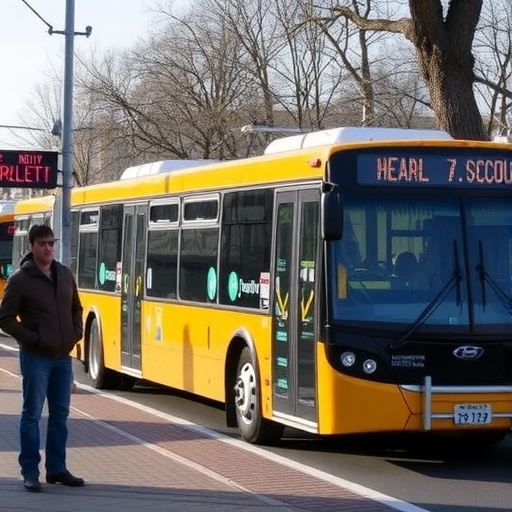
In recent years, urban transportation systems have garnered increased attention, especially in university communities. These areas represent unique environments where fixed-route and demand-responsive services compete to cater to diverse transportation needs. A new study by Khan et al. explores the factors influencing the uptake and effectiveness of these transportation modalities in a university setting, shedding light on the intersection of accessibility, user preferences, and community dynamics.
Understanding the dynamics of transportation services is crucial for optimizing urban mobility, particularly in academic environments where students, faculty, and visitors frequently traverse campuses. Fixed-route services, which operate on pre-determined paths and schedules, provide reliability but may not cater to every individual’s unique routing needs. In contrast, demand-responsive services, often facilitated by mobile apps, offer the flexibility to request rides as needed. This dichotomy presents an important focal point for researchers and urban planners alike.
Khan et al. emphasize that the decision-making process for transportation selection is multifaceted. Factors such as service availability, cost, trip purpose, and user demographics profoundly influence the choice between fixed-route and demand-responsive services. For instance, students may prefer demand-responsive options during late-night hours due to increased safety concerns, while commuting to classes may drive a preference for the consistency of fixed schedules. By analyzing these preferences, researchers can better understand how to design transportation services that meet the users’ needs.
One significant finding of the study is the role of technology in shaping transportation behavior. The rise of mobile apps has revolutionized how users approach transit options. For instance, real-time tracking and the ability to book rides at a moment’s notice have made demand-responsive services particularly appealing to younger, tech-savvy individuals. The students’ reliance on smartphones and digital solutions reflects broader societal trends toward convenience and immediacy, further complicating the dialogue around traditional transportation methods.
Moreover, the study reveals that perceptions about service reliability significantly impact user choices. If a service is perceived as unreliable, users are likely to seek alternatives, either to fixed-route services they deem more dependable or to neighboring ride-sharing platforms. The authors assert that enhancing the reliability of transportation services should be a paramount goal in urban planning, especially in a university context where fluctuations in demand can directly affect service efficacy.
The demographic makeup of university communities adds another layer of complexity to the analysis. Factors such as age, income level, and student status play essential roles in determining transportation mode preferences. For instance, international students or those from urban backgrounds might have different transportation needs and preferences compared to their local peers. Understanding these differences can aid in tailoring services that cater to diverse populations, ultimately leading to improved user satisfaction and higher ridership.
Safety considerations are another dimension explored in this research. Users often face hesitations about using certain transit options based on perceived risks, particularly during off-peak hours or in less populated areas. The study suggests that addressing these safety concerns through better lighting at transit stops, increased security patrols, or even community engagement initiatives can encourage higher utilization of both service types. Fostering an environment where users feel secure can significantly shift transportation behaviors in university settings.
In the context of environmental sustainability, the researchers note that public transportation systems can reduce carbon footprints if users opt for communal transport over individual car journeys. However, achieving this requires a delicate balance between promoting the environmental benefits and ensuring user convenience. Indeed, the interplay of convenience and sustainability is crucial when considering how to encourage transitions to public transport.
The study’s methodological approach combines quantitative data analysis with qualitative surveys to paint a more holistic view of transportation preferences in the target demographic. By gathering information directly from riders, the authors are able to capture nuanced insights that purely numerical data might overlook. This triangulation of methods enhances the validity and reliability of their findings, making for a compelling narrative on urban transportation behavior.
Future urban development strategies must consider these insights for effective transportation planning. Universities can serve as microcosms for broader urban challenges, making them ideal testing grounds for innovative transit solutions. The recommendations presented by Khan et al. have broader implications for cities worldwide as they seek to enhance urban mobility and encourage public transit use.
In conclusion, the ongoing exploration of fixed-route and demand-responsive services presents significant opportunities for improving transportation in university settings and beyond. As the landscape of public transportation evolves, stakeholders must remain agile and responsive to emerging trends, technological advancements, and the ever-changing needs of riders. As urban environments grow increasingly complex, well-informed decision-making backed by robust research will be crucial in fostering effective, safe, and sustainable transportation solutions.
By engaging with this study, urban planners, policymakers, and community leaders can begin to envision a future where transportation services are not only functional but also enriched by user engagement, technological integration, and a commitment to safety and sustainability.
Khan, M.A., Etminani-Ghasrodashti, R., Pamidimukkala, A. et al. Factors affecting use of fixed-route and demand-responsive services in a university community. Discov Cities 2, 62 (2025). https://doi.org/10.1007/s44327-025-00102-1
Cite Scienmag News
Courtney Benton. (December 12, 2025). Influences on Fixed-Route vs. Demand-Responsive Transit in Universities. Scienmag. https://scienmag.com/influences-on-fixed-route-vs-demand-responsive-transit-in-universities/
Courtney Benton. "Influences on Fixed-Route vs. Demand-Responsive Transit in Universities." Scienmag, 12 December 2025, https://scienmag.com/influences-on-fixed-route-vs-demand-responsive-transit-in-universities/. Accessed 4 September 2026.
Courtney Benton. "Influences on Fixed-Route vs. Demand-Responsive Transit in Universities." Scienmag. December 12, 2025. https://scienmag.com/influences-on-fixed-route-vs-demand-responsive-transit-in-universities/


