


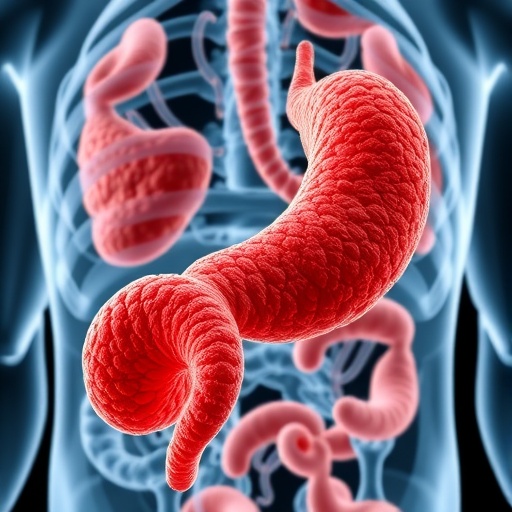
In an illuminating advancement that bridges the gap between metabolic diseases and one of the deadliest forms of cancer, a team of researchers from the University of Birmingham has uncovered compelling genetic commonalities that may reshape our understanding of pancreatic cancer prognosis and treatment. This groundbreaking study, recently published in Cancer Medicine, delves into the molecular intersections between pancreatic ductal adenocarcinoma (PDAC), obesity, and type 2 diabetes, illuminating a shared biological framework that has eluded scientists for years.
Pancreatic cancer remains a formidable clinical challenge characterized by its insidious onset and high lethality. PDAC, the most prevalent form, often evades early detection and is notorious for its resilience against conventional therapies, resulting in a dismal survival rate. Compounding this challenge is the distressing observation that patients with concurrent metabolic conditions, specifically obesity and type 2 diabetes, tend to experience even poorer outcomes, a correlation that has long puzzled oncologists and endocrinologists alike.
The investigative team, under the leadership of Dr. Animesh Acharjee, sought to dissect the underlying molecular mechanisms that unify these seemingly disparate conditions. Utilizing a robust, integrative methodological framework, the researchers analyzed expansive genetic datasets from both human and murine models, enabling a cross-species comparative analysis with extraordinary resolution. This approach facilitated the identification of conserved genetic pathways responsive in both pancreatic tumorigenesis and metabolic dysfunction.
Central to their findings was the augmented expression of six pivotal genes: ITGAM, PECAM1, CCL5, STAT1, STAT2, and CD44. Each of these genes plays a crucial role in modulating inflammatory and immune responses, suggesting that chronic inflammation—a hallmark of metabolic diseases—may actively foster a pro-tumorigenic microenvironment within the pancreas. The consistency of these gene expression profiles across both species and conditions underscores the biological plausibility of inflammation-driven cancer progression.
The study further leveraged single-cell transcriptomic analyses of human pancreatic tumors to excavate the tumor microenvironment with unprecedented granularity. This sophisticated technique delineated a distinct population of immune cells exhibiting heightened inflammatory activity linked to the aforementioned genes. This discovery implicates specific immune subsets as key orchestrators in the pathological synergy between metabolic impairment and cancer proliferation, presenting potential cellular targets for therapeutic intervention.
Laboratory validation using human pancreatic tissue samples fortified the genetic observations, confirming elevated gene activity within the metabolic disorder-associated tumor milieu. These findings collectively advocate for a model where metabolic disease-induced inflammation does not merely coexist with pancreatic cancer but may actively potentiate tumor growth and recurrence, thus exacerbating clinical outcomes.
The implications of this research extend beyond molecular characterization. By identifying these genetic markers as potential indicators of worse prognosis in PDAC patients with metabolic diseases, there emerges a promising avenue for precision medicine. Screening for these gene signatures could refine risk stratification, enabling clinicians to tailor surveillance and therapeutic regimens with greater acuity, potentially improving survival rates. Moreover, these insights open the gateway to novel targeted therapies aimed at disrupting the inflammatory circuits that link metabolic dysregulation to oncogenesis.
Professor Simon Jones emphasized the translational significance of this work, highlighting the complex interplay of chronic inflammation, metabolic dysfunction, and cancer biology. Appreciating these convergent pathways could pivot clinical paradigms, especially in managing patients burdened with multifaceted chronic conditions. As comorbidities increasingly complicate cancer care, integrated biological understanding becomes imperative for designing effective treatment strategies.
Funding by eminent bodies such as the Medical Research Council and Arthritis UK, facilitated through the NIHR Biomedical Research Centre: Birmingham, underscores the high scientific and societal value of this study. The utilization of cross-species data sets and advanced analytical tools also showcases the power of interdisciplinary, integrative approaches in unveiling the complexities of human diseases.
In an era where obesity and diabetes prevalence continue to escalate globally, these revelations assume even greater urgency. They call for intensified research into inflammatory mediators as both biomarkers and therapeutic targets, potentially ushering in a new frontier in combating pancreatic cancer through the lens of metabolic health.
As the biomedical community digests these findings, future research directions may include longitudinal studies to track gene expression dynamics over disease progression and therapeutic trials to evaluate the efficacy of anti-inflammatory agents in high-risk patient cohorts. This research not only advances scientific knowledge but also holds promise for tangible improvements in clinical management and patient quality of life.
The intersecting biological pathways illuminated by this study challenge conventional siloed views of disease, urging a holistic perspective in oncology and metabolic disease research. This integrative understanding promises to catalyze innovations that transcend traditional disease boundaries, ultimately steering the future of medicine toward more personalized and effective care.
News Publication Date:
5-Apr-2026
Web References:
https://doi.org/10.1002/cam4.71775
Cite Scienmag News
Nathaniel Bowman. (May 6, 2026). Inflammatory Genes Connect Pancreatic Cancer Risk to Obesity and Diabetes. Scienmag. https://scienmag.com/inflammatory-genes-connect-pancreatic-cancer-risk-to-obesity-and-diabetes/
Nathaniel Bowman. "Inflammatory Genes Connect Pancreatic Cancer Risk to Obesity and Diabetes." Scienmag, 6 May 2026, https://scienmag.com/inflammatory-genes-connect-pancreatic-cancer-risk-to-obesity-and-diabetes/. Accessed 6 September 2026.
Nathaniel Bowman. "Inflammatory Genes Connect Pancreatic Cancer Risk to Obesity and Diabetes." Scienmag. May 6, 2026. https://scienmag.com/inflammatory-genes-connect-pancreatic-cancer-risk-to-obesity-and-diabetes/


