

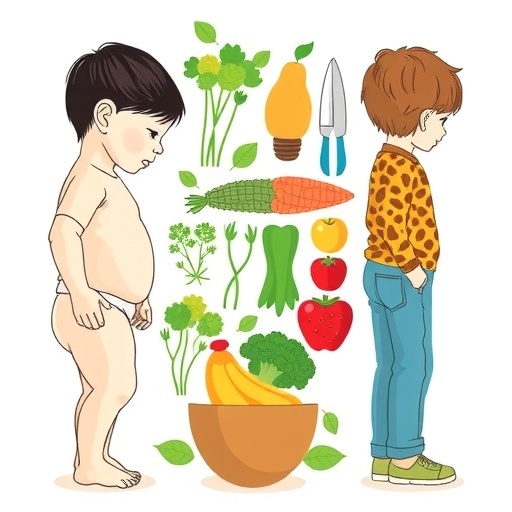
In a groundbreaking cohort study conducted within developed countries, researchers have meticulously analyzed the growth trajectories of infants raised in vegan households compared to their omnivorous counterparts. This comprehensive investigation reveals that infants from vegan households exhibit growth patterns remarkably similar to those from omnivorous homes, although there is a noteworthy initial increased risk of early underweight that declines by the time the infant reaches 24 months. These findings are poised to provoke thoughtful discourse within the scientific, medical, and public communities regarding the nutritional adequacy and health outcomes associated with vegan early infancy diets.
The study’s significance lies in its nuanced approach to tracking infant development longitudinally, offering a robust dataset over critical early developmental stages. By encompassing a variety of factors, including dietary patterns, health counseling practices, and socio-demographic variables, the research pioneers a holistic understanding of how plant-based dietary regimes impact infant physiology and growth. Current scientific debates often question whether strict vegan diets can provide the essential nutrients required for optimal infant growth, a subject this study directly addresses with empirical evidence.
At the core of this research is the differentiation of growth parameters measured through standardized indices such as weight-for-age, length-for-age, and body mass index (BMI) percentiles relative to established pediatric growth charts. The observed slight elevation in odds for early underweight conditions in vegan infants was statistically significant but demonstrated a compelling trend towards convergence with omnivore peers by 24 months. This temporal dynamic suggests that initial nutritional challenges may be mitigated over time, potentially through dietary adaptation or intervention.
From a physiological perspective, infancy represents a critical window for development, where nutritional adequacy exerts profound influence over cellular growth factors, metabolic programming, and immune system maturation. Vegan diets, characterized by the exclusion of all animal-derived products, require careful planning to ensure ample intake of key micronutrients such as vitamin B12, iron, and essential amino acids. The study alludes to the necessity of prescriptive nutritional counseling and support during both pregnancy and infancy to optimize outcomes for infants on vegan regimens.
Moreover, the public health implications of this study are far-reaching. With the increasing popularity of plant-based diets worldwide, healthcare providers face the challenge of balancing the promotion of ethically and environmentally conscious dietary practices with the imperatives of infant health. The reassurance provided by these findings may embolden more families to consider veganism without undue fear of compromising early childhood development, although vigilance in nutritional monitoring remains paramount.
The research methodology incorporated a cohort design allowing for the repeated assessment of individual infants over time, enhancing the reliability of growth measurements and reducing confounding biases common in cross-sectional studies. Longitudinal data capture enabled the investigators to disentangle transient nutritional effects from long-term growth patterns, thus providing a sophisticated model of infant development in diverse dietary environments.
Another dimension of the study examines the social and behavioral context of family dietary choices, recognizing that veganism often intersects with other lifestyle factors such as health consciousness, socioeconomic status, and access to healthcare resources. These variables may influence both the quality of infant diets and the efficacy of nutritional counseling services. Thus, the authors underscore the importance of multidisciplinary approaches that integrate dietary science with behavioral psychology and social determinants of health.
Given the study’s setting in developed nations, the findings might not be fully generalizable to lower-resource contexts where nutritional deficiencies are more prevalent and access to fortified foods or supplements is limited. The distinction emphasizes an urgent need for future investigations to evaluate vegan infant nutrition across diverse global populations, where environmental and economic variables significantly shape dietary feasibility and health outcomes.
Technologically, the study may have utilized advanced statistical modeling and bioinformatics tools to analyze complex nutritional and developmental data streams. These analytical approaches enable the precise quantification of growth deviations and the identification of subtle risk patterns that traditional analyses might overlook. Such rigor enhances the validity and translational potential of the findings for clinicians and policy-makers alike.
Importantly, the study sets a clear research agenda for subsequent efforts to explore detailed diet quality indices within vegan infant populations. Nutrient density, bioavailability, and the role of fortified foods or supplementation regimens constitute critical focal points. Additionally, the impacts of structured nutritional counseling during pregnancy and infancy—particularly its timing, content, and delivery methods—deserve rigorous examination to fortify support frameworks for families pursuing vegan diets.
In summary, this pioneering cohort study provides robust evidence that vegan infant diets, when properly managed, do not impede growth trajectories relative to omnivorous diets within a developed-country context. While a slight early vulnerability to underweight status exists, it subsides with age, suggesting dynamic adaptation processes. These findings catalyze a paradigm shift in how health professionals and families perceive and manage plant-based infant nutrition, underpinning an era of informed, evidence-driven dietary recommendations.
As awareness and adoption of vegan lifestyles escalate globally, integrating these scientific insights into public health messaging and clinical practice is imperative. Ensuring that infants thriving on vegan diets receive comprehensive, individualized nutritional guidance will ultimately support healthy development and broaden dietary options without compromising growth or well-being.
Subject of Research: Infant Growth Patterns in Vegan versus Omnivorous Households
Article Title: [Not Provided]
News Publication Date: [Not Provided]
Web References: [Not Provided]
References: (doi:10.1001/jamanetworkopen.2025.57798)
Image Credits: [Not Provided]
Keywords: Diets, Family, Infants, Cohort studies, Vegetarianism, Weight loss, Nutrition, Nutrition counseling, Pregnancy, Developmental stages, Age groups, Bulimia, Growth factors


