

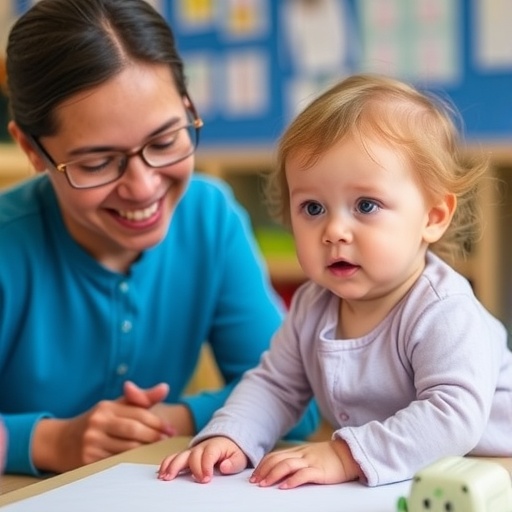
In the realm of early childhood education, a groundbreaking study has emerged, shedding light on the intricacies of infant caregiving and the dynamic interplay between teachers and classroom environments. This research, led by a team of scholars, including Benoit, A.M., Page, T.F., and DiCarlo, C.F., explores critical factors influencing the quality of caregiving in infant classrooms. The study, soon to be published in the “Early Childhood Educator Journal,” outlines how the relational perceptions of early childhood teachers can significantly impact the developmental outcomes for infants under their care.
At the heart of the study is the concept of caregiver quality, which encompasses a multifaceted understanding of how caregivers interact with infants in educational settings. Quality caregiving is not merely a function of experience or training; it is an amalgamation of relational dynamics that reflect both the caregiver’s emotional intelligence and the physical characteristics of the learning environment. The study meticulously highlights these vital relationships and how they contribute to creating a nurturing atmosphere conducive to infant development.
The researchers assert that one of the key elements of effective caregiving is the emotional connection that caregivers establish with infants. This connection is built on trust, empathy, and communication, which are pivotal in fostering a secure environment where infants can explore and learn. Emotional intelligence among caregivers is shown to play a critical role in forming these connections, highlighting the need for training programs that emphasize relational skills alongside traditional caregiving techniques.
Another dimension explored in this research is the impact of classroom characteristics on caregiving quality. The study identifies various environmental factors—such as space design, resource availability, and sensory stimulation—that can enhance or hinder infants’ learning experiences. By creating a thoughtfully arranged space that considers the sensory needs of infants, educators can significantly enhance the quality of care and learning.
Moreover, the role of early childhood teachers extends beyond mere supervision. They act as facilitators of learning, guiding infants through the complexities of social interactions and cognitive development. The study emphasizes the importance of teachers’ relational perceptions, which are shaped by their experiences and beliefs about caregiving. These perceptions influence how teachers respond to infants’ needs, thereby impacting the overall quality of the caregiving environment.
As the research unfolds, it becomes evident that the interrelationship between caregiving quality and classroom characteristics is crucial for the holistic development of infants. The study provides a comprehensive framework for understanding how these elements coexist and facilitate or inhibit learning outcomes. It advocates for a systemic approach to early childhood education that prioritizes not only the emotional and relational qualities of caregivers but also the physical environment in which care is provided.
In recent years, there has been a surge in interest regarding the implications of caregiver relationships on child development. The insights from this study add significant weight to existing literature, suggesting that attention to both caregiver training and classroom design can lead to improved outcomes for infants. This dual focus is essential for parents, educators, and policymakers who seek to enhance early childhood education systems.
The findings of this study could potentially guide the development of new training programs for early childhood educators, concentrating on emotional intelligence, relationship building, and the importance of creating engaging environments. Such initiatives would likely lead to more effective caregiving practices, thereby supporting better developmental trajectories for infants.
Furthermore, the research highlights the necessity for ongoing professional development in early childhood education. As the landscape of educational practices continues to evolve, it is imperative that educators receive regular training that encompasses both theoretical knowledge and practical skills. This will ensure that they are well-prepared to foster nurturing environments and provide high-quality care.
In conclusion, the study contributes significantly to the body of knowledge on infant caregiving in educational settings. By intertwining elements of relational perception and environmental characteristics, it proposes a comprehensive understanding of what constitutes quality care. The researchers urge educators and policymakers to consider these interconnected factors when designing early childhood education frameworks.
The influence of this research is expected to resonate throughout the field of early childhood education. As educators and stakeholders absorb these insights, they will be better equipped to create environments that not only support providers in their caregiving roles but that also maximize the developmental potential of infants.
In light of the profound implications of this research, further investigations are warranted. Future studies could expand upon these findings, exploring various demographic factors and their relationships with caregiver quality and classroom environments. The ongoing dialogue by researchers, educators, and policy makers will be essential in shaping a future in which every infant is afforded the highest standard of care and a solid foundation for learning.
Ultimately, the essence of quality caregiving is rooted in the connections fostered between caregivers and infants. This research stands as a testament to the vital roles that emotional intelligence and physical environments play in shaping early childhood development. By reinforcing these for both educators and policymakers, society can ensure that the littlest members of our communities thrive and flourish.
Subject of Research: Quality of infant caregiving and its relationship with teacher perceptions and classroom characteristics.
Article Title: Quality of Infant Caregiving, Early Childhood Teachers’ Relational Perceptions, and Infant Classroom Characteristics.
Article References:
Benoit, A.M., Page, T.F., DiCarlo, C.F. et al. Quality of Infant Caregiving, Early Childhood Teachers’ Relational Perceptions, and Infant Classroom Characteristics.
Early Childhood Educ J (2025). https://doi.org/10.1007/s10643-025-02073-9
Image Credits: AI Generated
DOI: https://doi.org/10.1007/s10643-025-02073-9
Keywords: Infant care, early childhood education, caregiver quality, emotional intelligence, classroom environment.


