


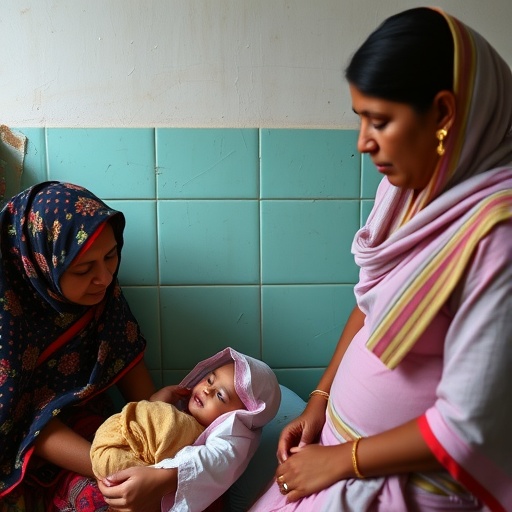
In the sprawling, densely populated refugee camps of Cox’s Bazar, Bangladesh, a silent crisis unfolds daily, disproportionately affecting Rohingya women. A groundbreaking study published in the International Journal for Equity in Health unveils stark inequalities in accessing maternal health care within these communities, shedding light on deep-rooted structural and socio-cultural challenges that perpetuate health disparities. This extensive research, led by Zakaria et al., delves into the multifaceted barriers impeding equitable maternal health service delivery and offers crucial insights into the intersection of displacement, gender, and health equity.
Cox’s Bazar, home to over a million Rohingya refugees fleeing persecution in Myanmar, epitomizes the complex humanitarian landscape where health infrastructure struggles under immense pressure. Amidst overcrowding, resource scarcity, and precarious living conditions, maternal health stands as a critical sphere fraught with vulnerability. The study systematically examines patterns and determinants influencing the receipt of maternal health care, including antenatal visits, skilled birth attendance, and postnatal care—fundamental services that shape maternal and neonatal outcomes.
Utilizing comprehensive data across several refugee camps, the researchers implemented rigorous statistical analyses to identify disparities not only between camps but also within them. Their findings reveal that while some women received consistent, high-quality care, a significant proportion remained excluded due to a convergence of factors such as age, education, marital status, household income, camp zone, and social support networks. The uneven distribution of health care access underscores a harsh reality where geographic and socio-economic segregation compounds vulnerability.
One of the study’s pivotal revelations highlights education as a significant determinant; women with formal education were likelier to utilize maternal health services effectively. This correlation signals broader implications for intervention strategies, emphasizing literacy and health education as vital tools for empowerment. Education nurtures informed decision-making and mitigates the influence of harmful traditional practices, thereby fostering improved health-seeking behavior amid marginalized communities.
The study also explores the impact of cultural and religious beliefs on maternal healthcare uptake. Deeply entrenched norms around childbirth, gender roles, and modesty create barriers to seeking institutional care. For many Rohingya women, reliance on traditional birth attendants persists, despite the availability of professional health services. The reluctance to engage with formal healthcare settings often stems from fear of discrimination, language barriers, or mistrust of unfamiliar systems, compounding disparities.
Geospatial disparities within the camps further exacerbate inequity. The research highlights that women in more remote or newly settled zones face formidable access challenges due to inadequate transportation and fewer health facilities. Infrastructure constraints, combined with administrative hurdles linked to refugee status, create a fragmented health system fraught with inconsistencies. These geographic inequities manifest in alarming discrepancies in maternal mortality and morbidity rates across the refugee population.
Additionally, the study addresses economic factors intimately tied to health outcomes. Even within a humanitarian aid context, hidden costs such as transportation fees, informal payments, or opportunity costs of time away from household duties hinder consistent healthcare utilization. Such economic burdens disproportionately affect the poorest households, linking financial vulnerability to adverse maternal health experiences and outcomes.
The authors also investigate the role of social support systems, revealing that women embedded in robust networks—be it familial ties or community groups—exhibit higher maternal health service uptake. Social capital, as the study terms it, provides emotional, informational, and practical resources facilitating healthcare navigation. Conversely, women isolated by displacement trauma or social marginalization encounter formidable isolation, diminishing their access to vital services.
Compounding these challenges is the overarching political and administrative context. The complexities of governance in refugee camps, entailing multiple stakeholders from government agencies, international NGOs, and local actors, generate coordination gaps. This fragmented approach impedes consistent policy enforcement, resource allocation, and monitoring, leaving many needs unmet and reinforcing systemic inequities.
The implications of the study resonate beyond mere healthcare access. They touch upon human rights, gender equity, and the urgent need for inclusive health policies attuned to the specific vulnerabilities of displaced populations. Inequality in maternal health care threatens gains made in global maternal mortality reduction and stands as a stark reminder of the persistent disparities fueled by displacement and marginalization.
Innovative policy recommendations emerge from this research. The authors advocate for integrated approaches that prioritize health education, culturally sensitive service delivery, and community engagement. Strengthening healthcare infrastructure with an equity lens and fostering cross-sector collaboration appear as critical pathways to redress disparities. Moreover, empowering Rohingya women through participatory interventions promises to enhance trust, uptake, and overall outcomes.
From a global health perspective, this study contributes to the expanding discourse on health equity in humanitarian settings. It underscores the importance of disaggregated data to uncover hidden inequities and tailor interventions effectively. The research methodology, combining quantitative and qualitative insights, provides a robust template for future investigations in comparable crisis contexts worldwide.
As the Rohingya crisis persists with no definitive resolution in sight, addressing maternal health inequalities transcends a purely medical issue—it demands a holistic, rights-based response. This entails not only the provision of services but dismantling structural barriers that perpetuate inequality. The study by Zakaria and colleagues serves as a clarion call to stakeholders across disciplines, urging prioritization of equitable healthcare as a cornerstone of refugee welfare and human dignity.
In sum, the findings compel us to re-examine assumptions about healthcare delivery in refugee settings, recognizing the heterogeneous experiences within populations that often appear monolithic. By illuminating the nuanced factors driving inequality, the research advocates for nuanced, intersectional strategies that honor the lived realities of displaced women. Bridging these gaps is essential not only for saving lives but for restoring hope amid adversity.
The pursuit of equity in maternal health among Rohingya women in Cox’s Bazar epitomizes a broader humanitarian and development imperative. It challenges global actors to move beyond fragmented responses and embrace comprehensive, equity-oriented frameworks. Such commitment is indispensable for transforming refugee camps from places of survival into spaces of opportunity, resilience, and health.
This landmark study thus marks a significant milestone in maternal health research within complex humanitarian emergencies. It fosters awareness, informs policy, and inspires action—underscoring that even in the most challenging environments, equitable healthcare is achievable and profoundly transformative.
Cite Scienmag News
Courtney Benton. (November 27, 2025). Inequality in Rohingya Maternal Healthcare Access. Scienmag. https://scienmag.com/inequality-in-rohingya-maternal-healthcare-access/
Courtney Benton. "Inequality in Rohingya Maternal Healthcare Access." Scienmag, 27 November 2025, https://scienmag.com/inequality-in-rohingya-maternal-healthcare-access/. Accessed 4 September 2026.
Courtney Benton. "Inequality in Rohingya Maternal Healthcare Access." Scienmag. November 27, 2025. https://scienmag.com/inequality-in-rohingya-maternal-healthcare-access/


