


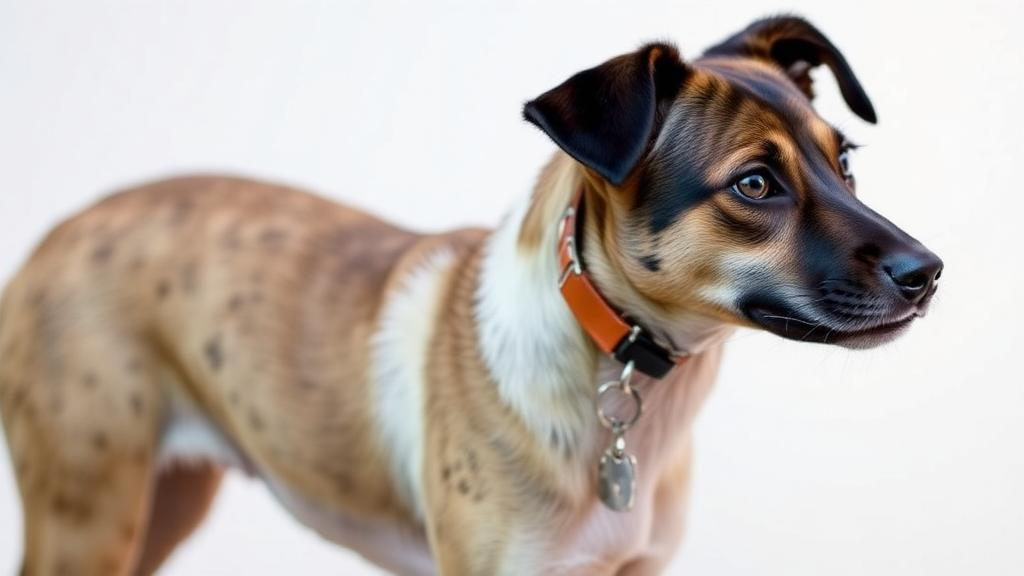
India’s homegrown dog breeds have long been celebrated by herders and hunters in the Himalayas and the Deccan, but their genetic story has remained largely unwritten. Now a team of Indian researchers has produced the first molecular-level characterization of two of the country’s most iconic native breeds, the Gaddi and the Mudhol Hound, and in doing so has mapped the genomic landscape of indigenous and exotic dogs across the subcontinent. Using a genome-wide sequencing approach, the scientists identified hundreds of thousands of single nucleotide polymorphisms, or SNPs, and used them to trace how geography and breeding history have shaped the DNA of dogs living in four Indian states. The findings, published in the journal Discover Biotechnology, suggest that India’s native canine populations harbor a level of genetic richness that may exceed that of the imported pedigree breeds popular in the country’s cities.
The study, led by Bhawanpreet Kaur and C. S. Mukhopadhyay of Guru Angad Dev Veterinary and Animal Sciences University in Ludhiana, together with H. M. Yathish of Karnataka Veterinary, Animal and Fisheries Sciences University, focused on six breeds: three indigenous ones, the Gaddi, the Tibetan Mastiff and the Mudhol Hound, and three exotic ones, the Labrador Retriever, the German Shepherd and the Pug. Fifty dogs were sampled from four states spanning northern and southern India: Punjab, Himachal Pradesh, Haryana and Karnataka. Peripheral blood samples were collected aseptically under ethical approval from the Institutional Animal Ethics Committee, and genomic DNA was extracted using the classical phenol-chloroform-isoamyl alcohol method before being quantified and quality-checked with spectrophotometry and gel electrophoresis.
The technical heart of the study is a method called double digest restriction-site associated DNA genotyping by sequencing, or ddRAD-GBS. In this technique, genomic DNA is cut with a pair of restriction enzymes, in this case SphI and MluI, derived from the bacteria Streptomyces phaeochromogenes and Micrococcus luteus. The resulting fragments, which represent a reproducible subset of the genome, are then sequenced on an Illumina platform using 150-base-pair paired-end reads. This reduced-representation strategy allows researchers to interrogate tens of thousands of genomic positions across many individuals at a fraction of the cost of whole-genome sequencing, making it a popular choice for population genetics in non-model organisms. The sequencing and genotyping work was carried out at AgriGenome Laboratories in Kerala and at the Animal Genomics Laboratory at GADVASU.
The raw sequencing output was subjected to rigorous quality control using the FASTQC tool, with the researchers examining per-base quality scores, sequence length distributions, GC content and duplication levels. The Q30 score, a measure of the proportion of bases sequenced with high confidence, ranged from 91.272 to 95.262 percent across samples, while GC content fell between 49.5 and 55 percent, close to the theoretical expectation for canine DNA. After filtering out low-quality genotypes, multi-nucleotide polymorphisms and likely paralogous variants, the team identified a staggering 356,461 SNP loci across the samples, of which 75,811 high-quality SNPs were retained for downstream population genetic analyses. The computational pipeline relied on R programming and Linux bash scripting, with the data converted into a genlight object for analysis using packages such as vcfR, poppr, ape and adegenet.
To untangle the relationships among the dogs, the researchers deployed a battery of complementary analyses. They constructed a phylogenetic distance tree from pairwise genetic distances, supported by 100 bootstrap replicates, and built minimum spanning networks in which each dog is a node connected to its closest genetic relatives. They also performed principal component analysis, which compresses genome-wide SNP variation into a few independent axes, and discriminant analysis of principal components, a multivariate method that maximizes separation between predefined groups without the strong assumptions of Bayesian clustering approaches. Finally, membership probability plots estimated the likelihood that each individual belongs to a particular genetic cluster, providing a visual summary of population structure across the four states.
The results paint a coherent phylogeographic picture. Samples from Punjab and Himachal Pradesh showed the closest genetic similarity to one another, followed by Karnataka and then Haryana, indicating that geographic proximity and possibly historical movement of dogs have left detectable signatures in the genome. On the distance tree, the Labrador Retriever clustered most closely with the German Shepherd, while the Pug grouped with the Indian breeds, the Gaddi, Tibetan Mastiff and Mudhol Hound. In the minimum spanning network, a Tibetan Mastiff from Himachal Pradesh occupied a central position, sharing many SNPs with surrounding samples, while a German Shepherd acted as a hub connecting several exotic-breed branches. The researchers caution that central nodes in such networks represent shared ancestral-like SNP profiles rather than actual ancestors of the other samples.
Perhaps the most striking conclusion is that the indigenous breeds carry greater genetic diversity than their exotic counterparts. The authors attribute this to long-term adaptation to local environments and varied ecological niches, from the high Himalayan pastures patrolled by Gaddi dogs to the Deccan plains where Mudhol Hounds have been bred for centuries as coursing hounds. Higher diversity can translate into greater resistance to disease and environmental change, and it bolsters the overall health of India’s canine gene pool. By contrast, exotic pedigree breeds, shaped by closed studbooks and intensive selection, typically exhibit narrower genetic variation. The contrast also highlights the threats posed by unregulated crossbreeding and urbanization, which could gradually erode the distinctive genetic makeup of native populations.
The study is the first to characterize the Gaddi and Mudhol Hound at the molecular level, filling a conspicuous gap in canine genomics. Dogs were the first animals domesticated from wild species roughly 15,000 years ago, and more than 400 breeds exist today, yet the genomic resources underpinning canine research, from the original 2005 Boxer reference genome to the newer German Shepherd-derived assembly and the Dog10K consortium’s sequencing of 2,000 canids, have focused overwhelmingly on Western breeds. By anchoring Indian dogs in that framework, using the ROS_Cfam_1.0 genome as the alignment reference, the new work extends the reach of population genomics to a region whose canine heritage has been underexplored.
Beyond its evolutionary insights, the research has practical implications for breeding and conservation. The dense SNP catalog provides a foundation for future genome-wide association studies aimed at identifying alleles underlying traits of interest, and for marker-assisted selection programs that could enhance genetic improvement while preserving diversity. The dataset has been deposited in the Sequence Read Archive under BioProject accession PRJNA843534, making it available to other researchers. The work was funded by the Department of Biotechnology, Government of India, through a collaborative project on parentage determination and cytogenetic profiling in dogs.
The broader message is one of urgency tempered by opportunity. The authors note that the creation of dog breeds is a recent event arising from mixed ancestral stock, and that localized breeding practices and historical forces have sculpted the genetic makeup of each population. The clear genetic clusters revealed by the DAPC and membership probability analyses confirm that breed boundaries are real and detectable in genomic data, even in a modest sample of fifty dogs. As India urbanizes and imported breeds grow in popularity, the window for documenting and conserving native canine genetic resources may be narrowing. This study demonstrates that the tools to do so, from restriction-enzyme-based sequencing to open-source population genetics software, are now firmly within reach, and that the dogs guarding Himalayan flocks and coursing hares across the Deccan carry a genomic legacy worth preserving.
Subject of Research: Genome-wide SNP-based phylogeographic and genetic diversity analysis of indigenous and exotic dog breeds in India
Article Title: Phylogeographic and genetic diversity analysis through genome-wide SNPs in indigenous and exotic canine breeds owned in India
Article References: Kaur, B., Yathish, H. M., Kashyap, N., & Mukhopadhyay, C. S. (2025). Phylogeographic and genetic diversity analysis through genome-wide SNPs in indigenous and exotic canine breeds owned in India. Discover Biotechnology, 2(1), Article 5. https://doi.org/10.1007/s44340-025-00012-3
Image Credits: AI Generated
DOI: 10.1007/s44340-025-00012-3
Keywords: dog genetics, genome-wide SNPs, ddRAD-GBS, Gaddi dog, Mudhol Hound, Tibetan Mastiff, phylogeography, genetic diversity, population structure, India, DAPC, conservation genomics
Cite Scienmag News
Juliet Wilcox. (October 2, 2026). India’s Native Dogs Carry a Genetic Signature All Their Own, Landmark SNP Study Reveals. Scienmag. https://scienmag.com/indias-native-dogs-carry-a-genetic-signature-all-their-own-landmark-snp-study-reveals/
Juliet Wilcox. "India’s Native Dogs Carry a Genetic Signature All Their Own, Landmark SNP Study Reveals." Scienmag, 2 October 2026, https://scienmag.com/indias-native-dogs-carry-a-genetic-signature-all-their-own-landmark-snp-study-reveals/. Accessed 4 October 2026.
Juliet Wilcox. "India’s Native Dogs Carry a Genetic Signature All Their Own, Landmark SNP Study Reveals." Scienmag. October 2, 2026. https://scienmag.com/indias-native-dogs-carry-a-genetic-signature-all-their-own-landmark-snp-study-reveals/


