


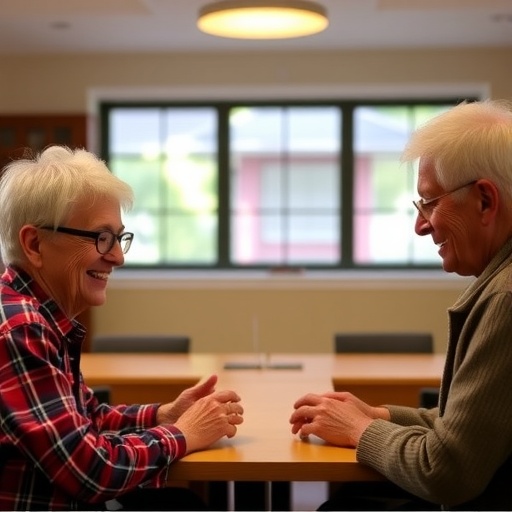
The National Center to Reframe Aging recently partnered with the Pennsylvania Department of Aging to initiate a transformative dialogue about the role and perception of senior community centers. This landmark event, held in Philadelphia on June 10, highlighted groundbreaking research and strategic communication frameworks designed to reposition senior centers as vital and dynamic community hubs. Rather than the outdated notion of these centers as passive or limited resources, the initiative underscores their potential to function similarly to libraries or public parks—spaces that actively support independence, socialization, health maintenance, and lifelong learning among older adults.
Senior community centers traditionally offer extensive services ranging from social engagement activities to critical health-related resources, yet despite their vast contributions, these institutions frequently suffer from misapprehensions that impede broader public and governmental investment. To address this challenge, the collaboration between the National Center and the Pennsylvania Department of Aging has developed evidence-based communication strategies that empower stakeholders. These frameworks help paint a more accurate and compelling narrative about senior centers, informed by empirical data derived from a representative cross-section of Pennsylvania residents, reflecting authentic community perspectives.
Patricia M. “Trish” D’Antonio, Executive Director of the National Center, underlined the project’s pioneering nature in the national context. She emphasized that the investment by the Pennsylvania Department of Aging is not only fueling state-level advancement but also inspiring a nationwide conversation on the importance of senior community centers. By implementing these research-driven recommendations, organizations and policymakers can amplify awareness, dismantle stigma, and bolster participation in senior centers. The ultimate goal is to elevate public support and ensure the sustainable development of these essential community assets amid the changing demographic landscape.
During the Community Conversation forum, Pennsylvania Secretary of Aging Jason Kavulich remarked on the National Center’s pivotal role as an ally in enhancing communication strategies used by advocates, families, and community leaders. His acknowledgment affirms the critical need for more tailored and resonant messaging that accurately conveys the multifaceted contributions of senior centers. Kavulich noted that previous attempts at rebranding and outreach strategies had fallen short because they lacked a nuanced understanding of the underlying reasons why participation rates did not align with the expanding older adult population.
He shared insights into the state’s evolving approach, which now focuses rigorously on understanding the motivations and barriers faced by potential center users. “We have approached the challenge from multiple angles for over a decade, but taking this thoughtful step back to understand the ‘why’ behind participation patterns is transformative,” Kavulich explained. This shift toward research-backed communication is enabling Pennsylvania to pioneer innovative outreach methods, ensuring that engagement efforts resonate authentically with diverse community members and ultimately increase senior center utilization.
Joining D’Antonio and Kavulich was Renee Cunningham, President of the Pennsylvania Association of Senior Centers and Executive Director of Center in the Park, a prominent senior community center located in Philadelphia’s Germantown neighborhood. Cunningham highlighted the significance of the research project as a defining moment for senior centers across the region. She articulated how previous rebranding efforts struggled due to a disconnect between senior centers’ actual offerings and public perceptions, a gap that this project’s evidence-based communication tools are designed to bridge decisively.
Cunningham stressed that the core work of senior centers—providing vital social, educational, and health-supportive functions—has always been robust. However, the transformative element now lies in the capacity to narrate these contributions in ways that inspire community action and foster identification with the centers. By helping the public view senior centers as indispensable community assets, the project seeks to enhance civic engagement and encourage broader societal recognition of their value.
The National Center’s collaboration has yielded a suite of digital resources and communication toolkits accessible via its website, providing advocates with versatile instruments to enhance messaging and community outreach. These tools are designed to help aging services organizations convey their purpose and impact in fresh, compelling ways that resonate with contemporary audiences. The ongoing partnership will further disseminate these findings and methodologies in an upcoming webinar scheduled for July 8 at 2 p.m. ET. This session, entitled “Reframing Communications About Senior Centers: Lessons Learned from Pennsylvania,” promises to offer deeper insights on how research-driven communication strategies can revolutionize the public narrative surrounding aging services.
This initiative arrives at a critical juncture as the aging demographic in the United States continues to expand rapidly. By repositioning senior community centers as vibrant, empowering environments rather than relics of passivity or social isolation, the project directly challenges ageist stereotypes and enacts a more inclusive vision of aging that highlights autonomy, active participation, and social connectivity. These centers, analogous to other public institutions like libraries and parks, are essential in fostering intergenerational engagement and enhancing the quality of life for older adults in communities.
The National Center to Reframe Aging, led by the Gerontological Society of America (GSA), stands at the forefront of combating ageism through nuanced, research-based communication initiatives. Their evidence-based approach draws on extensive interdisciplinary research and community engagement, leveraging data to inform strategies that shape aging discourse across the nation. The Center’s work aligns with GSA’s broader mission to advance aging research, education, and policy by providing tools and frameworks that influence social attitudes and encourage supportive programs for all age groups.
Supported by prominent foundations such as the Archstone Foundation, The John A. Hartford Foundation, RRF Foundation for Aging, and The SCAN Foundation, the National Center operates as an indispensable resource for aging services professionals, policymakers, and advocates. Its work exemplifies how translational research—moving evidence into practice—can redefine societal approaches to aging and create systemic change. The Center’s collaboration with state-level entities like Pennsylvania’s Department of Aging exemplifies the power of localized, data-driven interventions that generate scalable national impact.
In conclusion, this partnership heralds a new era in aging services communication and policy advocacy. By fostering a more accurate, asset-based narrative about senior community centers, this initiative not only enhances public understanding but also paves the way for increased funding, participation, and innovation within these critical institutions. As the U.S. confronts demographic shifts and heightening age-related challenges, such research-informed efforts provide a blueprint for other states and organizations aiming to transform how society values and supports its older populations.
- https://pacast.com/m?p=29475
- https://learning.reframingaging.org/seniorcenters
- https://learning.reframingaging.org/products/reframing-communications-about-senior-centers-lessons-learned-from-pennsylvania
- https://www.reframingaging.org/
Keywords: Aging, senior community centers, communication strategies, ageism, public health, gerontology, Pennsylvania Department of Aging, community engagement, aging services, public policy, social programs, aging population
Cite Scienmag News
Beatrice Stafford. (June 16, 2026). Increasing Recognition of Senior Centers through National Center to Reframe Aging and Pennsylvania Department of Aging Collaboration. Scienmag. https://scienmag.com/increasing-recognition-of-senior-centers-through-national-center-to-reframe-aging-and-pennsylvania-department-of-aging-collaboration/
Beatrice Stafford. "Increasing Recognition of Senior Centers through National Center to Reframe Aging and Pennsylvania Department of Aging Collaboration." Scienmag, 16 June 2026, https://scienmag.com/increasing-recognition-of-senior-centers-through-national-center-to-reframe-aging-and-pennsylvania-department-of-aging-collaboration/. Accessed 6 September 2026.
Beatrice Stafford. "Increasing Recognition of Senior Centers through National Center to Reframe Aging and Pennsylvania Department of Aging Collaboration." Scienmag. June 16, 2026. https://scienmag.com/increasing-recognition-of-senior-centers-through-national-center-to-reframe-aging-and-pennsylvania-department-of-aging-collaboration/


