

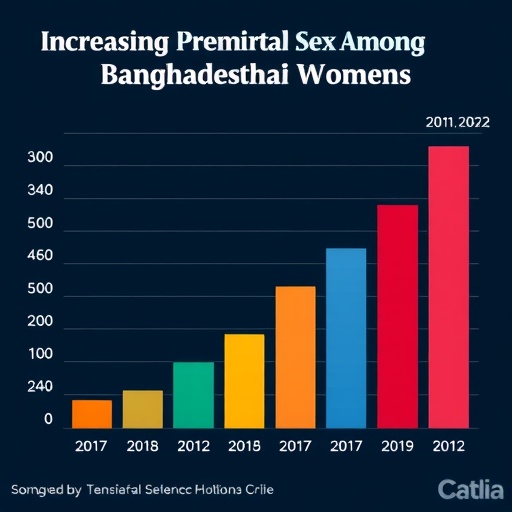
Recent research reveals a significant shift in the sexual behaviors of Bangladeshi women of reproductive age, highlighting a rising prevalence of premarital sex over the past decade. The study, conducted by Rabbi, Mamun, and Hossain, utilizes data from the Demographic and Health Surveys spanning from 2011 to 2022, illustrating a compelling narrative regarding women’s choices and societal norms. This burgeoning trend signifies not just a change in individual sexual behavior but a broader evolution within the Bangladeshi societal context, which has historically upheld strict norms around premarital sexual activities.
The findings indicate that the acceptability of premarital sex among women has seen a marked increase, transcending various socio-economic strata. This change may reflect wider global trends towards liberalization in sexual behavior, driven by improved access to education and a greater influence from digital media. Such factors could empower women in making informed decisions regarding their sexual health and relationships. However, it also raises concerns related to the implications on societal and health-related outcomes, particularly in a cultural landscape still rife with traditional expectations.
The cultural backdrop of Bangladesh presents a complex tapestry against which this research is set. Traditionally, the social framework emphasizes chastity and premarital purity, making this shift particularly noteworthy. Women who engage in premarital sex may face significant stigma and ostracism. Despite these societal pressures, the increased prevalence suggests that many women are prioritizing personal agency and autonomy over communal norms. This bold assertion of personal choice could signify a cultural reorientation, albeit a contentious one.
Moreover, the correlation of premarital sexual activities with various socio-economic factors warrants detailed exploration within the study. The research indicates that education is a crucial determinant, with women who attain higher levels of education being more likely to engage in premarital sex. This trend points to a greater awareness of sexual health, rights, and access to information, which can empower women to take control of their sexual health. Additionally, urbanization appears to play a significant role, with urban women displaying higher rates of premarital sexual behavior than their rural counterparts.
Interestingly, the demographic data suggests that younger women are leading this change. The findings illuminate a generational shift in attitudes towards premarital sex, wherein younger cohorts appear less constrained by traditional societal expectations and more inclined towards exploring their sexual autonomy. Consequently, this has brought forth discussions on the need for comprehensive sexual health education that addresses not just biological aspects but also emotional, ethical, and relational dimensions.
Despite the progressive trajectory highlighted by the study, concerns regarding health and safety remain paramount. The rise in premarital sexual behavior necessitates enhanced public health strategies to ensure that women have access to sexual health resources. Effective educational programs, accessible contraceptive options, and safe spaces for discussing sexual health are essential components of mitigating potential risks associated with premarital sexual activities. Moreover, these measures must be sensitive to the cultural dynamics at play, integrating respect for local customs while promoting informed choices.
The research raises pertinent questions about gender dynamics and the implications of rising premarital sexual activity on relationships. As women gain more agency in their sexual lives, traditional notions of masculinity and expectation surrounding male-female interactions may also undergo scrutiny and transformation. The study hints at a potential shift where relationships are founded on mutual consent, understanding, and respect, rather than solely societal dictates.
Moreover, this rising trend necessitates a broader public dialogue around sexual rights and the value of understanding and respecting individual choices. Engaging men in discussions about changing norms is critical to fostering a more equitable environment, ensuring that both genders navigate relationships in a culture that is evolving. Initiatives that promote healthy relationships and equitable dialogues can aid in dismantling longstanding gender disparities.
In addition to cultural implications, the research underscores the importance of intersectionality in understanding varying experiences of premarital sex among different groups of women. Factors such as socioeconomic status, educational attainment, and geographic location create a nuanced landscape of experiences that must be acknowledged when assessing the trends. It is crucial for policymakers and health educators to consider these multivaried experiences to design appropriate interventions that are thoroughly effective and culturally relevant.
As the discourse on premarital sex evolves, the need for empirical research in this realm becomes undeniably urgent. Future studies could benefit from qualitative insights that deepen the understanding of women’s motivations, fears, and aspirations surrounding premarital sex in Bangladesh. Such research can inform holistic approaches to sexual health education and support systems to address the unique challenges that arise in this transitional phase.
In conclusion, the increasing prevalence of premarital sex among Bangladeshi reproductive-aged women as highlighted in Rabbi et al.’s study reflects profound shifts in societal norms and individual autonomy. These trends underscore the importance of adapting to the changing landscape of sexual behavior by promoting informed health practices and respectful dialogue. As societal perceptions continue to shift, embracing comprehensive education and supportive resources will be vital in safeguarding women’s health and well-being, thus fostering a society where personal choice is celebrated and protected.
Subject of Research: Rising Prevalence of Premarital Sex and Its Correlates among Bangladeshi Reproductive-Aged Women
Article Title: Rising Prevalence of Premarital Sex and Its Correlates among Bangladeshi Reproductive-Aged Women: Evidence from Demographic and Health Surveys, 2011–2022
Article References:
Rabbi, A.M.F., Mamun, A.A., Hossain, M.A. et al. Rising Prevalence of Premarital Sex and Its Correlates among Bangladeshi Reproductive-Aged Women: Evidence from Demographic and Health Surveys, 2011–2022.
Arch Sex Behav (2025). https://doi.org/10.1007/s10508-025-03299-9
Image Credits: AI Generated
DOI:
Keywords: Premarital sex, Bangladeshi women, reproductive health, sexual behavior, societal norms, health education, personal agency.


