

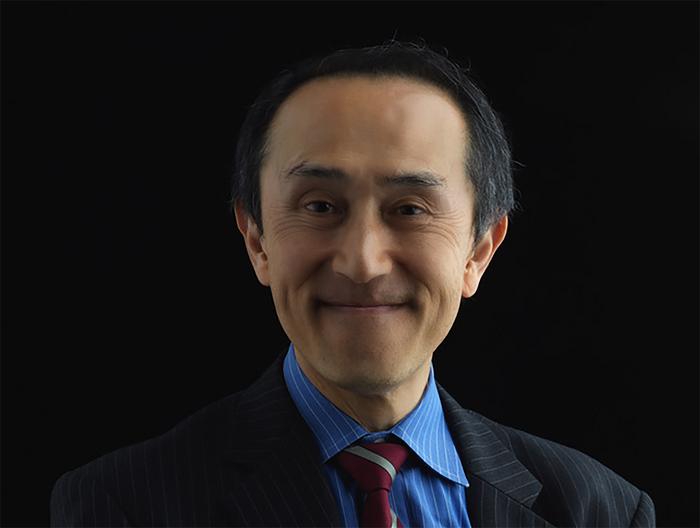
Fukuoka, Japan — On 17 July 2024, the British Academy held its Annual General Meeting, where Koji Mizoguchi, Professor of Archaeology at Kyushu University’s Faculty of Social and Cultural Studies, was elected as an International Fellow. He is the first Japanese archaeologist and the first researcher from Kyushu University to receive this honor.

Credit: Kyushu University
Fukuoka, Japan — On 17 July 2024, the British Academy held its Annual General Meeting, where Koji Mizoguchi, Professor of Archaeology at Kyushu University’s Faculty of Social and Cultural Studies, was elected as an International Fellow. He is the first Japanese archaeologist and the first researcher from Kyushu University to receive this honor.
Founded in 1902, the British Academy aims to deepen and share understanding of people, societies, and cultures across time and place, enabling everyone to learn, progress, and prosper. Notable Fellows include Cambridge University’s Professor Dame Mary Beard, an expert on ancient Rome.
The International Fellowship is the highest honor the Academy confers on non-UK residents for excellence in the humanities and social sciences. With Mizoguchi’s election, the ranks of Japanese International Fellows now include three current members. The other two are political scientist Takeshi Sasaki, former President of the University of Tokyo, and linguist Yutaka Yoshida, Professor Emeritus at Kyoto University. Mizoguchi is the ninth Japanese scholar to receive this honor, and it has been ten years since the last Japanese researcher was elected as an international fellow.
In 2024, the British Academy elected 52 UK Fellows, 30 International Fellows, and 4 Honorary Fellows. The full list of new Fellows was published on Thursday, July 18.
Koji Mizoguchi commented, “I am deeply honored and pleasantly surprised by this selection. It is wonderful that my continued efforts in social archaeology have gained such international recognition. This honor is rooted in the rich tradition of archaeology at Kyushu University and Japan’s historical advancements in this field. I will continue to cherish these local foundations while striving to make further global contributions.”
Over the past decades as a social archaeologist, Mizoguchi has analyzed materials such as artifacts, architecture, and human remains to reconstruct how people lived, interacted, and organized their societies. His work aims to uncover the stories behind historical artifacts and experiences, understanding how knowledge is produced and its impact on both past and present societies.
By studying cemeteries and burial practices, Mizoguchi explores how the living commemorate the dead, and how these memories relate to the social structures and systems of the time. He also looks at the networks formed by the flow of people, goods, and information in settled communities, investigating how these networks shaped social hierarchies and complexity. In his research on religion, Mizoguchi studies how religion helps people understand and address societal issues, using archaeology to explore the link between social changes and religious practices. Cultural memories, networks connecting people and places, and in-depth explorations of religion collectively weave his extensive research framework.
Through this integrative approach, Mizoguchi seeks to understand the mechanisms by which human communities maintain and transform their societies, achieve complexity, and develop state-like structures and social organizations. His notable publications include The Archaeology of Japan: From the Earliest Rice Farming Villages to the Rise of the State (Cambridge University Press, 2013) and Global Social Archaeologies: Making a Difference in a World of Strangers (with Claire Smith, Routledge, 2019). Furthermore, he is the only Asian scholar contributing a major section on “Post-Processual Archaeology” to the prestigious Encyclopedia of Archaeology, Second Edition (Elsevier/Academic Press, 2024).
In addition to his research achievements, Mizoguchi has served as President of the World Archaeological Congress(WAC) since 2013. The WAC promotes global interest in the past, supports local histories, and facilitates international academic exchange. Under his leadership, social archaeologists have increasingly addressed postcolonialism, community heritage, and indigenous rights, advancing the field of contemporary social archaeology. Mizoguchi is dedicated to bridging global divides and bringing attention to human rights issues and inequality. His efforts highlight archaeology’s role in addressing modern social issues and contributing to a more just world.
###
About Kyushu University
Founded in 1911, Kyushu University is one of Japan’s leading research-oriented institutes of higher education, consistently ranking as one of the top ten Japanese universities in the Times Higher Education World University Rankings and the QS World Rankings. The university is one of the seven national universities in Japan, located in Fukuoka, on the island of Kyushu—the most southwestern of Japan’s four main islands with a population and land size slightly larger than Belgium. Kyushu U’s multiple campuses—home to around 19,000 students and 8000 faculty and staff—are located around Fukuoka City, a coastal metropolis that is frequently ranked among the world’s most livable cities and historically known as Japan’s gateway to Asia. Through its VISION 2030, Kyushu U will “drive social change with integrative knowledge.” By fusing the spectrum of knowledge, from the humanities and arts to engineering and medical sciences, Kyushu U will strengthen its research in the key areas of decarbonization, medicine and health, and environment and food, to tackle society’s most pressing issues.

