


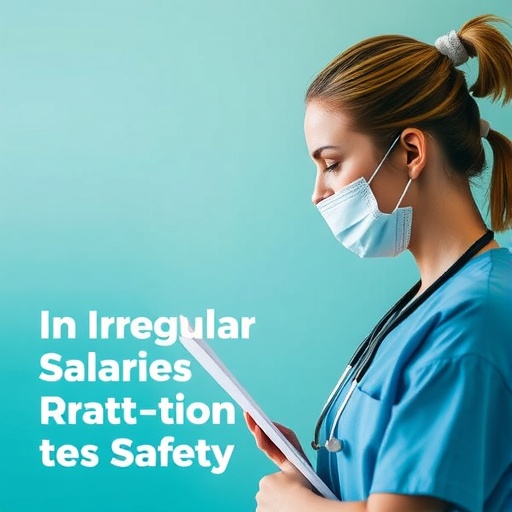
In recent years, the healthcare sector, particularly in developing nations, has received heightened attention regarding the correlations between job satisfaction and patient safety. Recent research sheds light on these connections with a focus on Cameroon, a nation rich in culture yet struggling with economic challenges. The study, led by researchers Chance and Théophile, delves into critical factors that affect not only the job satisfaction of nurses but also the safety of patients under their care. Irregular salary payments emerge prominently in the findings, raising serious questions about the sustainability and structure of health systems in such contexts.
The healthcare system in Cameroon has been grappling with various issues for decades, where irregular salary payments have become a common occurrence. Nurses, often on the frontline of patient care, are especially impacted. The research indicates that when healthcare professionals receive their salaries inconsistently, it generates a significant strain on their overall job satisfaction. This strain can lead to burnout, dissatisfaction, and ultimately, a decrease in the quality of care provided to patients. The study emphasizes how vital a stable income is for healthcare professionals, not merely for their personal well-being but for fostering an environment conducive to optimal patient care.
Critical to understanding the implications of irregular salary payments is the “ripple effect” described in the study. When nurses face financial uncertainty due to delayed or inconsistent pay, they are likely to experience stress that transcends their work environment. This stress can create a vicious cycle, where concerns about personal finances distract from the attention and care that nurses should provide to their patients. The study meticulously outlines this chain reaction, revealing that the repercussions of financial instability extend beyond the individual nurse to affect their colleagues and, crucially, the patients they care for.
In the context of patient safety, the ramifications are even more alarming. The research highlights that the diminished job satisfaction resulting from financial insecurity can result in adverse outcomes for patients. Nurses who are overworked and stressed are less likely to perform at peak levels, thereby increasing the chances of errors in medication administration, oversight in patient monitoring, and general lapses in care. These outcomes pose life-threatening risks to patients, particularly in high-stakes environments like hospitals and emergency care units.
Furthermore, the study draws connections between the retention rates of nursing staff and job satisfaction. It was found that when nurses are satisfied and feel valued—often determined by timely salary payments—they are more likely to stay in their positions and remain motivated. Conversely, frequent turnover creates instability within care teams, complicating the relationship dynamics between healthcare providers. This instability further fosters the environment for patient safety concerns, emphasizing the need for sustainable employment practices in nursing.
In their detailed analysis, Chance and Théophile examine existing literature on job satisfaction and healthcare outcomes, synthesizing various studies that align with their findings. The convergence of data from different research avenues illustrates a pressing concern: the necessity for systemic interventions to address salary irregularities. As public health practitioners and policymakers begin to grasp the weight of these findings, a call to action emerges for a comprehensive reform in how healthcare providers are compensated.
Moreover, the study also encourages healthcare stakeholders and government officials to engage in transparent dialogues with nursing professionals regarding their concerns. Such engagement is pivotal for implementing solutions that enhance job satisfaction and, consequently, patient safety. Nursing unions and professional associations are encouraged to advocate for improved compensation structures and consistent salary disbursement as foundational steps to safeguard healthcare quality.
The implications of this research transcend the confines of Cameroon, serving as a stark reminder to global health communities about the importance of employee welfare in environments where lives are at stake. The financial conditions under which healthcare providers operate can either uplift or undermine public health objectives. Therefore, as countries around the world strive to improve health services, the experiences of nursing professionals must be kept at the forefront of discussions regarding reform.
In conclusion, this groundbreaking research presents a multi-faceted view of how irregular salary payments lead to significant impacts on job satisfaction and patient safety among nurses in Cameroon. While the specific context of Cameroon may be unique, the patterns identified are widely applicable across various health systems worldwide. As health policymakers aim to promote better patient outcomes, acknowledging and addressing the factors that contribute to nursing job dissatisfaction must become a priority.
In sum, the ripple effect documented in this study serves as a clarion call for innovations in healthcare funding and salary systems. Ensuring that nurses receive timely and fair compensation will not only improve their professional lives but also fortify the very framework that supports patient care.
Chance, E., Théophile, P. The ripple effect: irregular salary payments, job satisfaction, and patient safety among nurses in Cameroon.
Discov glob soc 4, 5 (2026). https://doi.org/10.1007/s44282-025-00284-4
Cite Scienmag News
Courtney Benton. (January 8, 2026). Impact of Irregular Salaries on Nurse Well-being and Safety. Scienmag. https://scienmag.com/impact-of-irregular-salaries-on-nurse-well-being-and-safety/
Courtney Benton. "Impact of Irregular Salaries on Nurse Well-being and Safety." Scienmag, 8 January 2026, https://scienmag.com/impact-of-irregular-salaries-on-nurse-well-being-and-safety/. Accessed 3 September 2026.
Courtney Benton. "Impact of Irregular Salaries on Nurse Well-being and Safety." Scienmag. January 8, 2026. https://scienmag.com/impact-of-irregular-salaries-on-nurse-well-being-and-safety/


