


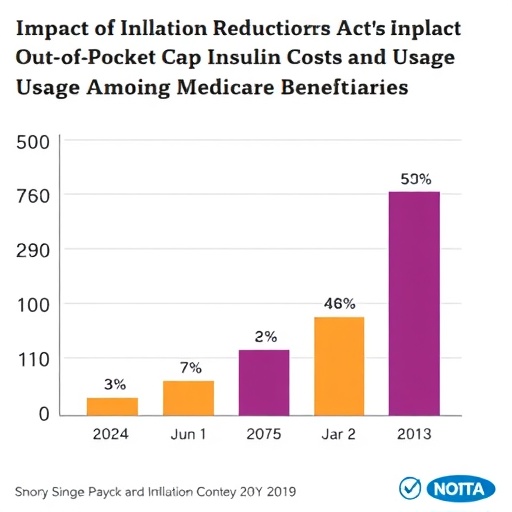
The landscape of diabetes management underwent a significant transformation in 2023, driven by a pivotal policy change in Medicare that capped insulin out-of-pocket expenses to $35. This regulatory intervention has ushered in notable improvements in both the affordability and consistency of insulin access among Medicare beneficiaries, particularly for those previously burdened by exorbitant costs. The ramifications of this policy ripple far beyond simple cost reduction, as recent empirical findings elucidate complex dynamics affecting medication adherence and overall treatment efficacy in diabetes care.
Diabetes mellitus, a chronic metabolic disorder characterized by impaired glucose regulation, mandates lifelong insulin therapy for many affected individuals. Historically, the financial strain of procuring insulin has posed a formidable barrier, often precipitating suboptimal dosing or complete discontinuation of therapy—a scenario fraught with increased risks of acute complications such as diabetic ketoacidosis and long-term microvascular damage. The $35 cap initiative represents a targeted intervention designed to mitigate these economic hurdles, potentially stabilizing glycemic control on a population scale.
The recent study conducted to assess the real-world impact of this policy employed a robust methodological framework, analyzing claims data from Medicare beneficiaries before and after the cap implementation. Findings reveal a pronounced stabilization and reduction in out-of-pocket expenses concurrent with a statistically significant uptick in insulin utilization among high-cost subgroups. These individuals, historically marginalized by the financial toxicity of diabetes treatment, demonstrated enhanced medication adherence, indicating not only improved cost metrics but also clinically relevant benefits.
From a pharmacoeconomic perspective, the policy’s success underscores the critical interplay between drug pricing, insurance design, and patient behavior. The predictable and limited out-of-pocket expenditure facilitated by the cap alleviates the financial unpredictability that previously undermined consistent insulin use. Consequently, this fosters better patient autonomy in diabetes self-management and may catalyze reduced emergency care visits and hospitalizations, ultimately impacting long-term healthcare expenditure trajectories positively.
Technically, the policy aligns with principles of value-based insurance design, wherein patient cost-sharing is minimized for high-value interventions such as insulin. This approach contrasts with more traditional models where fixed copayments or percentage-based coinsurance impose disproportional burdens on patients requiring chronic therapies. Application of such progressive insurance structures in diabetic care highlights a progressive paradigm facilitating equitable access to essential medications through deliberately tailored financial mechanisms.
Importantly, the research exposes nuanced shifts in health equity landscapes. By specifically targeting insulin access for Medicare enrollees—a demographic often with fixed or limited incomes—the policy addresses social determinants of health inherent in diabetes outcomes disparities. Moreover, it sets a precedent for similar reforms in private insurance markets and Medicaid programs, where insulin affordability remains a pervasive challenge.
Despite the encouraging outcomes, the study also signals the necessity for ongoing surveillance to ascertain the durability of these effects across temporal scales and diverse patient cohorts. Longitudinal assessments would be instrumental in identifying unintended consequences, such as shifts in formulary preferences, dispensing patterns, or broader pharmaceutical market behaviors. These insights can fine-tune policy frameworks to optimize both patient-centric benefits and systemic sustainability.
In parallel, the research accentuates opportunities for integrating digital health tools with financial policy interventions. Continuous glucose monitoring systems and telemedicine consultations, when coupled with cost-reduction initiatives, could synergistically enhance adherence and clinical outcomes. Future investigations might explore these intersections to craft holistic strategies combating diabetes morbidity through multi-pronged approaches.
The compelling evidence from this Medicare policy evaluation, presented at the 2026 American Diabetes Association’s Scientific Sessions, serves as a clarion call for healthcare stakeholders. Policymakers, providers, insurers, and patient advocates are collectively invited to harness these insights, expanding the reach of affordable insulin beyond Medicare confines. Such advocacy is critical in combating the diabetes epidemic, which continues to exact significant human and economic tolls worldwide.
At the heart of this transformative development lies a mission to democratize access to lifesaving medications by bridging economic gaps. The Medicare $35 insulin cap stands as a testament to how thoughtfully engineered health policies can reshape therapeutic landscapes, ensuring that cost no longer remains a barrier to sustaining life with dignity and efficacy. This initiative sets a gold standard in addressing pharmaceutical affordability, emboldening future efforts to tackle affordability in other chronic disease domains.
In summary, the comprehensive analysis of insulin out-of-pocket costs post-policy implementation illuminates a successful blueprint for enhancing drug access, adherence, and health equity. The nexus of pharmaceutical economics, health insurance reform, and clinical outcomes exemplifies the multifaceted dimensions crucial for enduring improvements in chronic disease management. As insulin prices continue to challenge the healthcare system globally, such evidence-based policy innovations are indispensable pillars for constructing equitable and sustainable healthcare models.
News Publication Date: Not specified; study presented in 2026.
Web References: Not provided.
References: doi:10.1001/jama.2026.5975
Cite Scienmag News
Courtney Benton. (June 6, 2026). Impact of Inflation Reduction Act’s Out-of-Pocket Cap on Insulin Costs and Usage Among Medicare Beneficiaries. Scienmag. https://scienmag.com/impact-of-inflation-reduction-acts-out-of-pocket-cap-on-insulin-costs-and-usage-among-medicare-beneficiaries/
Courtney Benton. "Impact of Inflation Reduction Act’s Out-of-Pocket Cap on Insulin Costs and Usage Among Medicare Beneficiaries." Scienmag, 6 June 2026, https://scienmag.com/impact-of-inflation-reduction-acts-out-of-pocket-cap-on-insulin-costs-and-usage-among-medicare-beneficiaries/. Accessed 4 September 2026.
Courtney Benton. "Impact of Inflation Reduction Act’s Out-of-Pocket Cap on Insulin Costs and Usage Among Medicare Beneficiaries." Scienmag. June 6, 2026. https://scienmag.com/impact-of-inflation-reduction-acts-out-of-pocket-cap-on-insulin-costs-and-usage-among-medicare-beneficiaries/


