

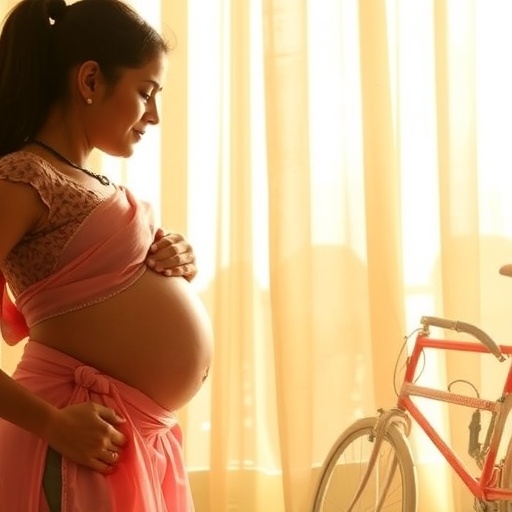
As global temperatures climb and heat waves become more frequent and severe, the implications for maternal health have emerged as a pressing concern. In a recently published article in JAMA, researchers synthesize the current scientific knowledge regarding the impacts of ambient heat on pregnant individuals, illuminating a critical intersection between climate change and reproductive health. This analysis delves deeply into the physiological stressors that extreme heat imposes during pregnancy, offering an urgent call to understand and mitigate these risks.
Pregnancy inherently alters the body’s thermoregulatory dynamics. The increased metabolic rate, expanded blood volume, and hormonal changes characteristic of gestation amplify heat production and impair heat dissipation. Under normal conditions, the body maintains homeostasis through sweating and vasodilation, but higher ambient temperatures and heatwaves challenge these mechanisms, pushing maternal core temperatures to potentially dangerous levels. The article details these physiological challenges, emphasizing that even modest elevations in maternal body temperature can disrupt fetal development and increase adverse outcomes.
An emerging body of epidemiological evidence links exposure to extreme heat with heightened risks of pregnancy complications. These include preterm birth, low birth weight, hypertensive disorders, and stillbirth. Crucially, the timing of heat exposure during gestation appears to be significant, with early and late pregnancy stages showing increased vulnerability. The authors discuss these associations in light of recent large-scale cohort studies and meta-analyses, underscoring the consistency of these findings across diverse geographical and socioeconomic contexts.
Indoor heat exposure compounds the risks posed by outdoor temperatures, especially in inadequately cooled living environments common in many low- and middle-income regions. The article explores how high indoor temperatures exacerbate physiological stress, particularly among pregnant individuals who may spend prolonged periods at home. Furthermore, occupational exposure to heat, especially in outdoor manual labor or poorly ventilated settings, introduces a distinct set of challenges. For instance, agricultural and construction work during heatwaves can significantly increase heat strain, reflecting an important social determinant of risk.
Thermodynamics principles are pivotal in understanding the heat transfer processes relevant to pregnant individuals. The article explains how convective and radiative heat gains from the environment, combined with metabolic heat production, influence the core body temperature. The interplay between peripheral vasodilation and sweat evaporation becomes a limiting factor when humidity is high, diminishing evaporative cooling efficiency. These complexities are critical for developing accurate models to predict heat stress under varying climatic and physiological conditions.
At the molecular level, hyperthermia during pregnancy may disrupt cellular homeostasis and induce oxidative stress, inflammatory responses, and placental dysfunction. These pathological pathways can impair nutrient and oxygen transfer to the fetus, elevating risks of developmental anomalies. The article highlights experimental data from both animal models and human observational studies that elucidate these mechanistic underpinnings, providing a biological basis for the epidemiological trends observed.
The authors underscore the disproportionate impact of heat exposure on marginalized populations. Socioeconomic factors influence access to cooling resources, quality healthcare, and occupational protections, rendering certain groups more vulnerable to heat-related pregnancy complications. This inequity highlights the need for targeted public health interventions that consider social determinants and environmental justice.
Managing heat risks during pregnancy requires a multifaceted approach. The article discusses behavioral strategies, such as hydration, scheduled rest in cooler environments, and avoidance of direct sun exposure during peak heat hours. Additionally, structural solutions including improving housing insulation, access to air conditioning, and redesigning workplaces to reduce heat load are pivotal. Public health messaging tailored to pregnant individuals and healthcare providers is vital to raise awareness about heat risks and prevention strategies.
The role of healthcare systems in monitoring and mitigating heat-related risks is emphasized. Prenatal care protocols could incorporate environmental heat exposure assessments, with anticipatory guidance for pregnant individuals during heatwaves. Clinicians are urged to consider heat stress as a potential contributing factor when managing pregnancy complications of unclear etiology.
Looking forward, the article advocates for enhanced research integrating climatology, obstetrics, and physiology to refine risk assessment models and develop effective interventions. Innovations such as wearable sensors for continuous body temperature monitoring and predictive analytics tied to weather forecasting may revolutionize personalized heat risk management for pregnant individuals.
In the context of global climate trajectories, the increasing frequency of extreme heat events portends a significant public health challenge. Pregnancy, already a vulnerable physiological state, demands focused attention in climate adaptation planning. The synthesis presented in this JAMA article serves as both a scientific foundation and a call to action to bridge disciplines, policy, and practice to protect maternal and fetal health in a warming world.
This comprehensive examination of ambient heat exposure, from its physical and biological mechanisms to its epidemiological consequences and pragmatic management strategies, marks a vital contribution to understanding how climate change directly jeopardizes human reproductive biology. As policies evolve to address climate threats, integrating maternal health considerations will be indispensable to safeguarding future generations.
Subject of Research: Risks to maternal health from exposure to ambient heat under climate change
Article Title: [Not specified in the provided text]
News Publication Date: [Not specified in the provided text]
Web References: https://doi.org/10.1001/jama.2026.0001
References: Accessible via the full article at JAMA and accompanying supplementary materials
Image Credits: Not provided


