


Long-term exposure to contaminants such as arsenic and nitrate in water is linked to an increased risk of various diseases, including cancers, cardiovascular diseases, developmental disorders and birth defects in infants. In the United States, there is a striking disparity in exposure to contaminants in tap water provided by community water systems (CWSs), with historically marginalized communities at greater risks compared to other populations. Often, CWSs that distribute water with higher contamination levels exist in areas that lack adequate public infrastructure or sociopolitical and financial resources.

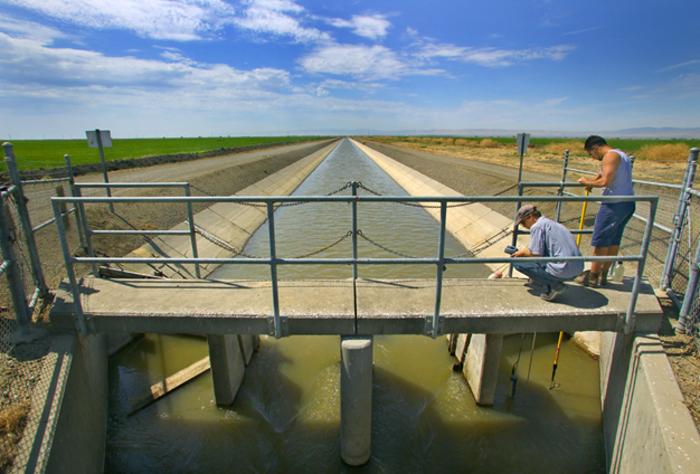
Credit: Berkeley Lab from Openverse
Long-term exposure to contaminants such as arsenic and nitrate in water is linked to an increased risk of various diseases, including cancers, cardiovascular diseases, developmental disorders and birth defects in infants. In the United States, there is a striking disparity in exposure to contaminants in tap water provided by community water systems (CWSs), with historically marginalized communities at greater risks compared to other populations. Often, CWSs that distribute water with higher contamination levels exist in areas that lack adequate public infrastructure or sociopolitical and financial resources.
In a recent study published in the American Journal of Public Health, Ms. Sandy Sum, a PhD candidate at the Bren School of Environmental Science & Management, UC Santa Barbara, investigated the drinking water quality in California’s CWSs serving majority Latino/a communities. Ms. Sum analyzed trends in nitrate and arsenic concentrations in drinking water sourced from both surface and groundwater, using a varied set of data, including water sampling data, historical drought records, sociodemographic characteristics of the populations, measures of agricultural intensity and CWS characteristics from the period 2007–2020. Her study found that these systems consistently exhibit higher and more variable levels of nitrate and arsenic compared to those serving non-majority Latino/a populations. She also found that instances of drought increased the contamination in CWSs serving these communities. “Drought increased nitrate concentrations in majority Latino/a communities, with the effect doubling for CWSs with more than 75% Latino/a populations served. Arsenic concentrations in surface sources also increased during drought for all groups,” explains Ms. Sum.
Nitrate concentrations in groundwater-sourced drinking water increased from a baseline of 2.5 mg/L in 1998 to a peak of 3.1 mg/L in 2018 for majority Latino/a CWSs. In contrast, nitrate levels in non-majority Latino/a CWSs decreased from 2.1 mg/L to 1.8 mg/L over the same period. This widening disparity in nitrate exposure is particularly pronounced in surface-sourced water, where majority Latino/a CWSs show a mean nitrate concentration of 2.2 mg/L, significantly higher than the 1.2 mg/L observed in non-majority Latino/a CWSs as of 2020.
Drought conditions exacerbated these disparities, with a notable impact on surface-sourced drinking water. For majority Latino/a CWSs, drought conditions lead to an increase in nitrate levels, with a 2-unit increase in the normalized drought index resulting in a 0.04 mg/L rise in nitrate concentrations for CWSs serving more than 25% Latino/a populations. The increase is more pronounced in systems serving over 75% Latino/a populations, with a 0.16 mg/L rise. This effect is particularly evident in very small (<500 connections) and privately operated CWSs, where nitrate concentrations are more susceptible to drought conditions. Surface-sourced water shows a drought-related increase in nitrate levels of 0.17 mg/L, more than double the increase observed in groundwater sources (0.07 mg/L).
“[The findings] are concerning when we consider that although more CWSs, about 77%, are supplied by groundwater, more people, almost 80%, are served by CWSs that use surface water as their primary source,” Ms. Sum notes. “Impending droughts driven by climate change may further increase drinking water disparities and arsenic threats. This underscores the critical need to address existing inequities in climate resilience planning and grant making,” she explains further.
Additionally, arsenic concentrations in drinking water also exhibited variability under drought conditions. Drought increases overall arsenic concentrations in surface-sourced drinking water for both majority and non-majority Latino/a CWSs. However, for majority Latino/a communities, drought leads to a statistically insignificant decrease in arsenic levels in groundwater-sourced drinking water. This trend contrasts with recent findings in the San Joaquin Valley, where drought-related intensified agricultural groundwater pumping has significantly increased nitrate prevalence by 3 to 5 times in public supply wells, highlighting a broader regional issue.
The study underscores the need for enhanced drought resilience measures, particularly for very small and privately operated CWSs serving Latino/a communities. “[The differential] effects I found suggest that CWSs serving Latino/a communities are not mitigating elevated nitrate concentrations during drought conditions, which exacerbates existing disparities. This may reflect a lack of treatment infrastructure, resource constraints or other operational or technical differences,” says Ms. Sum. “Although I focused on only arsenic and nitrate concentrations, these vulnerable CWSs may also be at increased risk for contamination from other sources like pesticides, waste disposal sites and manufacturing plants, under stressors such as drought, floods and other natural events,” Ms. Sum concludes on a cautionary note.
Future research should explore how drought impacts arsenic and nitrate levels to help understand the public health implications and guide policy initiatives for ensuring safe and equitable drinking water access.
Journal
American Journal of Public Health
Method of Research
Data/statistical analysis
Subject of Research
Not applicable
Article Title
Impact of Droughts on Served Drinking Water Disparities in California, 2007–2020
Article Publication Date
7-Aug-2024
COI Statement
The author has no conflicts of interest to declare.
Cite Scienmag News
Sloane Callahan. (August 7, 2024). Impact of drought on drinking water contamination: disparities affecting Latino/a communities. Scienmag. https://scienmag.com/impact-of-drought-on-drinking-water-contamination-disparities-affecting-latino-a-communities/
Sloane Callahan. "Impact of drought on drinking water contamination: disparities affecting Latino/a communities." Scienmag, 7 August 2024, https://scienmag.com/impact-of-drought-on-drinking-water-contamination-disparities-affecting-latino-a-communities/. Accessed 3 September 2026.
Sloane Callahan. "Impact of drought on drinking water contamination: disparities affecting Latino/a communities." Scienmag. August 7, 2024. https://scienmag.com/impact-of-drought-on-drinking-water-contamination-disparities-affecting-latino-a-communities/

