

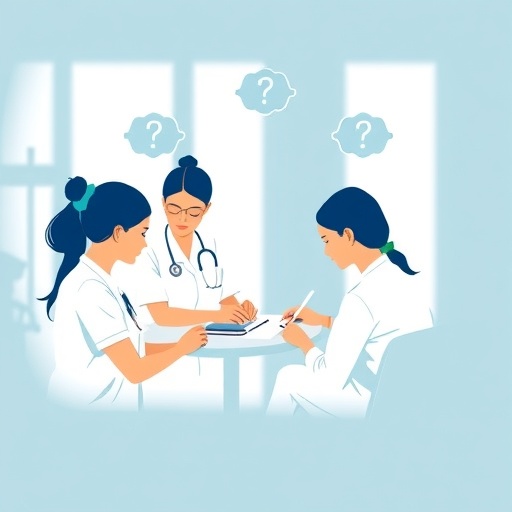
In a sweeping examination of educational methodologies, a recent systematic review and meta-analysis has shed light on the transformative effects of case-based, problem-based, and team-based learning on nursing students. This study, helmed by Zou, Xie, and Huang, sheds light on the interactive dynamics of learning methods and their influence on essential skills in future healthcare professionals. The findings published in BMC Medical Education raise critical questions about traditional teaching frameworks in nursing education and advocate for innovative pedagogical strategies.
The findings underscore the glaring difference in how various learning models shape the educational journey of nursing students. These students, who will one day be at the forefront of healthcare, require not only theoretical knowledge but also practical skills. The analysis suggests that methodologies that promote active engagement—such as case-based and problem-based learning—are pivotal in developing essential competencies. This is not just about acquiring information; it’s about enhancing problem-solving abilities, fostering self-directed learning, and cultivating effective communication skills.
In healthcare education, traditional lecture-based learning often leads to a passive learning experience. In stark contrast, the reviewed learning methodologies engage students by encouraging them to take ownership of their learning processes. For instance, case-based learning involves real-life scenarios that demand critical thinking and decision-making. This immersive experience allows nursing students to connect theory with practice, imparting invaluable skills that textbook learning often lacks.
Moreover, problem-based learning (PBL) further enhances critical thinking by challenging students to solve complex problems without predefined solutions. It pushes students to analyze situations, identify relevant knowledge, and synthesize information. This approach nurtures a deeper understanding of course content and encourages lifelong learning habits. The study illustrates a significant correlation between PBL and improved problem-solving abilities, which are crucial in the fast-paced environment of healthcare.
Team-based learning (TBL), on the other hand, adds another layer of complexity to the educational dynamic. Collaboration is emphasized, with students engaging in group activities that necessitate effective communication and trust-building. The meta-analysis highlights TBL as a means of preparing students for the collaborative nature of healthcare settings. It teaches them to appreciate diverse perspectives while fostering a sense of accountability towards peers, which is fundamental in a profession where teamwork is crucial for patient safety.
As the study progresses through the data, it highlights a striking trend: students exposed to active learning environments reported higher levels of self-directed learning. This is particularly important as healthcare professionals must often take the initiative and seek resources beyond the classroom. Developing self-directed learning skills can enhance a nurse’s ability to adapt to a rapidly changing healthcare landscape, making them more effective practitioners.
The authors of the study are careful to note the limitations of previous research in this area, specifically the gaps in long-term outcome studies that measure the enduring impact of these educational strategies. However, the existing data paints a promising picture: case-based, problem-based, and team-based learning strategies not only enhance immediate educational outcomes but also contribute to the ongoing professional development of nursing students.
Implications for nursing education are significant. With the findings from Zou and colleagues, educational institutions are encouraged to re-evaluate their curricula and consider integrating more active learning strategies. This shift could resonate throughout healthcare systems as well-prepared nurses enter the workforce, ready to tackle the complexities of patient care with enhanced skills and confidence.
Furthermore, as the healthcare field confronts ongoing challenges—ranging from an aging population to the ramifications of global pandemics—investing in more effective educational techniques becomes paramount. The incorporation of active learning can be seen as an investment in the future of healthcare, ensuring that nurses are well-equipped to face the ever-evolving demands of the profession.
In summary, Zou, Xie, and Huang’s meta-analysis serves as a clarion call for nursing education reform. Their research reinforces the necessity of embracing innovative pedagogical approaches that empower nursing students. By focusing on case-based, problem-based, and team-based learning methodologies, institutions can significantly enhance the competencies of future nurses, ultimately benefiting entire healthcare systems.
The current research landscape reveals a pivotal moment in nursing education. It provides a framework for integrating these active learning strategies into curricula, ensuring that nursing students emerge not just as knowledgeable graduates, but as equipped professionals ready to make a meaningful impact.
The push towards reform in nursing education reflects broader trends in educational reform across numerous fields. As educators grapple with how best to prepare students for real-world challenges, the insights derived from recent studies like this one will be instrumental in developing forward-thinking educational paradigms. With ongoing support for innovative learning environments, the nursing profession may very well be on the brink of a transformative shift.
The benefits of case-based, problem-based, and team-based learning extend beyond academia; they offer a blueprint for how healthcare professionals can approach patient care. By nurturing critical thinking, self-directed learning, and team collaboration, nursing education can forge a path towards a more effective, humane, and responsive healthcare system.
These findings not only draw attention to effective educational approaches but also serve as a crucial reminder of the adaptability required in nursing. As healthcare continues to evolve, so must the strategies employed to educate those who will care for future generations.
A shift in teaching does more than improve skills; it assures that nursing students are prepared to navigate the complexities of real-world healthcare scenarios. This study ultimately calls on educational stakeholders to champion the integration of these methodologically driven approaches. The students, and by extension, the patients they will care for, stand to benefit immensely from these necessary changes.
Subject of Research: Effects of case-based, problem-based, and team-based learning on nursing education.
Article Title: The effects of case-based, problem-based, and team-based learning on nursing students’ problem-solving, self-directed learning, and communication skills: a systematic review and meta-analysis.
Article References:
Zou, Y., Xie, W., Huang, H. et al. The effects of case-based, problem-based, and team-based learning on nursing students’ problem-solving, self-directed learning, and communication skills: a systematic review and meta-analysis.
BMC Med Educ (2026). https://doi.org/10.1186/s12909-026-08602-3
Image Credits: AI Generated
DOI: 10.1186/s12909-026-08602-3
Keywords: nursing education, case-based learning, problem-based learning, team-based learning, self-directed learning, communication skills, healthcare education reform.


